
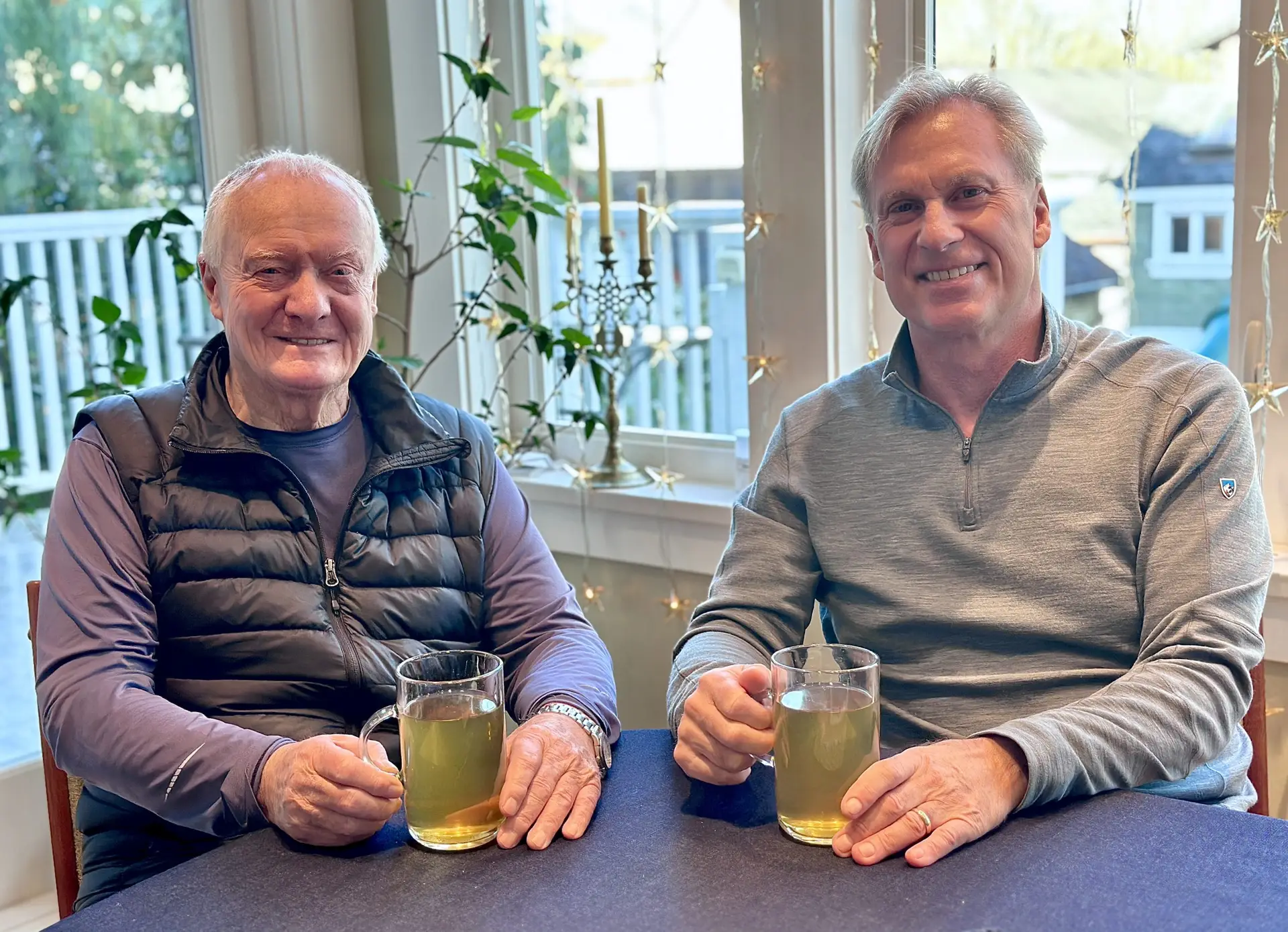
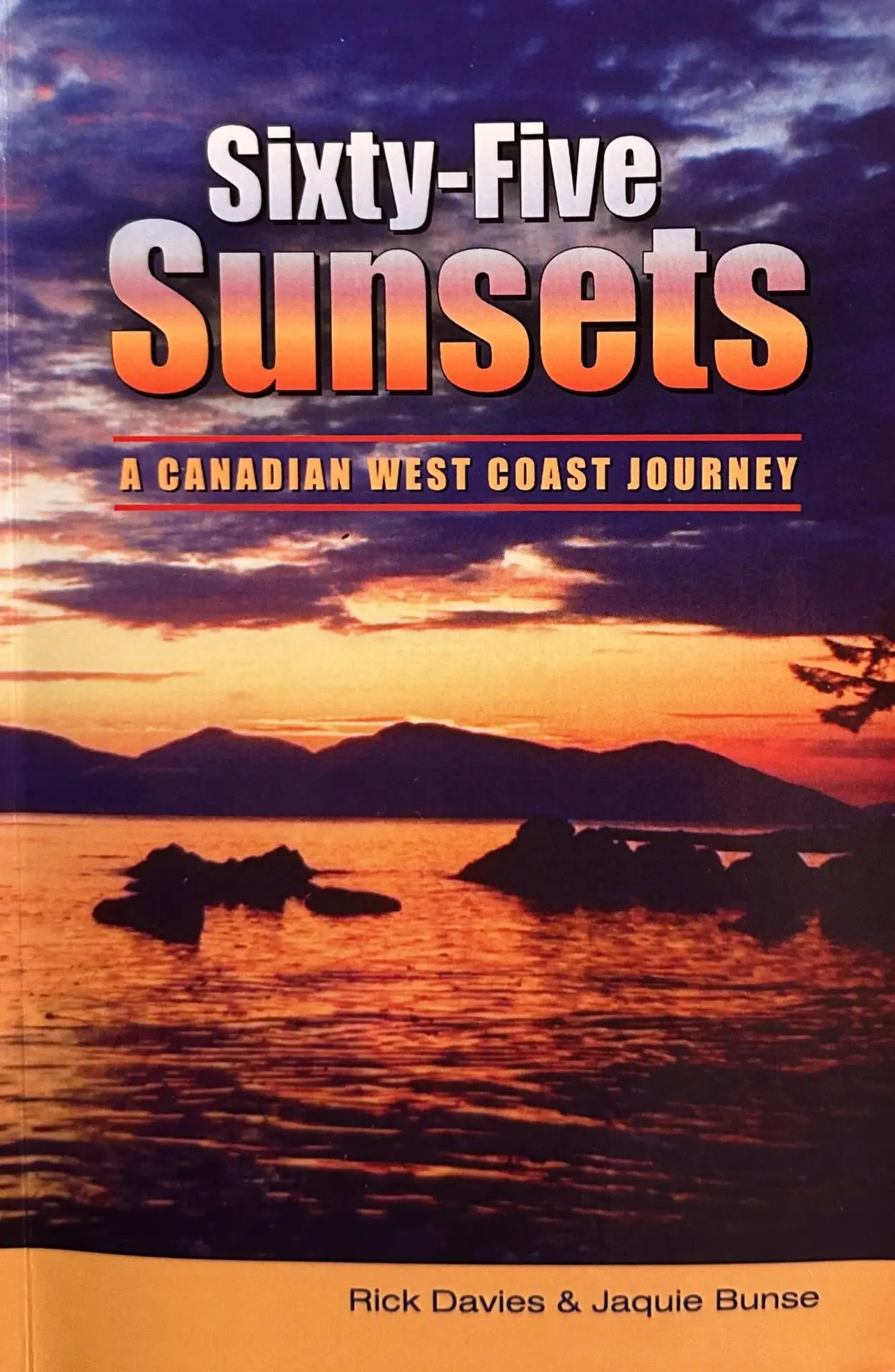
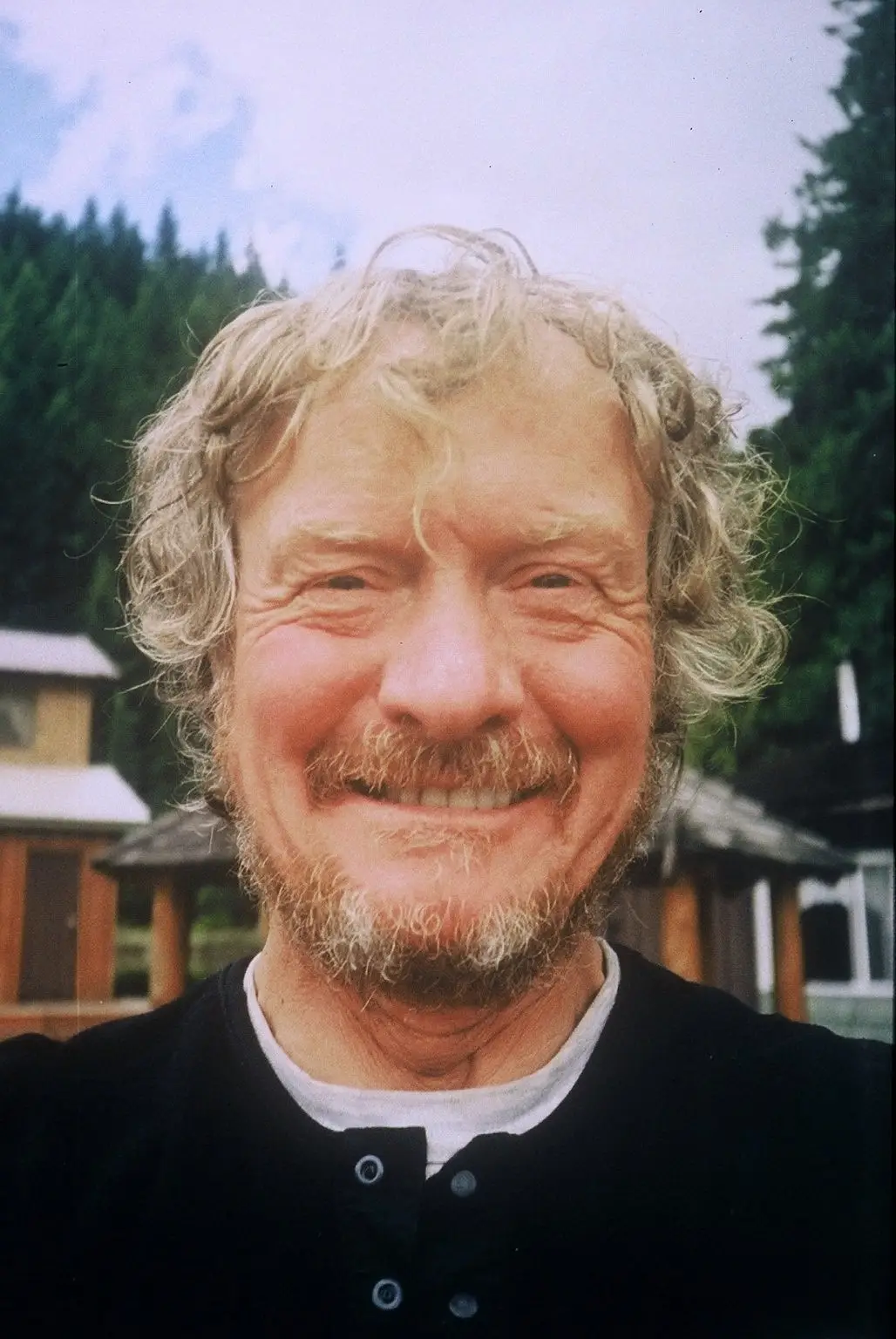
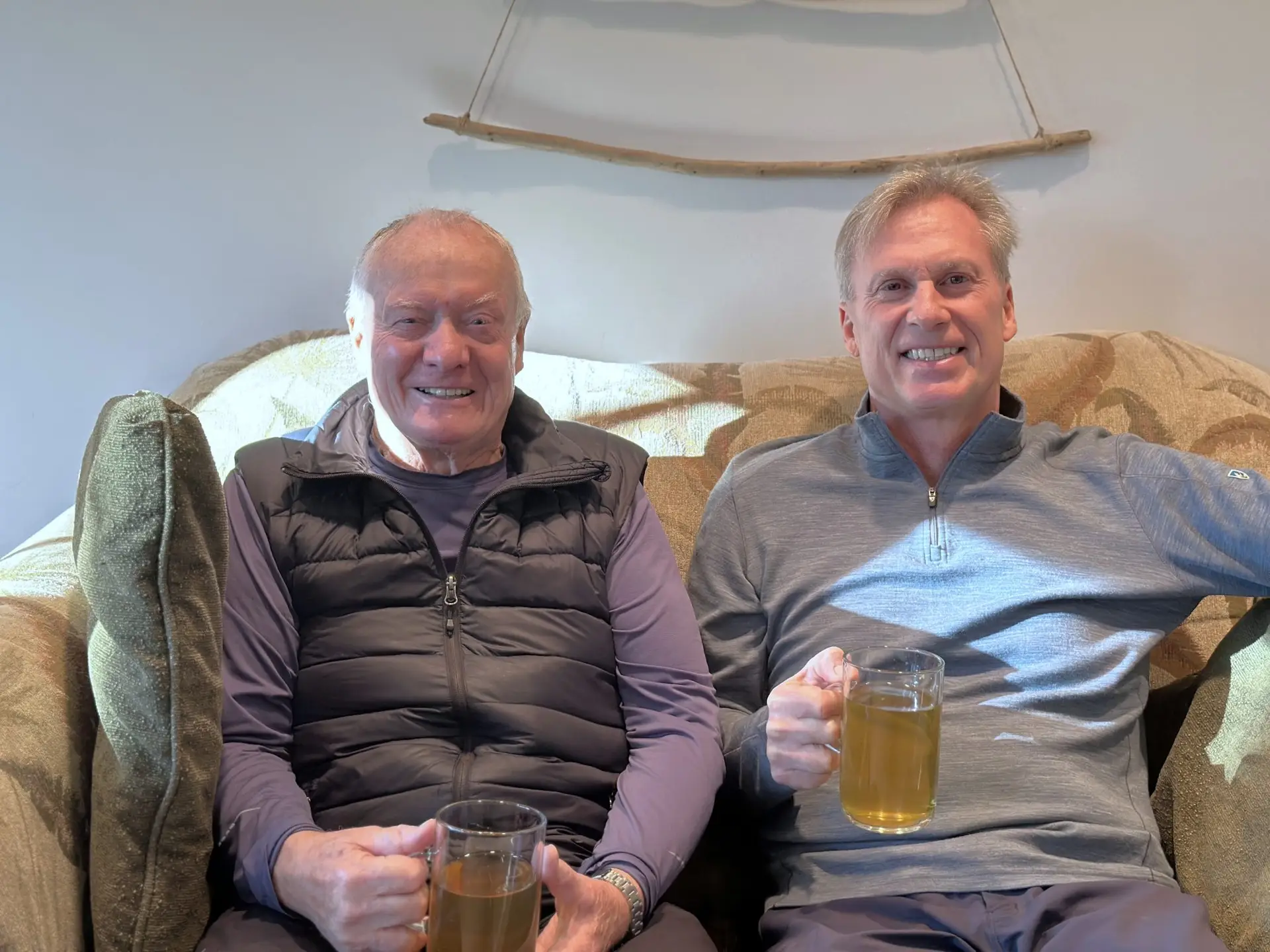
When I invited 81-year-old Rick Davies over for lunch, I was expecting a one-hour chat about Sixty-Five Sunsets: A Canadian West Coast Journey — the book he and his wife Jaquie wrote about their paddle from Alaska to Vancouver. I wanted to hear his top tips for paddlers over 60 from a presentation he and Jaquie delivered to a group of paddlers at SKABC. And truth be told, I also had a more selfish agenda: I wanted to check whether I was on track at 65 to be living an active life like Rick’s when I reach 81.
After swapping stories over lunch, I felt charmed and more than a bit awed. Tea followed. Then more tea. At some point Rick opened his laptop and began scrolling through photographs of his many adventures with Jaquie — and the afternoon shifted from interesting to quietly profound.
The images weren’t arranged for effect, but taken together they had one: kayaks pulled up on wild beaches, camps in improbable places, ski tracks disappearing into the distance, and again and again the same two people, side by side, fully engaged. Hard not to think of the opening montage from the Pixar movie Up, where Carl Fredricksen relives his life with Ellie through a blur of snapshots and sweet memories. Except this wasn’t a movie — it was Rick’s life. Beautiful, tender, and tinged with grief, because Jaquie — his soulmate — died at 74 after a seven-year slide into Alzheimer’s.
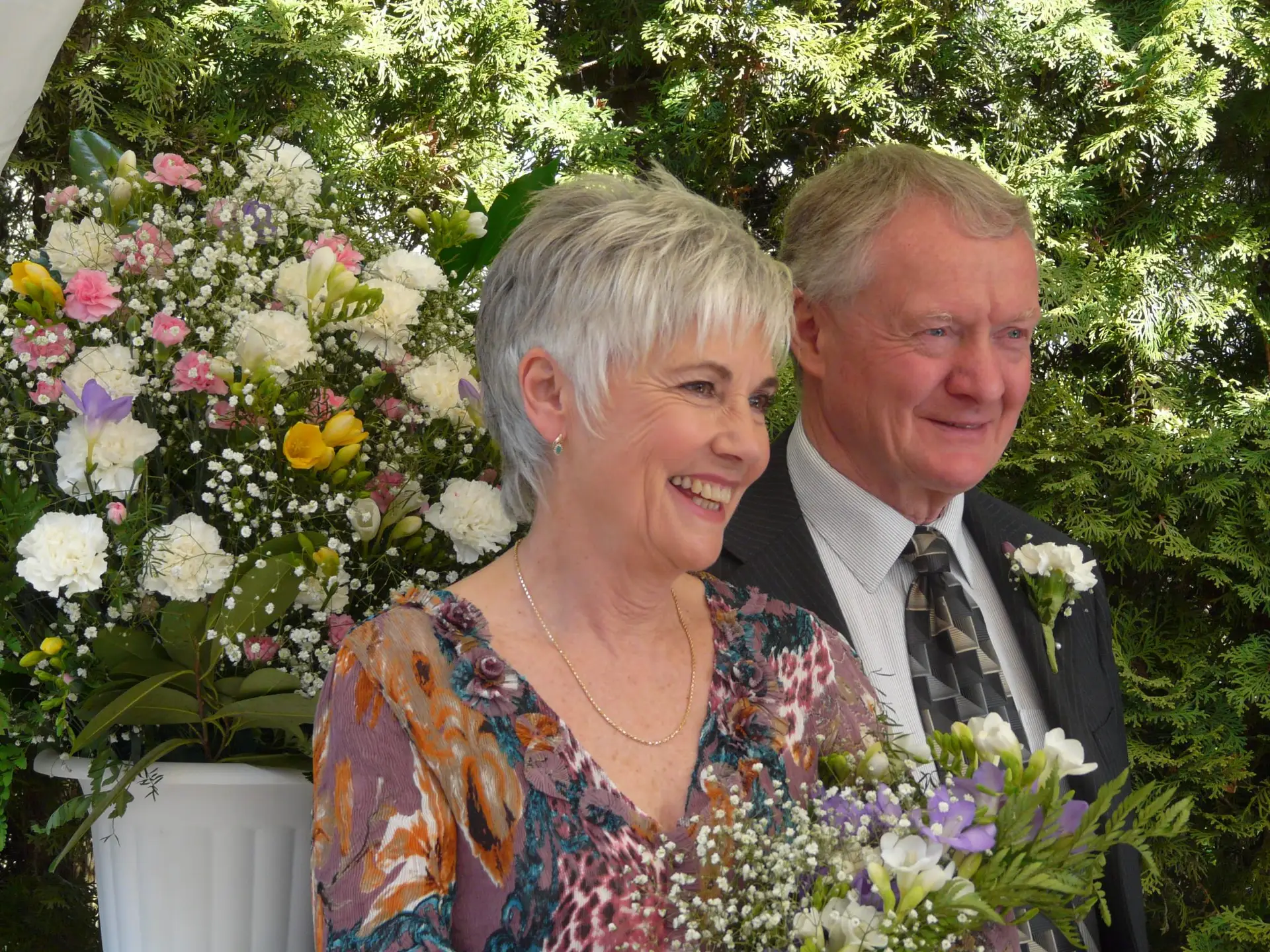
Four hours later, we were still talking, surrounded by a swirl of stories spanning decades, continents, and an astonishing range of adventures. Two threads ran through it all: his love for Jaquie, and an unquenchable spirit — the ability to bounce back and pivot after major setbacks. He’d changed careers and countries, lost the love of his life, survived stage 4 lymphoma in 2024, and somehow always landed on his feet, finding new ways to connect to the wild. At 81, he’s still adventuring — differently, but fully — and still teaching outdoor recreation at Capilano University.
What follows is the distilled wisdom from four hours of conversation, a lifetime of adventure, and one very fine pot of jasmine green tea. If you’re a paddler over 60 wondering whether your best years are behind you, Rick Davies has a clear answer: not even close.
The Adventurer's Mindset
At seven, Rick was a free-range explorer walking through forests miles from his New Zealand home, building the curiosity and resilience that still define him today. There was no adult supervision. No curated outdoor experiences. Just natural curiosity and the freedom to follow it. At 81, he’s still exploring the trails and waters near his home in Lynn Valley, North Vancouver.
Rick’s father — a WWII Special Forces veteran — used folding Klepper sea kayaks to sneak behind enemy lines and plant explosives under German ships. Perhaps that’s where Rick’s seafaring urges were born.
Rick left home at 15, and at 17 joined the New Zealand Navy, learning electronics, mechanical systems, and the kind of calm that comes when things go wrong. He became a teacher himself — of electronics, communications, teamwork, and leadership — to sailors, ski resort workers, bankers, and corporate executives. Along the way, he developed a habit of preparing thoroughly for whatever he threw himself into. Adventure, however, was the true constant.
Naturally fit, Rick ran his first marathon at 37. His first sea kayak trip was off the west coast of Vancouver Island in the early 1980s. Pre-trip training consisted of exactly one hour in a rental kayak in the protected waters of False Creek — two days before departure. He then drove to Tofino and paddled a tippy, rudderless Greenland kayak up the west side of Vargas Island in 20-knot winds, four-foot breaking waves, and a 15-foot Pacific swell. He was, as he puts it, right up against “that thin red line separating adventure from disaster” — and simply didn’t know enough to understand how dangerous it was. “Enjoyment wasn’t part of the experience,” Rick laughs. “It was sheer survival.” Still, he was hooked.
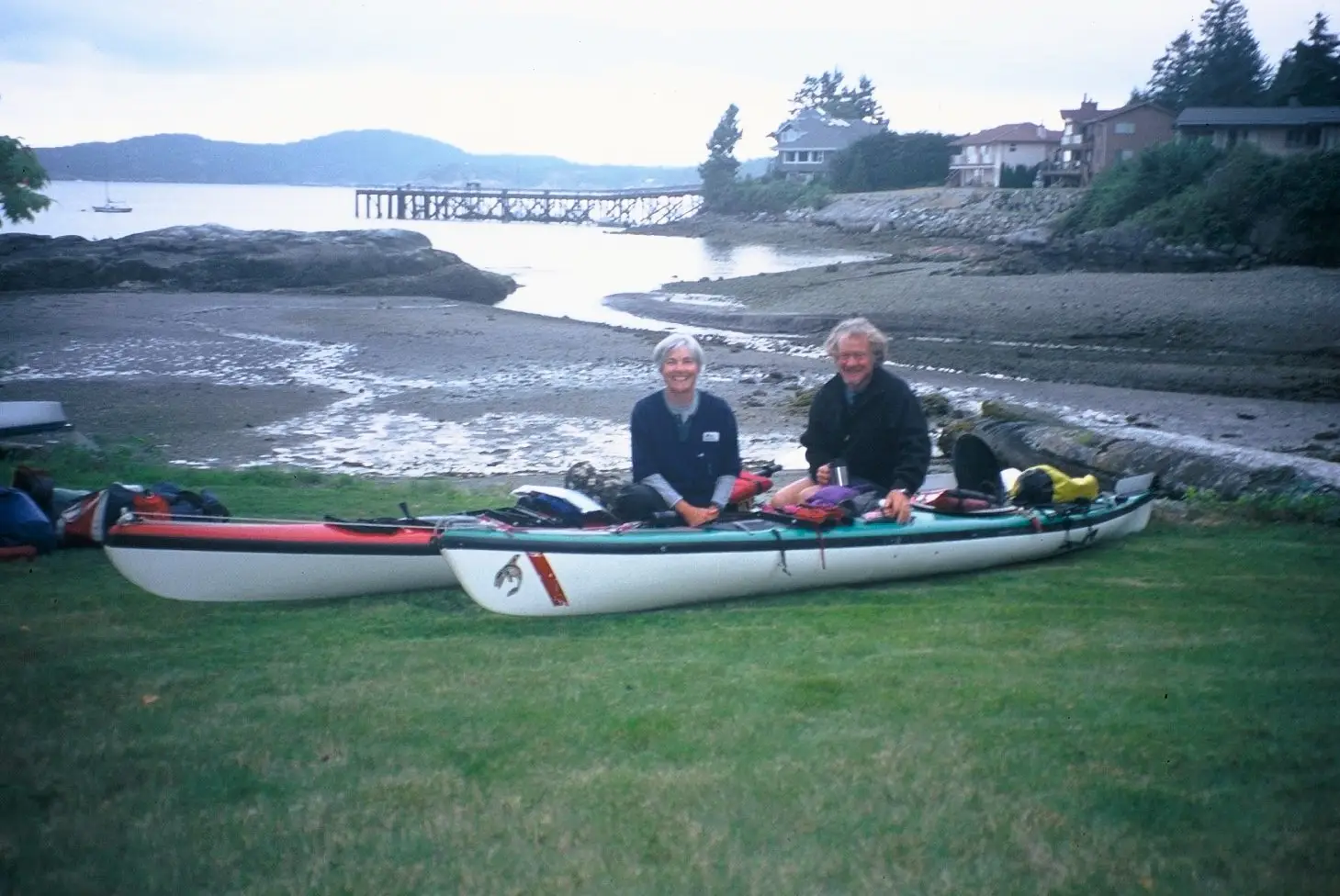
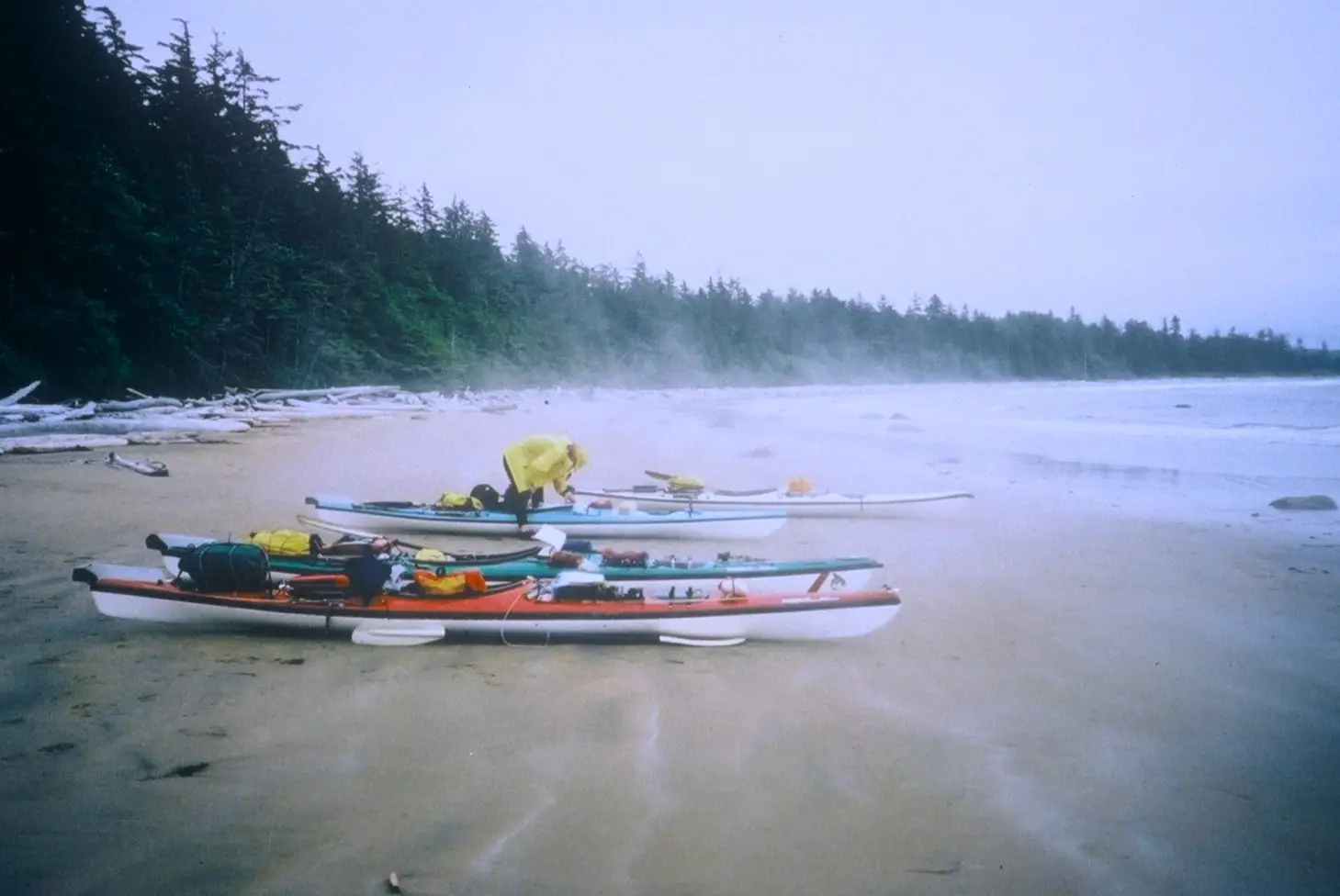
Over time he traded the Greenlander for a high-volume Nimbus Seafarer with a rudder — a revelation in stability and comfort. At 57, alongside Jaquie at 54, he completed a 65-day, 1,100-km paddle down the Inside Passage from Somerville Island to Vancouver.
Rick’s adventure credentials are, frankly, absurd. He’s summited the tallest peaks in New Zealand, climbed Kilimanjaro, paddled Haida Gwaii for a month, skied across the Grand Canyon from North Rim to South Rim in winter, rafted the Colorado River, canoed the Yukon River, followed Aboriginal Wayfinders across Australia’s outback, tracked caribou and reindeer herds across the Arctic with Indigenous guides in Canada and Norway, and made 17 trips to Polynesia studying ancient seafaring navigation techniques.
In his 60s and 70s, Rick began seeking a greater margin of safety in his adventures. He’d stay on the beach while others launched and now considers being called a “chicken” a compliment. He’s not interested in do-or-die quests or Instagram glory. His goal isn’t heroics, it’s to keep going.
In 2024, stage 4 lymphoma nearly killed him. Treatment saved his life but left him weaker, forcing him to step back from paddling, cross-country skiing, and backcountry hiking. In 2025, his focus shifted to building back his strength — quads to handle steep terrain, shoulders for paddling. For 2026, he plans to dial up strength training another notch, spurred on by his children and a community of fellow adventurers at Capilano University.
In the movie Up, young Elle excitedly declares her motto “Adventure is Out There.” And certainly, Rick and I have spent much of our lives answering that call. There’s always another mountain, coastline, or trail waiting to be explored—and another travel blog or YouTube video to click on for inspiration.
But I wonder if Elle had it quite right.
As boys of seven, Rick and I already carried within us a restless curiosity, a willingness to wander, and an irresistible urge to see what was around the next corner. Our adventures since then are simply physical expressions of an adventurous spirit that has been with us all along—who we are at our core, not merely what we do.
So which matters more: the adventure calling to us from “out there,” or the adventurous spirit pushing us from within?
Perhaps the magic happens when the two meet—the world offering its invitation, and something inside us answering, “Let’s go.”
Takeaway: If you’re wired to love moving outdoors, keep going. The adventurer’s mindset doesn’t grow old — it just adjusts the pace, the gear, and the definition of success. Your adventurous spirit may be the most durable thing about you.
Inspiring Maps and Charts
Rick has been collecting maps of his worldwide adventures since 1957. They are battered, stained, annotated things — torn, muddy, watermarked, bearing food stains, blood stains, and handwritten notes about bearings, traverse times, shortcuts, and hazards. Before the Sixty-Five Sunsets paddle, he and Jaquie spread 25 nautical charts across their living room floor and plotted the entire route mile by mile. He still has those charts. And he still has the memories that go with every pencil mark.
I am exactly the same. In university I would take breaks from studying to visit the map table in the library — Mongolia, what’s there? — and lose an hour before I’d noticed. I still carry paper charts in a waterproof map case on my kayak deck, annotated with paddling times, lunch stops, and bail-out options – now supplemented with digital navigation aids of course. Maps breathe life and inspiration into our adventures. They translate curiosity into expedition, and expedition into memory. They are puzzle, conquest, and memento all at once.
Do maps have souls? Rick wonders. I think they might.
Takeaway: Dig into maps and charts — paper and digital. Books too. Use them to dream up new adventures. Use them afterwards to remember the ones you’ve had. A well-annotated old chart is a shared memory, a kind of autobiography.
Partners
When Rick first met Jaquie, she had the good looks of a former Miss Peachland beauty queen. But that wasn’t what grabbed him. It was walking through her front door and seeing in the entrance an ice axe, cross-country skis, and climbing ropes. The rugged Toyota Land Cruiser parked out front didn’t hurt either, especially after learning that Jaquie had customized it herself. Rick knew at once she was something special — someone to hang on to.
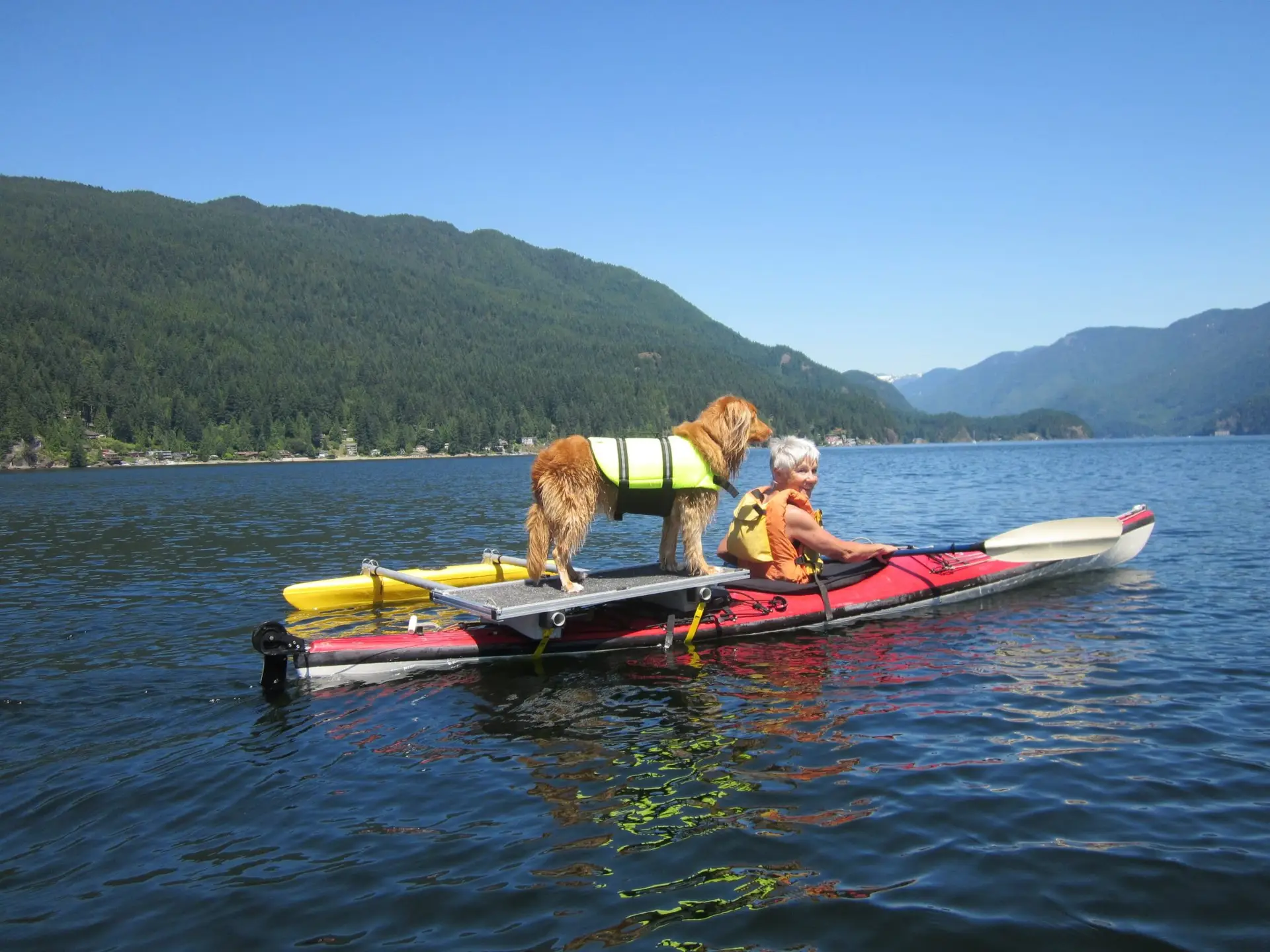
When Alzheimer’s struck Jaquie, it was devastating. For seven years, the last two in a care facility, she slipped away in a slow goodbye. Through it all, Rick saw their story as one long adventure — love meeting impermanence with grace. Without complaint or resentment, he completely changed their travel formula, setting aside more extreme adventures to focus on what they could do together: Norway, Belize, gentler things — right up until she couldn’t travel anymore. No ego. Just love.
Takeaway: What you have with your partner is precious and won’t last forever. Give them a hug today and say out loud how much they mean to you.
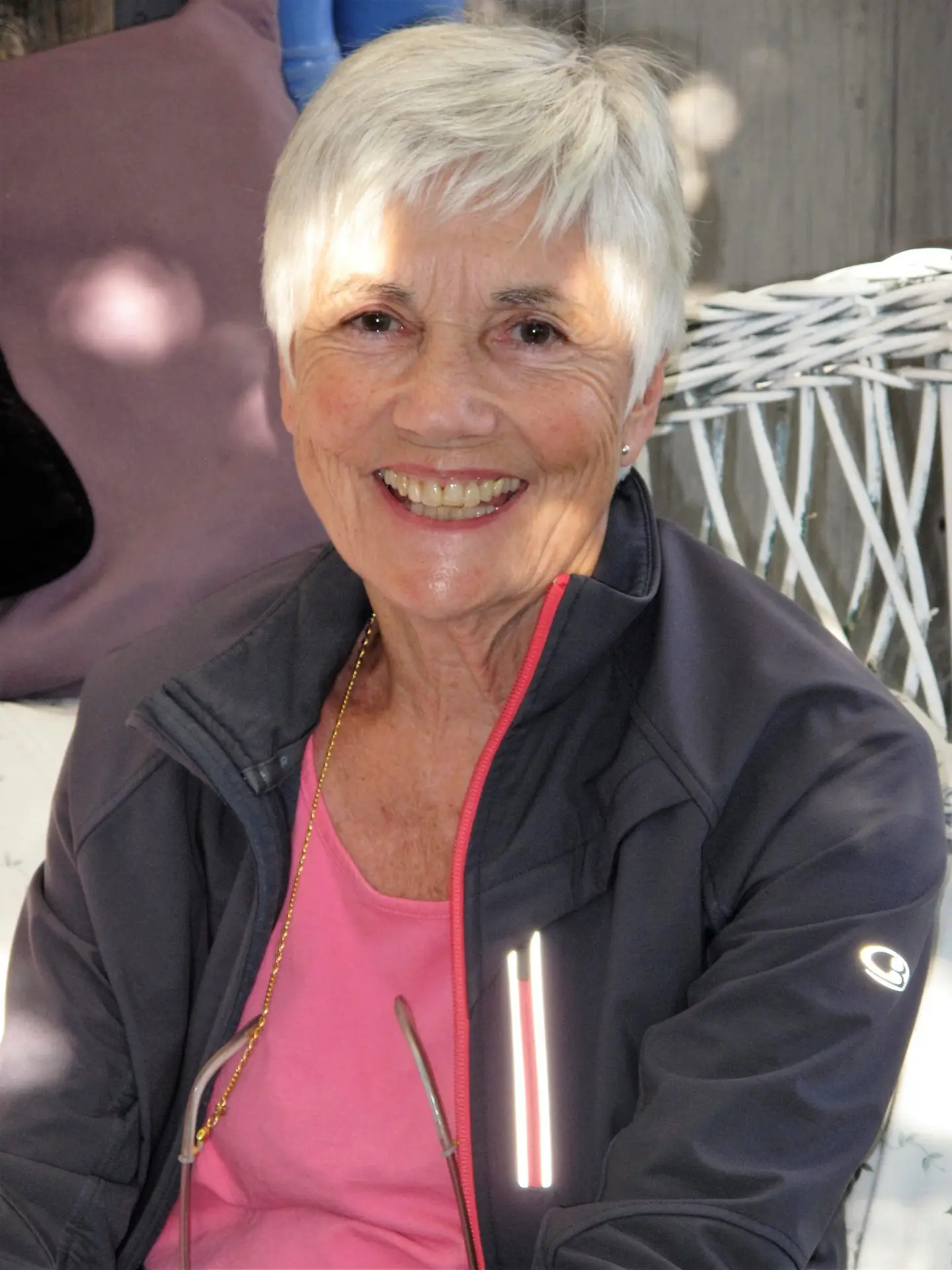
Trip of a Lifetime: Find Your Formula
When Rick and Jaquie set out on their Sixty-Five Sunsets paddle, they had one shared rule: no rushing. They wanted to live on the BC coast, not race through it. They averaged 12 nautical miles on paddling days and took nine rest days for weather or recovery. Their longest day was 21 nautical miles in 13 hours. Rick developed tendinitis in his left elbow on day three and couldn’t fully straighten his arm. He paddled another 1,050 kilometres with a painful bent elbow. This tells you much of what you need to know about Rick.
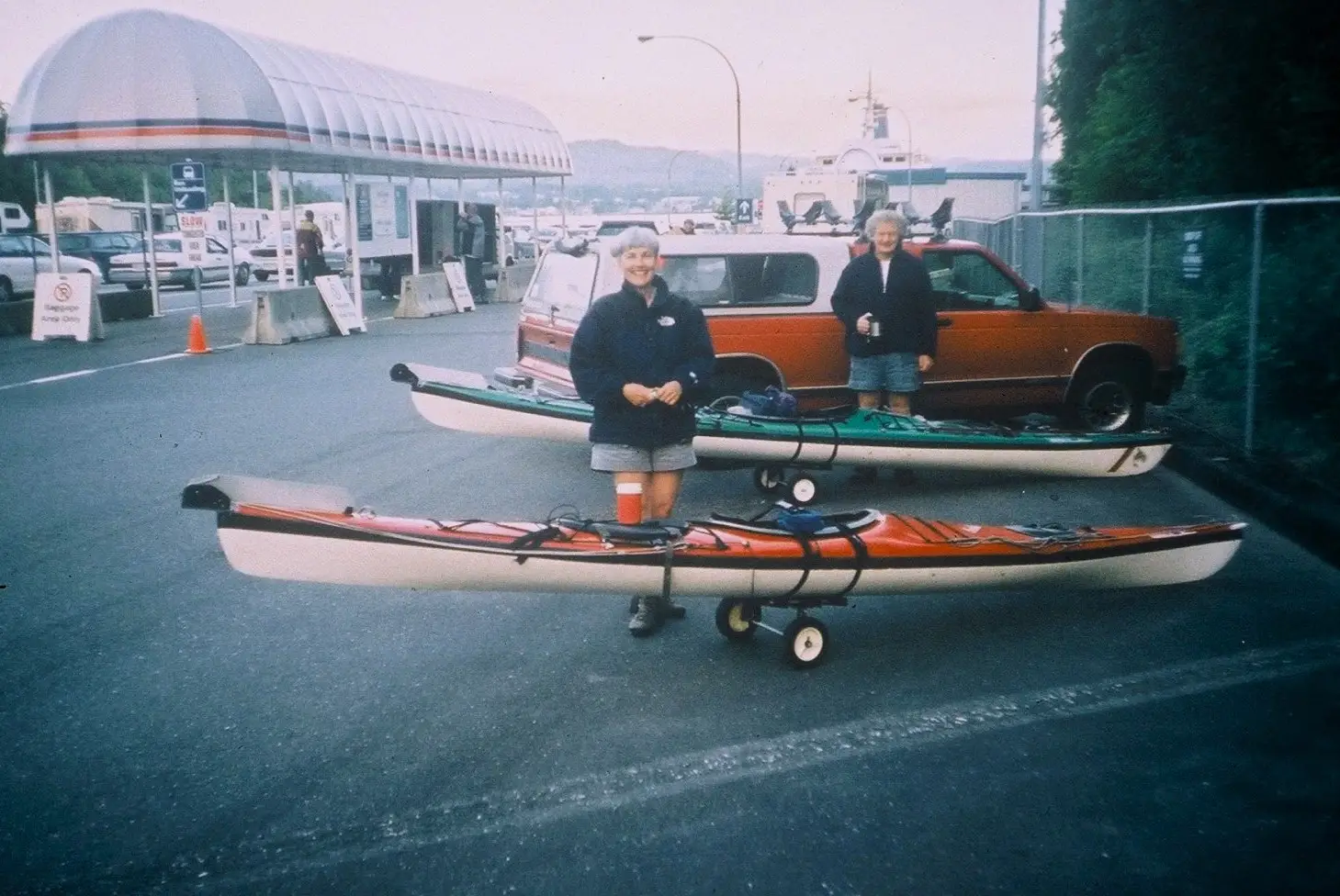
On our 60-day paddle from Bella Bella to Tofino, Julee and I took a different approach — visiting the best beaches on the exposed outer coast, covering 600 kilometres rather than 1,100 (a decision I am deeply grateful for after reading what Rick went through). We averaged 15 nautical miles on paddling days, with many rest days to enjoy fabulous beaches and wait out weather. We slept on sandy beaches, never had to scramble over slippery rocks or cut tent sites out of the bush. Our elbows remained fully operational throughout.
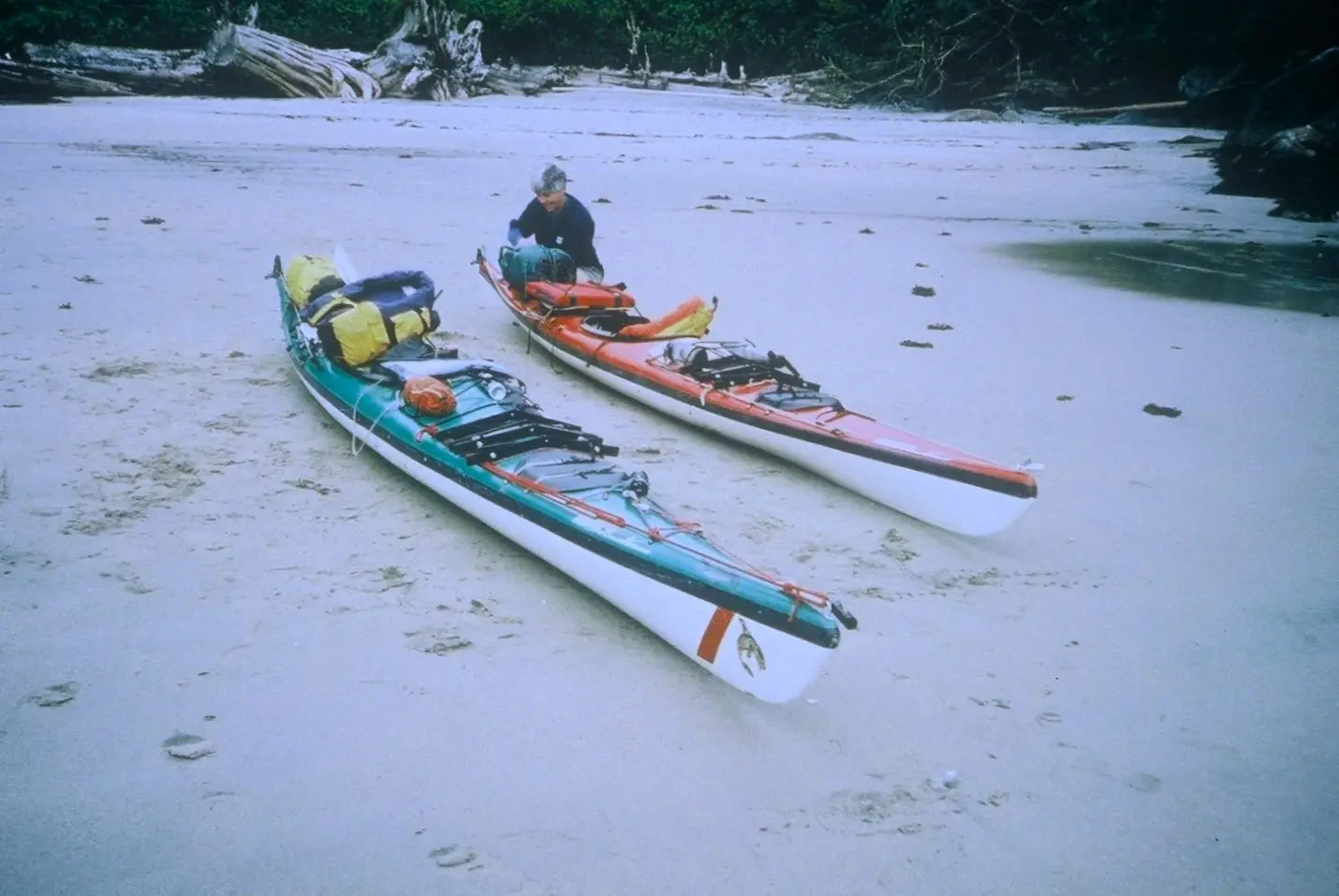
Like Rick and Jaquie, we camped in a mountain tent with a vestibule and immersed ourselves in the same rhythm: packing, eating up the miles, unpacking, putting up camp, eating, sleeping, and doing it all again the next day. Everything we need in life contained in a small kayak. It is a wonderful rhythm I’ve returned to often – sea kayaking, hiking, and doing long distance walks and cycling trips across Europe.
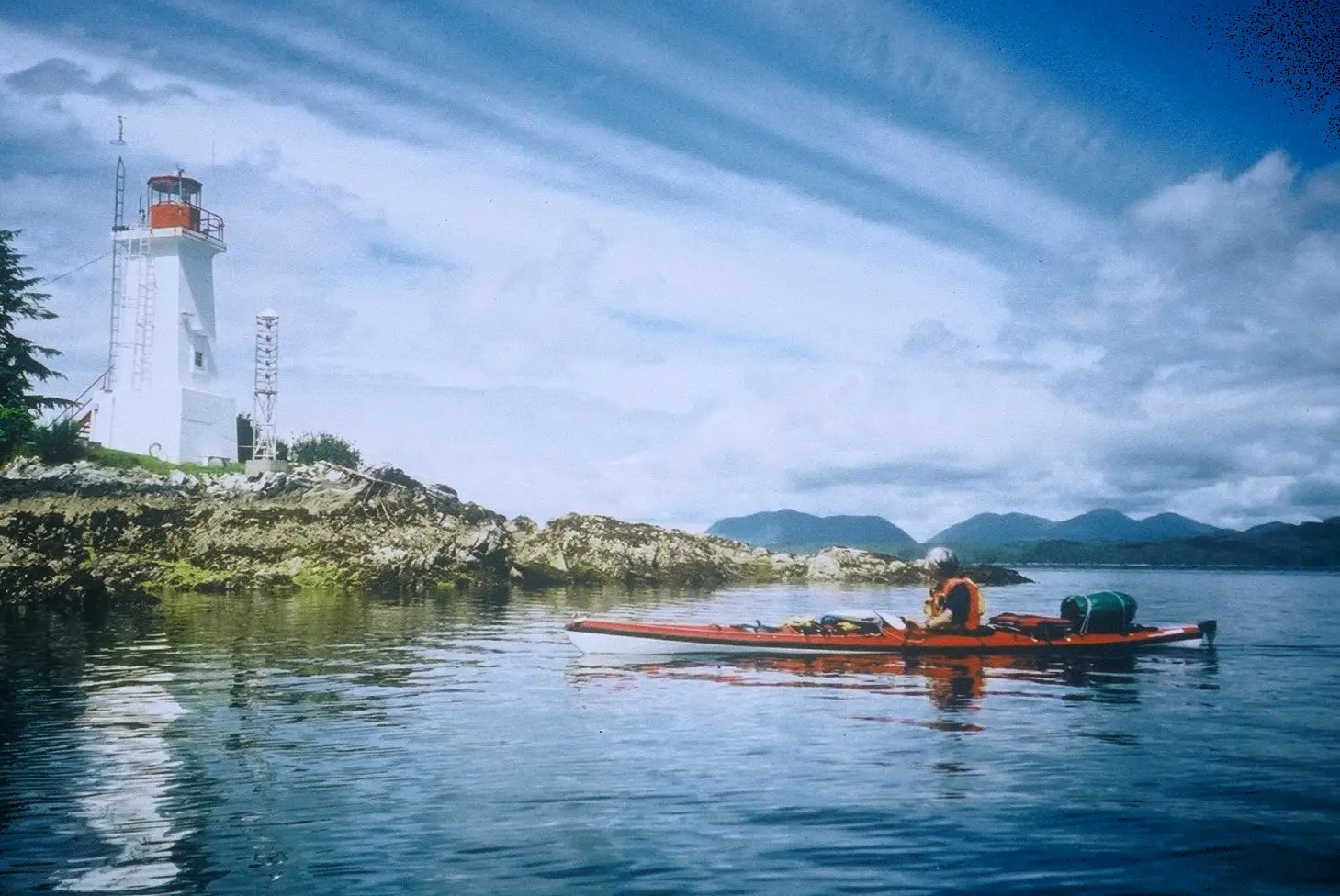
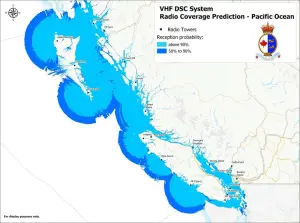
Rick and Jaquie paddled singles at 2 knots; Julee and I chose a double for its greater speed and stability, averaging 3. Both teams carried VHF radios and flares, knowing there would be stretches where no vessel would be within range to receive a distress call.
Rick’s food supply for the first unsupported month weighed over 200 pounds; our food weighed much less thanks to Julee’s efforts preparing and home-drying nearly all our meals and snacks before the trip. However, our route through offshore islands with no guaranteed water supply meant hauling 50 litres of water weighing 110 pounds.
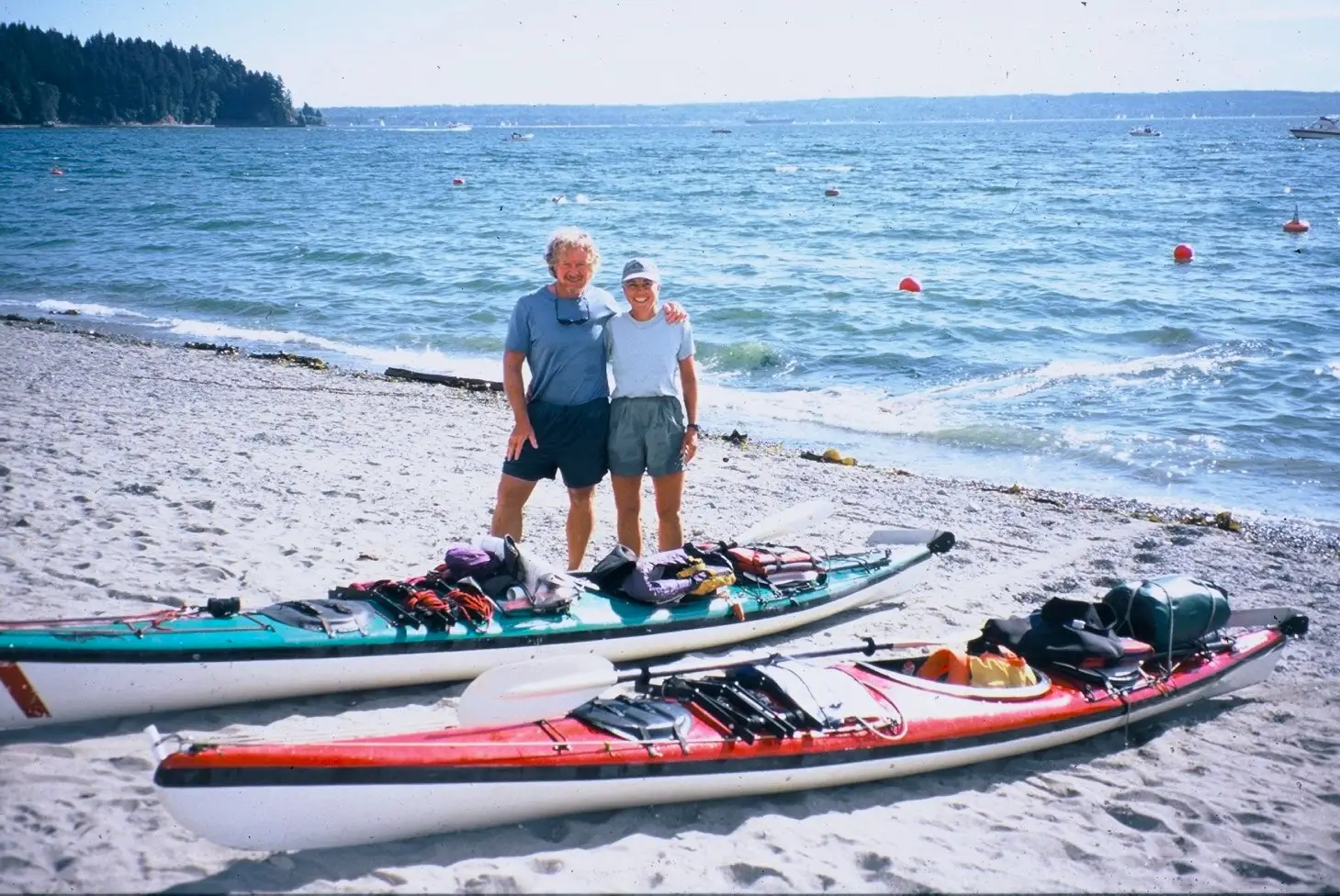
Both trips also involved a sailing rig. Rick and Jaquie’s was elegantly simple: raft the kayaks together, hold a paddle vertically, drape a tarp over the blades, and away you go. Ours was considerably more ambitious — a stepped aluminum mast through the deck, a proper jib with lines cleated to the deck, and (here comes the masterstroke of nautical engineering) metal strapping fastening two bumper floats to the blade of my spare paddle to create an outrigger.
In 10–15 knots of wind, it performed magnificently. I felt like a Polynesian Wayfinder and may have used the word “elegant” out loud. The problem is that wind on the BC coast does not stay at 10–15 knots. By early afternoon it has risen to 25 knots, the Polynesian fantasy has evaporated, and the person in the front cockpit — with no control over the tipping of the kayak and a very clear memory of our near-death McMullan Islands experience — was expressing her displeasure with considerable volume and clarity. We used the rig for seven days total, including a thrilling ride down the west coast of Calvert Island, and retired it without ceremony or regret. Some engineering marvels are best appreciated briefly.
The key lesson from both adventures: Rick’s formula was right for Rick and Jaquie; ours was right for us. The point isn’t which formula is better — it’s to know yourself. Your body, your risk tolerance, your relationship, your vision of what a great trip feels like. Build the adventure around that.
Rick and Jaquie called their trip the best of their lives. Julee and I call ours the same. Both play in our heads like the montage from Up — sepia-toned and perfect, campfires and sunsets, eagles and kingfishers, sea lions and orcas, wind through the swaying trees.
Takeaway: Figure out your personal travel goals and adventure formula — the one that creates a sepia-toned montage when you look back decades later. Then go while you still can.
Risk
Rick writes in Sixty-Five Sunsets: “We all fear the unknown. But we kayakers have our own set of fears. We look at charts of unfamiliar narrows and rapids and wonder: how fast does it run? Will there be a refuge? What is the exposure? Are there reefs and boomers?… We learned to push our limits increment by increment, not by leaps and bounds, not blindly. In doing so, we minimize the risk of injury or worse.”
Rick’s sense of risk was shaped most dramatically by mountaineering. On New Zealand’s Mount Cook, descending with his climbing partner Stephen, a crack opened above them and ice blocks the size of five-ton trucks cascaded down 1,500 feet of vertical rock face directly toward them. They leapt a crevasse and ran for their lives through deep snow. Only afterward, lying in the snow looking back at their tracks disappearing under a pile of ice blocks, did the shaking start. A tick of time was all that separated Rick and the life he went on to live from being buried inside that icefall, making his way slowly down a glacier still roped to his friend. That kind of experience recalibrates your Risk-O-Meter permanently — and for the better.
“Rushing nature,” he writes, “is usually a recipe for danger.” He learned to wait. The mark of a true wilderness traveller, he says, is not the ability to speed through difficult terrain, but rather the ability to sit still. Staying comfortable mentally and physically, and waiting out a storm for as long as necessary. That patience has saved his skin more than once. Many mountaineering friends, he notes, have taken up sea kayaking after too many close calls — and also because their knees gave out. “Look after your knees,” he urges. “And don’t break anything.”
As we get older, our Risk-O-Meters should recalibrate toward caution. The goal isn’t recklessness dressed up as adventure — it’s to keep having adventures as long as possible.
Takeaway: Get your inner Risk-O-Meter in good working order. Differentiate the risks worth taking from those that aren’t — and talk it through with your paddling partners before you’re in the soup together. Their meters may be calibrated differently from yours.
Community
Jaquie wrote in Sixty-Five Sunsets: “I believe that the generosity with which we are met along the way will be my strongest impression of this trip. I aspire to live the rest of my life open to people and their stories in every corner I visit.”
Rick put it his own way: “The wilderness travel community is an amazingly close network. I find I have a closer bond with my friend Dieter in Munich — who I met on Kilimanjaro — than with a neighbour I see nearly every day.”
On their Alaska paddle, Rick and Jaquie stopped at the wilderness cabin at the north end of Burnett Bay — the same cabin Julee and I sheltered in years later. Built by Randy Washburn, it has been a haven for paddlers waiting out storms for decades. All four of us pored through the logbook entries, feeling a strong sense of kinship with strangers who’d faced the same conditions and felt the same things.
Rick’s colleagues at Capilano University are all adventurers. He loves the energy of being around people who are still getting out there. “You need a community to bring you up,” he says. “Some days you don’t feel like doing anything, but an incoming invitation from a friend is all it takes to get you off the sofa.”
The BC Marine Trails Association, SKABC, and other paddling clubs are exactly these kinds of communities — organizing trips, sharing knowledge, maintaining the campsites, charts, and trail reports that make coastal paddling possible. Rick has given back to communities like these throughout his life. If you’ve benefitted, consider doing the same. Volunteer. Teach a course. Write a trip report.
Takeaway: Surround yourself with active people. Accept their invitations. Extend your own. And consider giving back to the clubs and organizations that have supported your adventures.
Mindset
In Sixty-Five Sunsets, Jaquie wrote: “53 days out and we’re still thoroughly enjoying every single day… If we had allowed the weather to dominate our spirits, we would’ve been miserable for over a third of the journey. No matter what the situation, we possess the power to choose our attitude.”
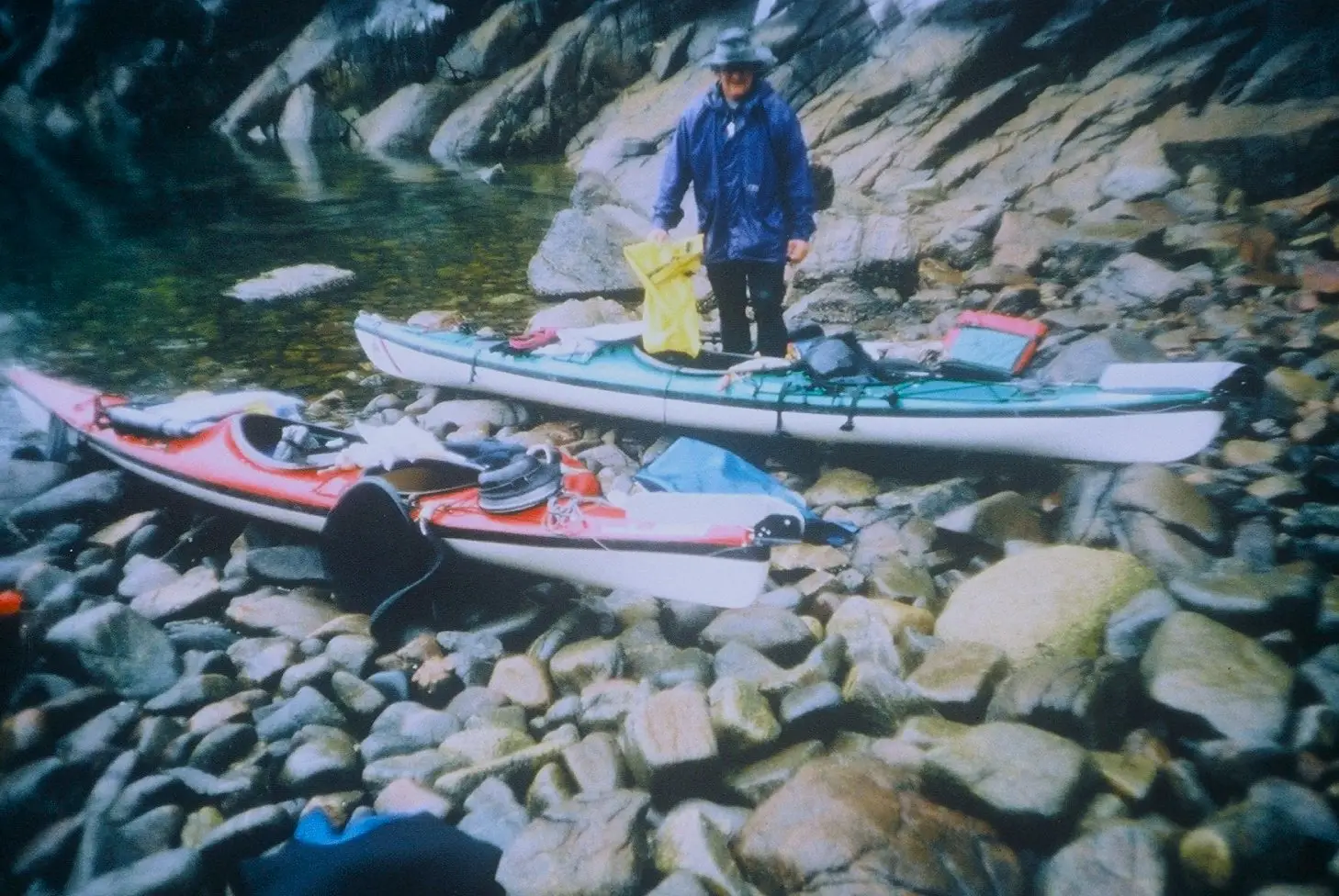
On rest days, Rick and Jaquie read, ate, watched wildlife, walked the beach, and did, as she put it, “all those nothing things that a day at the beach is supposed to be. The sun on our skin induced a delicious laziness that slowed the passage of time and sank deep into our souls.”
Takeaway: You can’t control the weather, but you can control your attitude — so have a good one.
Have a Positive Quest
When I asked Rick whether he had an overarching theme that gave his adventures deeper meaning, he said “just moving, outdoors, in nature” had been his primary interest — never changing from the forests of his New Zealand childhood to the Lynn Valley trails and Indian Arm paddles of today.
But he also has a secondary quest that has propelled a remarkable set of specific adventures: a lifelong fascination with Indigenous navigation. He has been to Polynesia 17 times, studying ancient seafaring techniques — using stars, ocean swells, birds, and the feel of the wind, with no instruments at all to navigate vast distances between two tiny islands. He has studied Aboriginal wayfinding in Australia’s outback, traveled to northern Norway to observe Reindeer herders, and ventured into Canada’s Arctic studying Caribou migrations with Indigenous guides. His month-long kayak trip to Haida Gwaii fits the same thread: a deep, slow attention to place.
A positive quest is not a bucket list. A bucket list is a collection of destinations. A positive quest is a thread of meaning running through many adventures, connecting them, giving you a reason to keep going beyond the next horizon.
What is your thread?
Takeaway: Find the theme that gives your adventures meaning beyond the miles. It will keep pulling you forward long after the novelty of any single trip has worn off.
Health and Fitness
If you met Rick today, you’d never guess he nearly died less than two years ago. Stage 4 Lymphoma took him to the brink, but in typical Rick fashion, he found his way back. “I’m enjoying life — just doing what I damn well like,” he says.
These days his workouts are gentler, but ongoing. He walks the forest trails near his home, stays flexible, eats well, and mixes in strength training. How does he keep going? “Day by day,” he says. His adventures aren’t driven by ego or a desire for glory. “Just being out there, independent, living the simple life, camping, a glass of wine at sunset with somebody nice” — that’s what matters.
He draws on Positive Psychology, Martin Seligman’s work, and role models like Rick Hansen who live full lives despite adversity — people still redefining what’s possible at a certain age or after setbacks.
Takeaway: Keep moving, targeting the outer edge of what your health envelope allows.
Pivoting With Grace
When faced with a proverbial ‘fork-in-the-road,’ we have three basic choices: persevere, pause or pivot. Rick has persevered in the face of adversity over and over since he was a boy; paddling 1100km with tendonitis in a bum arm is just one small example. Pausing is a skill that developed later in life. Now he doesn’t mind staying on the beach in dangerous weather even if he gets called a “chicken.” But where Rick really shines is pivoting; his whole life is a masterclass. From runaway teen to navy sailor, peak-bagging mountaineer, teacher, husband, father, sea kayaker, backcountry skier, round-the-world adventurer with Jaquie, then a gentle companion to a woman disappearing into Alzheimer’s, cancer survivor, and now a university teacher rebuilding his strength with the intention of getting back on skis and, eventually, back on the water.
When Jaquie’s diagnosis ended their high-adrenaline adventures, Rick didn’t mourn what was lost. He shifted — quieter travel, Belize and Norway instead of Kilimanjaro, meaningful connection, simply being together. No ego. Just love. When cancer forced another pause, he adapted again, turning his energy toward teaching and rebuilding from the inside out.
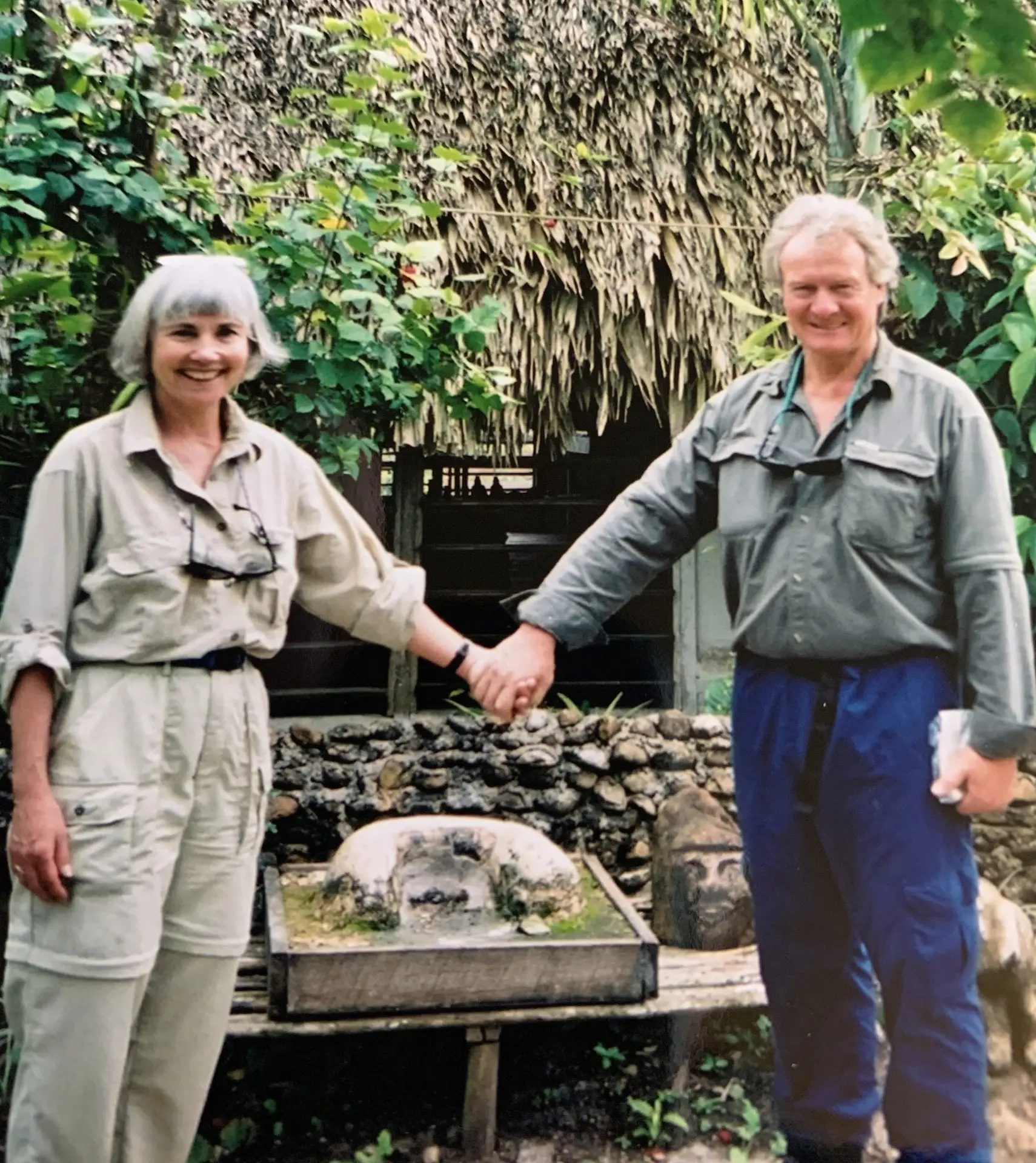
At 81, he’s had to let go of many things: his home in New Zealand, mountain climbing, some friends, Jaquie. But — and this is the thing that struck me most across the table — he does not feel like he is running out. He feels like there is still more to do. His glass doesn’t feel half empty. It feels half full.
The skill most worth developing, Rick says, is not strength or endurance or technical paddling ability. It is resilience — the capacity to take a hit, regroup, find the new angle, and keep going.
What is he proudest of? Running away from home at 15, with no formal schooling after that, and managing to build a great life — for himself, for his children, for Jaquie, and now even teaching at a university of all things. Although Rick may not have a formal university degree himself, he clearly has a “PhD in Pivoting,” which at the end of the day counts for a lot more.
Takeaway: Men plan, the gods laugh. Pivot and move on.
Photography As a Secondary Quest
When I told Rick that one of my quests in retirement is to populate my photo library with magnificent adventures so I can scroll through them on my iPad when they put me in a dementia ward, Rick laughed. “Been doing that for decades,” he said.
His digital archives are vast — decades of photographs meticulously stored in well-labeled folders on his laptop, each one organized by year and destination. We are both, in our different ways, building memories on purpose. Not just experiencing adventures in the moment, but capturing and curating them so that future us can re-experience what it felt like to be out there.
We both want more images for our future sepia-toned montages: more beaches, more sunrises, more faces of friends and family who’ve shared the journey. Because even when the wilderness fades from memory, a photograph can stir the feeling again — of friendships, salt air, and shared adventure.
Takeaway: Curate a photo library of your adventures so that future you, and others, can re-experience your happiest memories.
Epilogue: On Track?
At 81, Rick Davies is not the fastest paddler on the water. Right now, he’s not paddling at all — still rebuilding his shoulder strength after lymphoma. But he’s still at the gym. Still teaching young people to love the outdoors. Still walking through forests near his home. Still out there, with plans for more. He’s planning to clean spider webs from his kayak this weekend so he can hit Deep Cove with his son.
He told me something near the end of our four hours that I’ve been turning over ever since. His goal, he said, is simple: “To live. Really live. Until I die. To keep that adventurous spirit going as long as I can.”
At 65, I find myself measuring my own trajectory against Rick’s arc. Free-range child, check. Life-changing trip with a beloved wife, check. Kids, check. Multiple pivots to the travel formula, check. Cancer survived, check. Fitness and strength regime to boost healthspan, check. Still getting out there, check. Positive quest, check. Community of fellow adventurers — needs improvement. Magnificent photo library so I can have my Up moment scrolling through happy memories in the dementia ward, check.
If the Rick Davies model holds, I have a long way still to go. I find that genuinely thrilling.
Sea Kayaking After 60 - Challenges and Solutions
In May 2015, Rick and Jaquie delivered a presentation to a group of SKABC paddlers on the challenges older paddlers face and how to solve them and stay on the water. Click here to see their presentation.

What a fantastic interview you had with Rick — and resulting article! So many takeaways resonated with me. Boatloads of gratitude for all of them. Now, back to organizing the gazillion photos in my Photo Library! Yikes. 😉
~ Susan