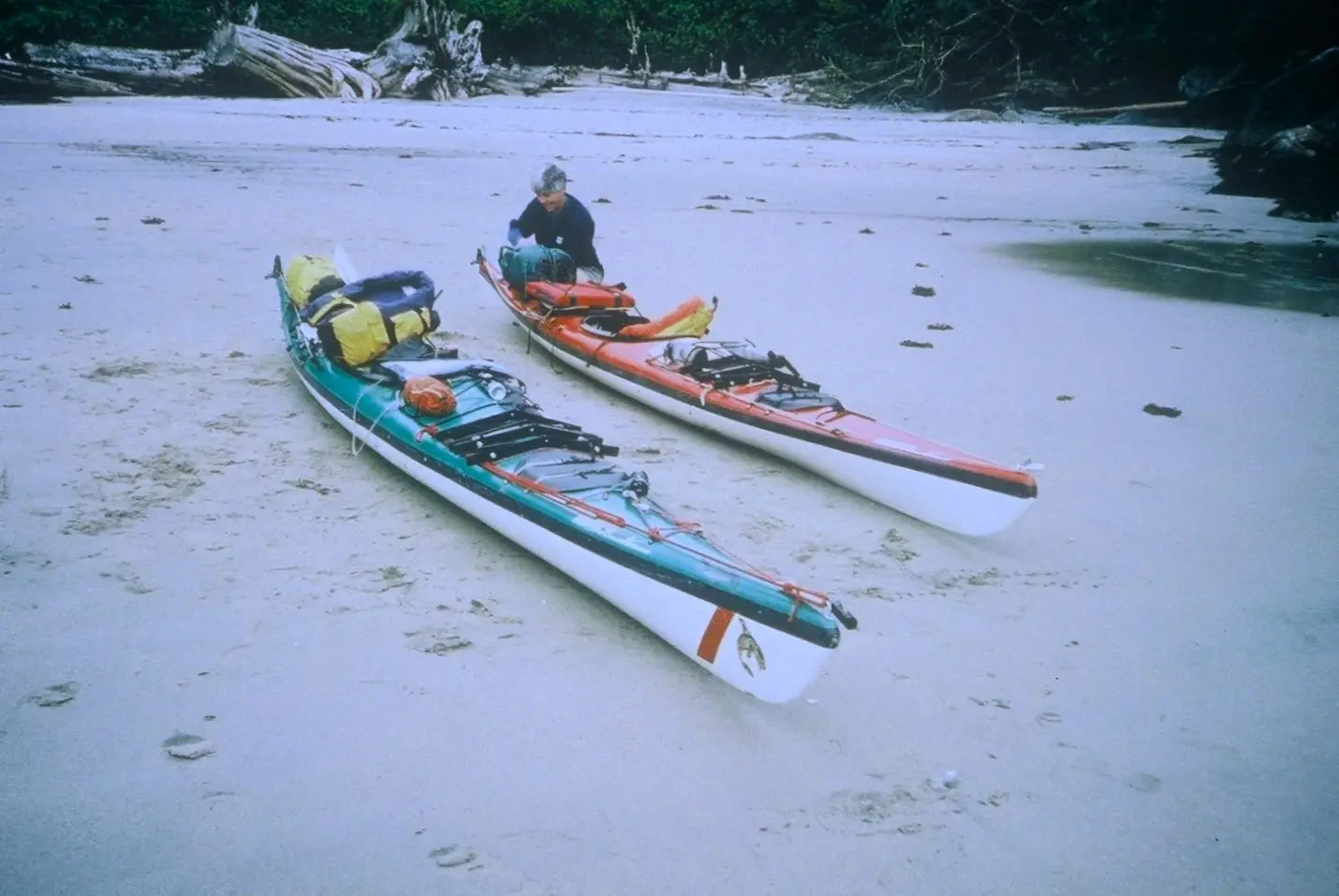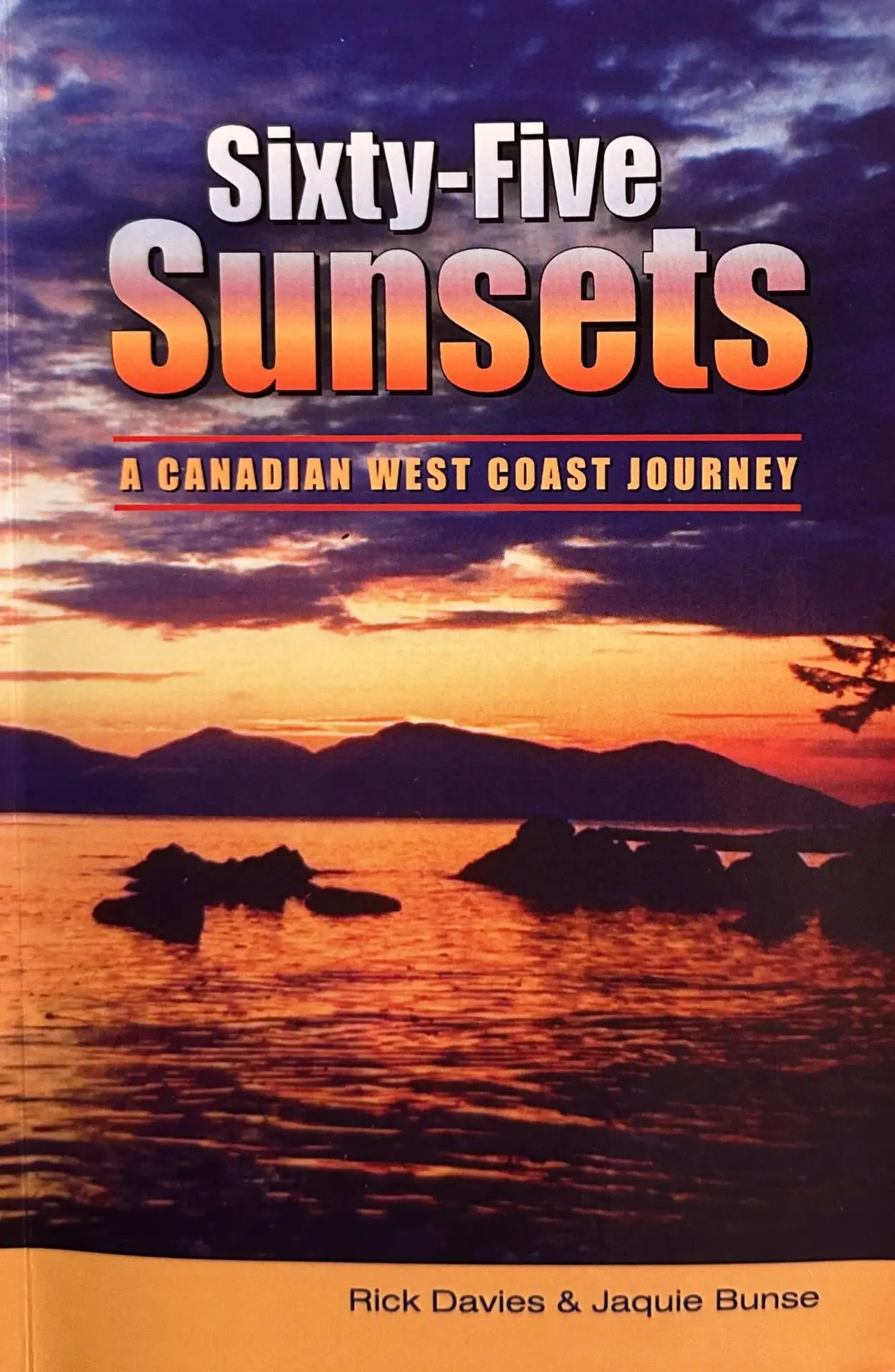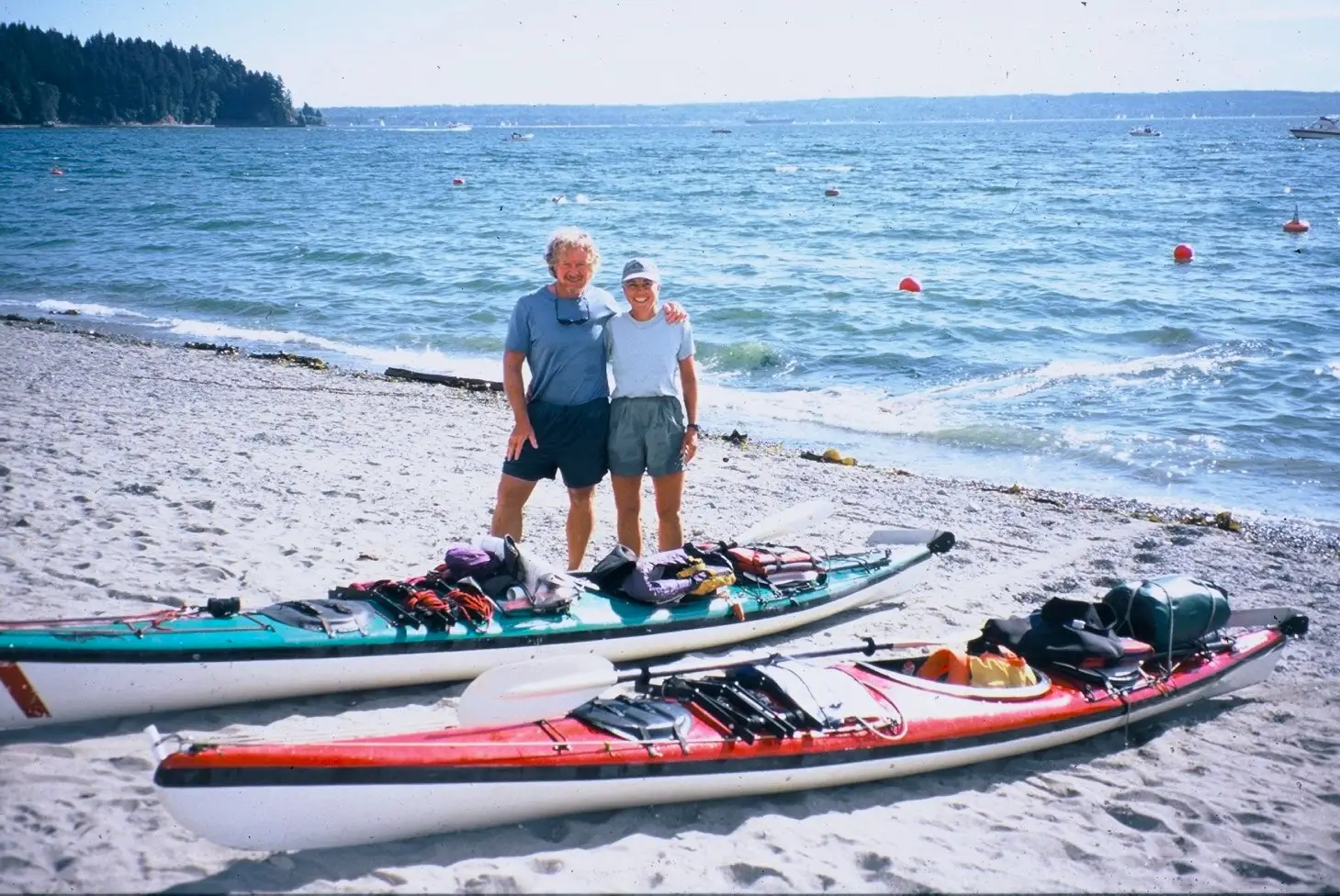
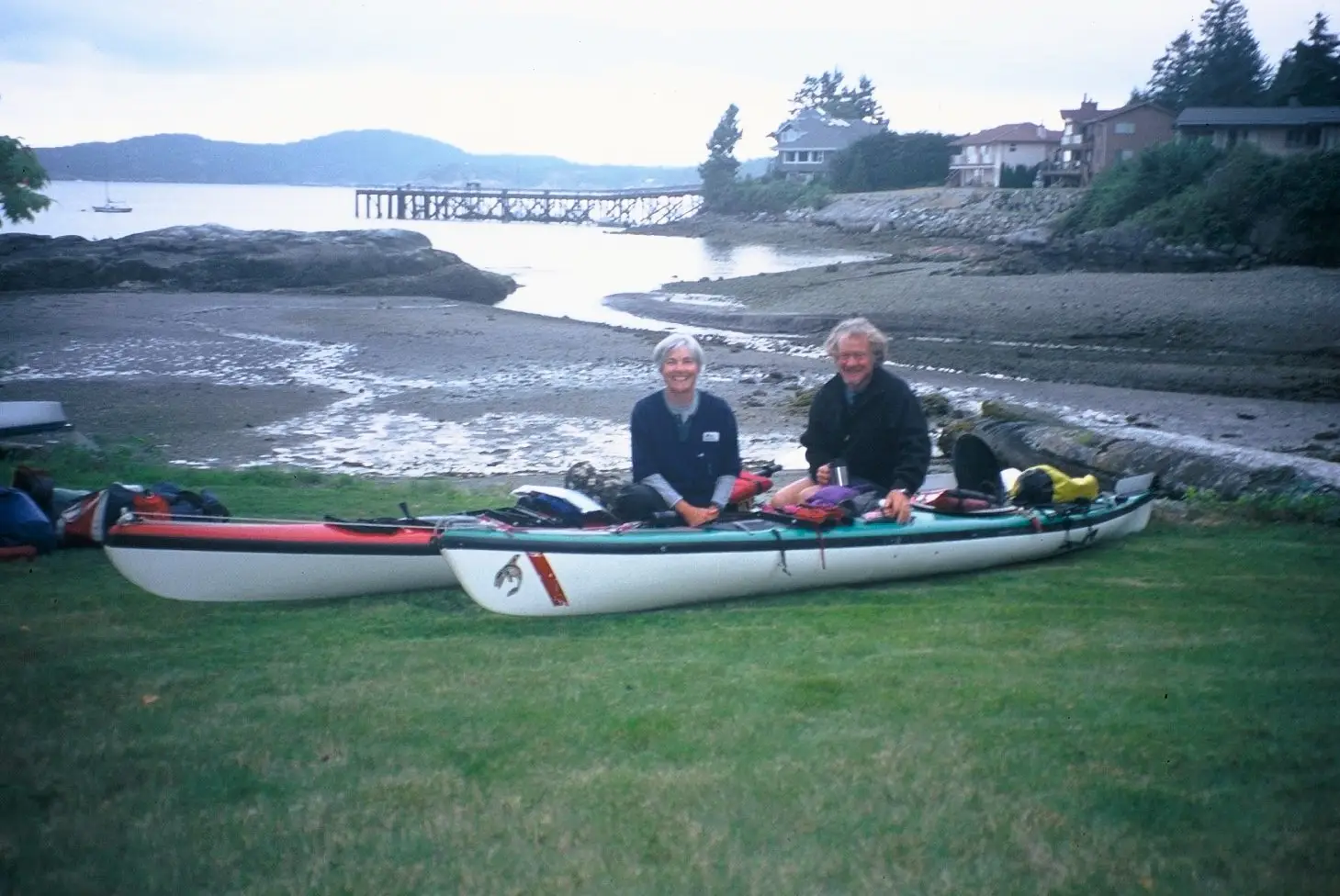
Authors Rick and Jaquie completed an 1100-km paddle from Alaska to Vancouver down the Inside Passage. They wrote about their journey in their book Sixty-Five Sunsets: A Canadian West Coast Journey and shared these top tips for older paddlers in a presentation to SKABC.
CHALLENGE | SOLUTION |
| Use “Scoop Rescue” technique as demonstrated in this YouTube video. Instead of trying to lift the boat, the rescuer flips it upright while it’s still full of water. Rescuer then rolls capsized kayak to lower the cockpit rim into the water facing swimmer. The swimmer floats into the cockpit on their back. Once the swimmer is in past their foot pegs, the rescuer “scoops” them up by righting the boat, using the swimmer’s paddle for extra leverage. The rescued kayaker is now upright but in a pool of water. Use a pump to empty the cockpit while the rescuer maintains stability. |
2. Strain compensating for kayak weathercocking in strong wind | Shorter, flatter boat. Less gear on deck. Rudder. |
3. Cramped legs after long periods in the kayak | Daily stretching. Bigger XL cockpit. Noodles or water bag under thighs. Gel seat cover. Replace seat. Adjust rudder pedals further away. Blowup paddle float and shim under front of seat to address pressure points. Change knee position to reduce cramping. |
4. Keeping dry and warm while paddling as metabolism slows | Dry suit with thin fleece. Choose your weather. Plan more shore days in your trip. Eat protein as well as carbs snacks to balance metabolism. |
5. Keeping dry and warm during storm days in camp | Larger boots to accommodate thicker socks. Roomy rain slicker and bib overpants. Thicker fleece pants and jacket. Bigger tarp. Plan gourmet meals for storm days. |
6. Carrying kayak down and back up the beach on multi-day trips | Buy a lighter Kevlar kayak. Cart with fat wheels. Soft plastic roller noodles with plastic pipe inside (or copper pipe) for strength. Skid on small logs. Carry kayak empty. Use slings and four people to a single, lift on sides instead of bow and stern. Plan your trip to land or launch at high tide. More trips up & down beach with smaller bags. Use large IKEA bags for carrying gear. Use climbing gear straps over shoulders to attach multiple small bags to reduce number of trips. |
7. Lifting kayak on and off vehicle, especially when living or kayaking alone | Lightweight kayak. Buy a lower vehicle. Use a trailer. Pulley system in garage. “Side-loading lift-assist” roof rack (e.g Thule Hullavator Pro and the Yakima ShowDown). Keep kayak at a beach location. Use a bike & trailer or cart with fat wheels if near a beach. Sell your kayak and rent wherever you go. Move house closer to the water. Kayak buddy to help load. |
8. Reading charts and tide tables on water with poor eyesight | Glasses case secured in chart case. Enlarged photocopy of part of chart. Navigation app or chart photos on cell phone or iPad that can be zoomed in and out. Magnifying glass. Prescription sunglasses. |
9. Sore butt and hamstrings after sitting in boat for periods | Gel seat. Noodles under thighs. Pedals further away. Bigger XL cockpit to stretch your legs out. |
10. Not enough upper-body strength to re-enter during self-rescues or being rescued | Stirrup around coaming (make sure it will float). Use tow line for stirrup. Paddle float outrigger to stabilize kayak for re-entry. |
11. Back problems while cooking and sitting around camp | Carry a lightweight folding table and camp chair offering back support. Put cooking gear on tall log or use driftwood to build a waist-high bench. |
12. Shoulder problems while paddling | Reduce cadence and amount of effort. Lightweight carbon-fibre paddle. Shorter paddle with smaller paddle blade. Thinner (Quill-type) paddle. Avoid feathering. Angled-shaft paddle. Work on torso rotation. |
13. Carpal tunnel or sore wrists | Unfeather your paddle (straight-blades). Uriel stretchy wrist brace that supports wrist without covering thumbs. |
14. Discomfort sleeping | Drybag or rolled up fleece under knees. Experiment with pillow height and size. Thicker sleeping pad. |
15. Blood sugar ups and downs, especially in cold, wet weather | Carry snacks in PFD. Warn companions of your condition. |
16. Different paddling speeds within group | Carefully choose kayak companions. Discuss honestly at the pre-trip meeting. All commit to comfortable speed for slowest member. |
17. Different aims for the trip | Carefully choose kayak companions. Discuss honestly at the pre-trip meeting. Don’t assume everyone kayaks for the same reason. |
18. Latent medical conditions that could incapacitate a paddler | Travel in a group of at least four. All take a wilderness first aid course. Choose your route carefully with pre-planned off-ramps. Double the time for the trip. Have a double kayak in the party. |
19. Hands going numb on paddle | Paddling gloves. Move thumb to same side as fingers. |
20. Forgetting where items are stowed on the kayak, in camp or at home | Always use the same system for packing, storing gear in the boat, around camp and at home. Have laminated checklists in your kayak and at home. Train yourself to put things back where they belong. Have bags with different colours for front hatch, cockpit and rear hatch. Use strip of duct tape to label contents. |
21. Kayak feels tippy | Buy kayak with wider beam. Travel in a double. Outrigger device. |
22. Couple with unequal paddling strengths | Use a double kayak. Long tow rope. |
23. Stress rushing to load & unload when launching and landing | Do your trips with similar people. Arrive an hour earlier at the launch. Plan your trip with a 30% time “fudge factor.” |
24. Desire for low daily mileage | Pick your group carefully. Research intermediate camps. Resist competitive culture to go further and faster. |
25. Desire to avoid crowds | Paddle mid-week. Select gear for off-season or winter paddling. Research less crowded areas. |
26. Safety concerns around desire to paddle solo or no-one to go with | Equip with proper thermal protection assuming cold water immersion. Equip for a night out, even on day trips. Play the what-if game and then equip for every possible scenario. InReach Spot 2-way Satellite Phone. VHF radio. Cell phone if within cell coverage area (consider texting instead of calling as your phone will search for service while you paddle). Leave detailed trip plan with a reliable person. Develop a bomb-proof roll. |
27. Difficulty lifting heavy bags | Split into a series of smaller bags. Different colours for front hatch, cockpit and rear hatch. This is easier to pack in a vehicle and bags can be laid beside the appropriate hatch for quicker loading. |
28. Difficulty getting gear from your apartment to vehicle | Four-wheeled folding cart sized to fit the elevator and passageways. |
29. Difficulty getting in and out of tent | Taller/bigger tent. Taller vestibule. Shoes that slip on and off easily. Dig a hole as an access step at tent door. |
30. Difficulty getting bear hang line rigged high enough | Use hauling line, stuff sack with a small rock inside as a leader to toss over branch. Followed by a regular line to haul up bags. Use fishing line as a leader. Plan trip around campsites with installed bear caches. As a last resort, store food in waterproof bags tightly sealed in kayak cockpit. |