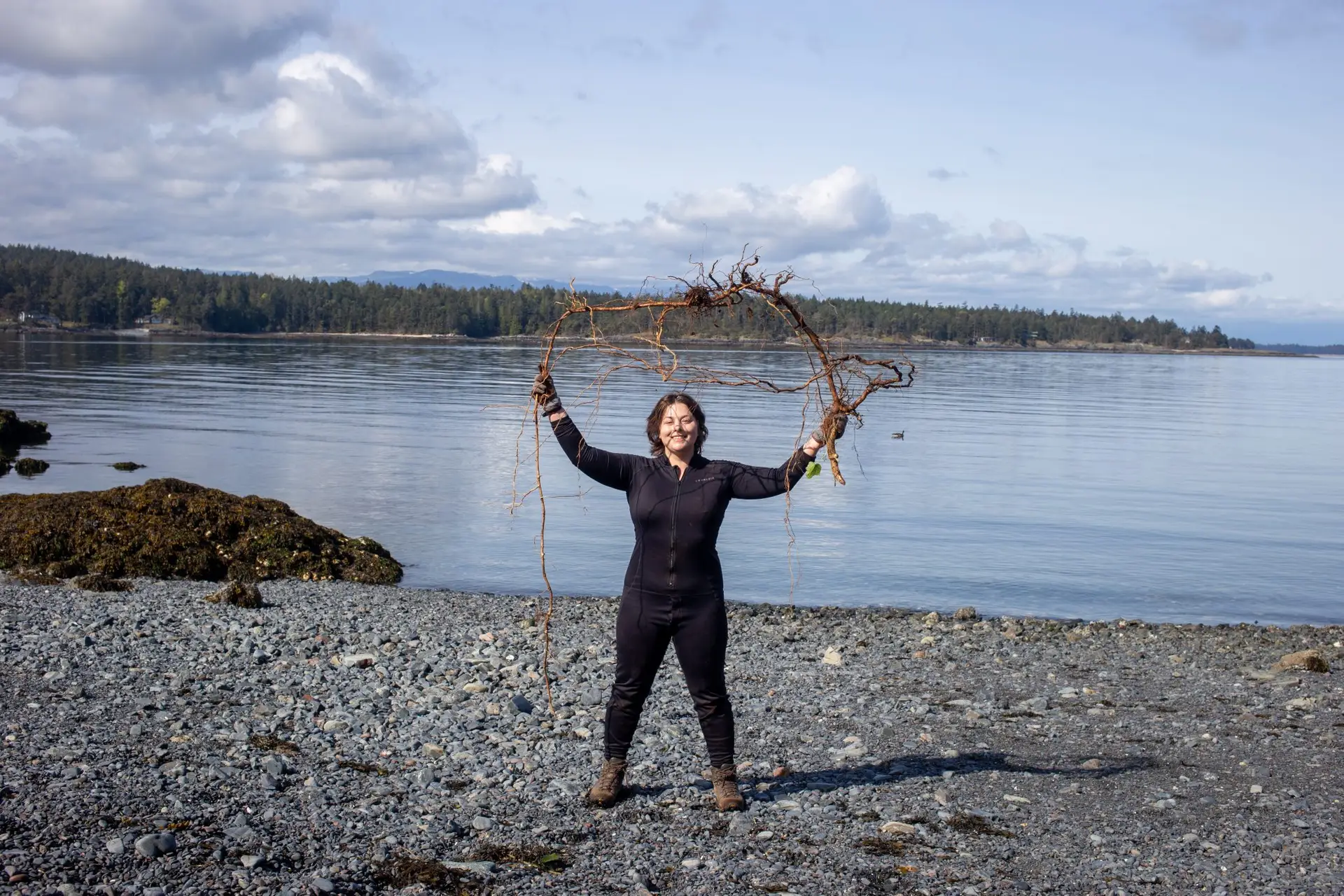
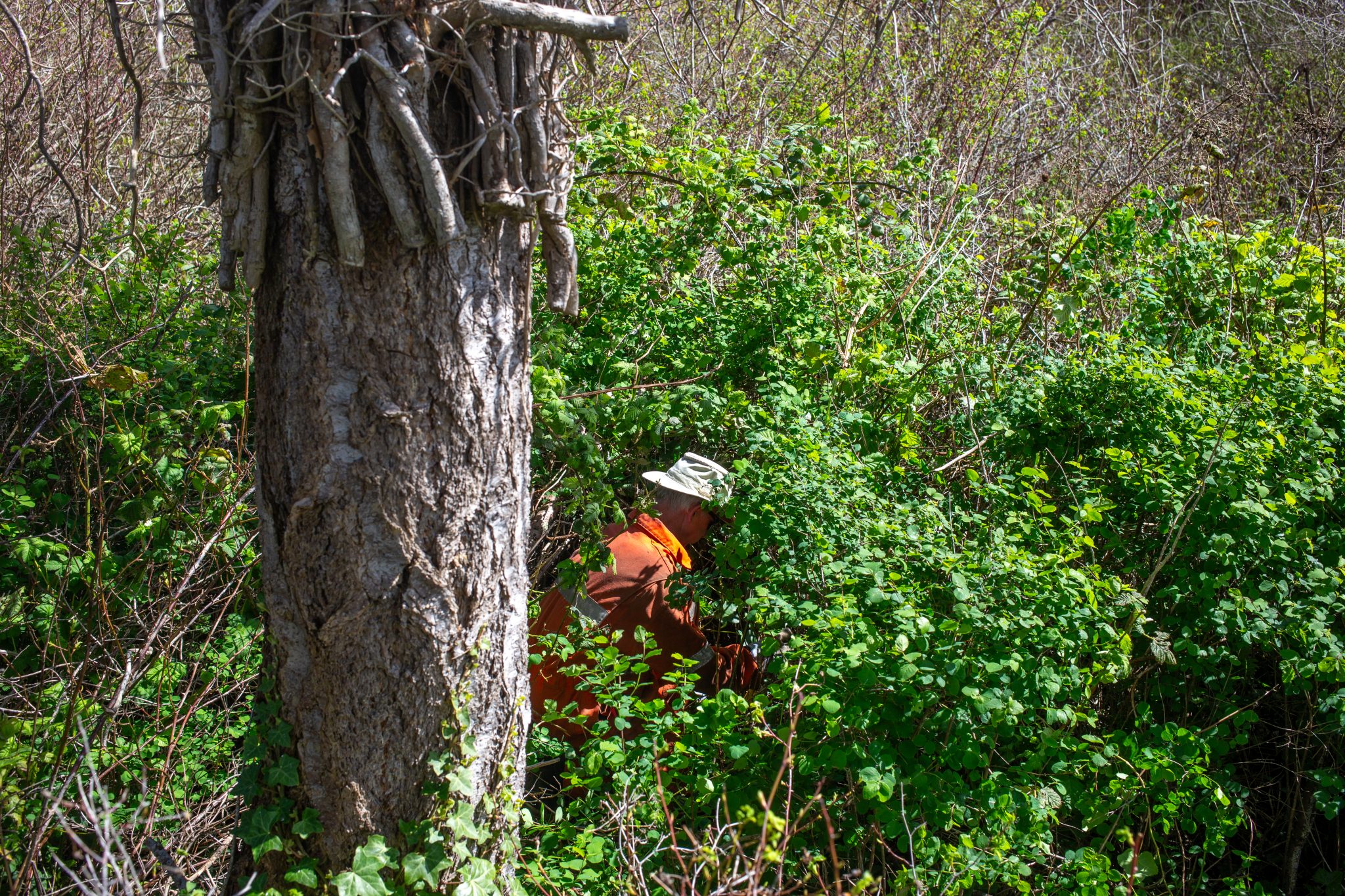
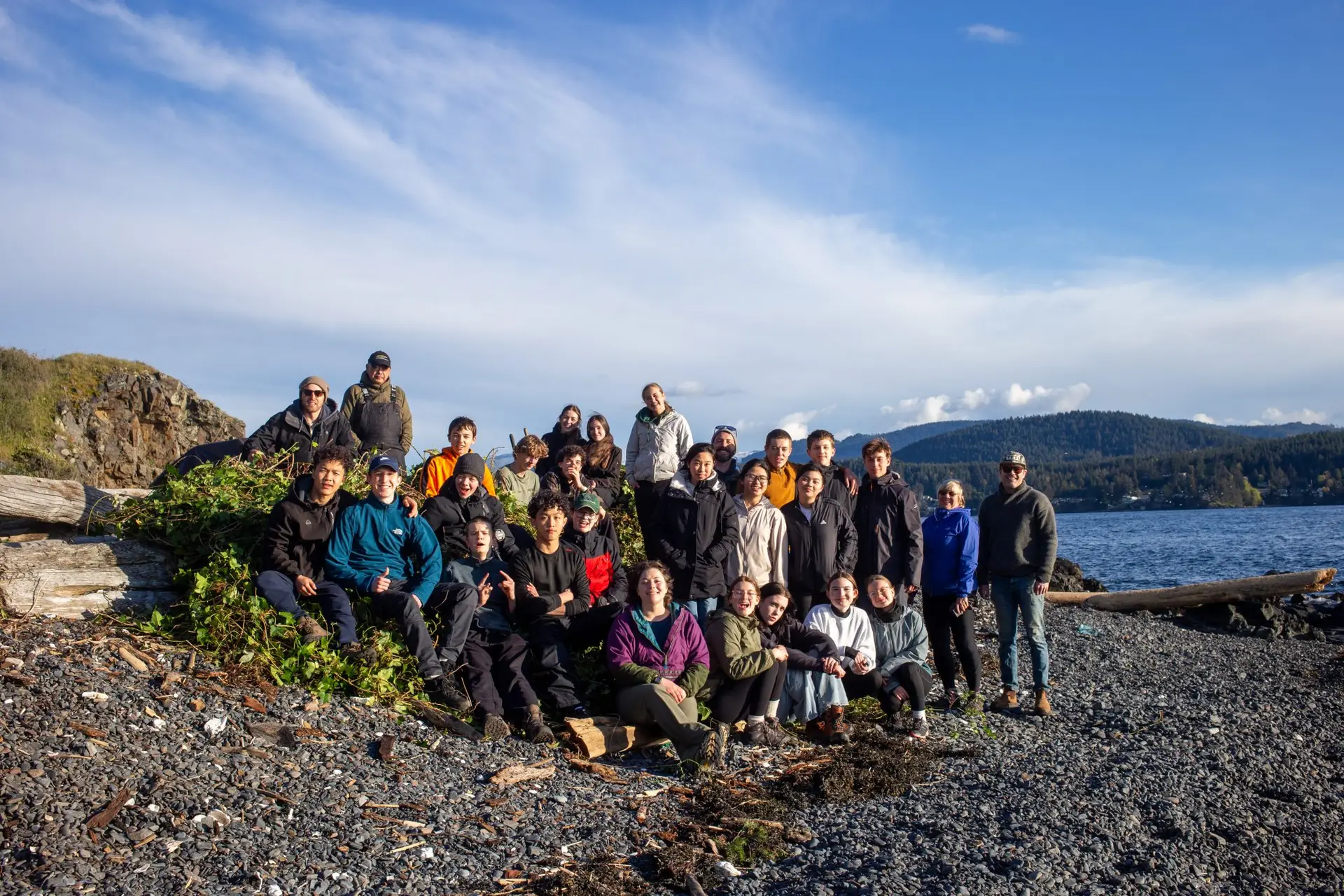
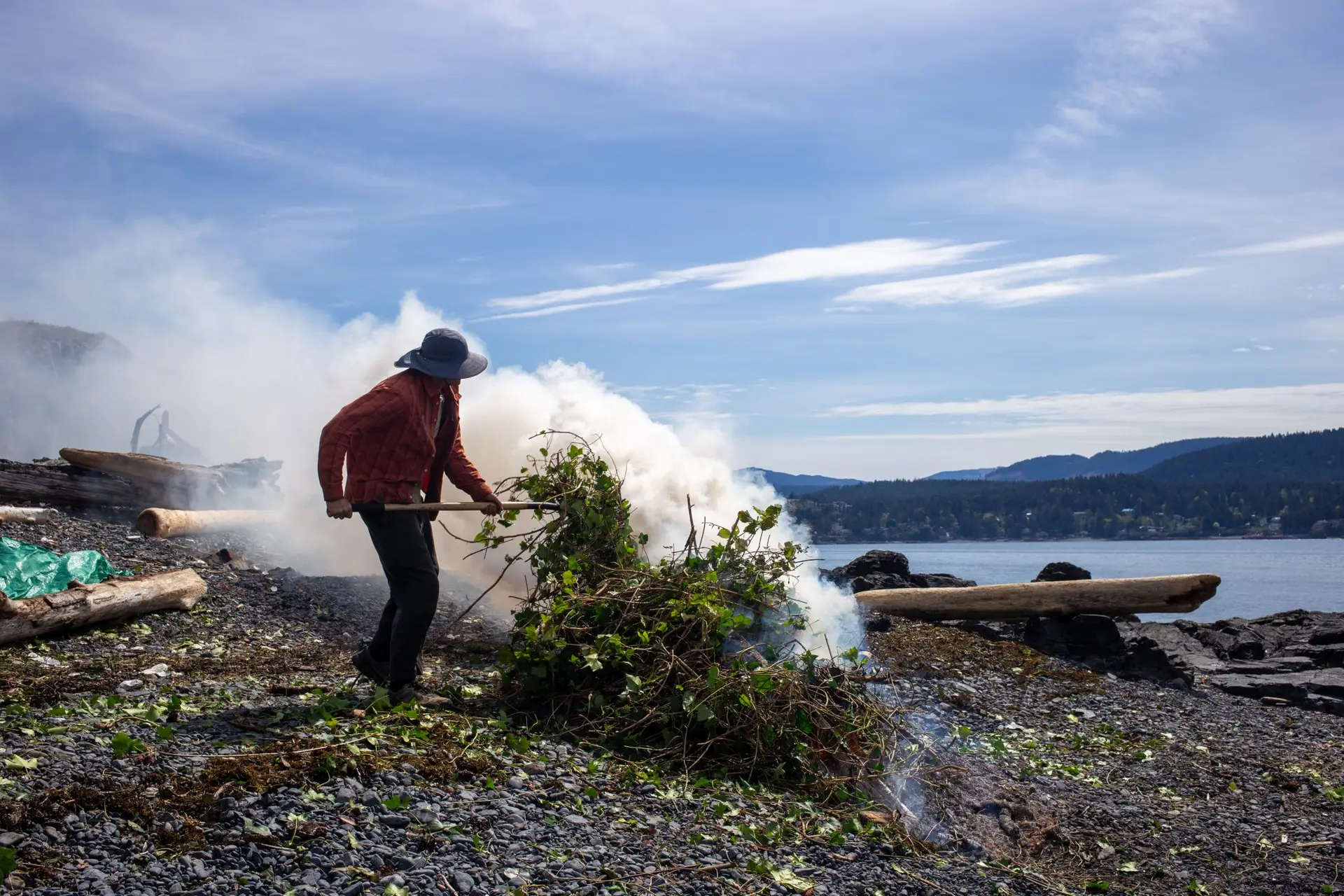
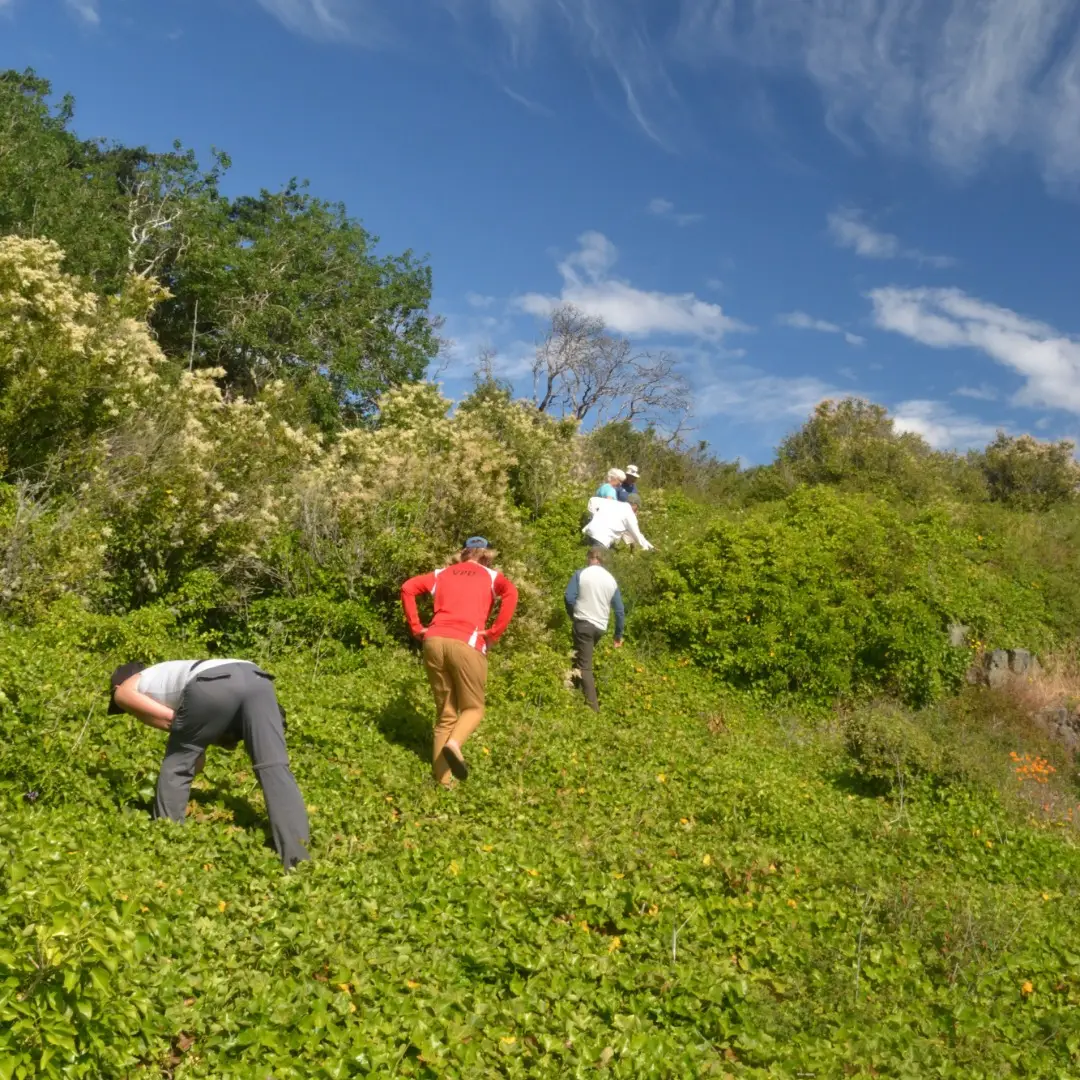
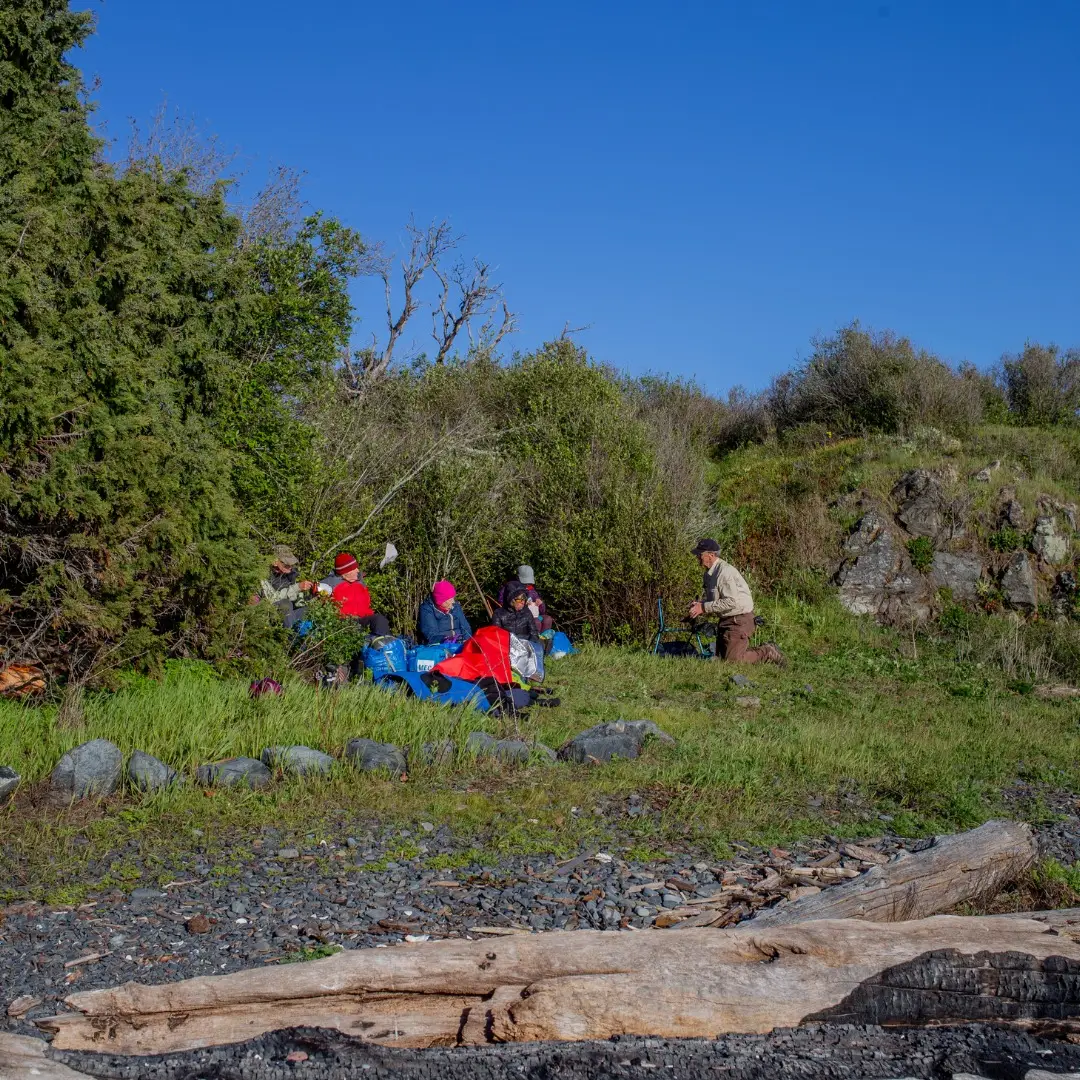
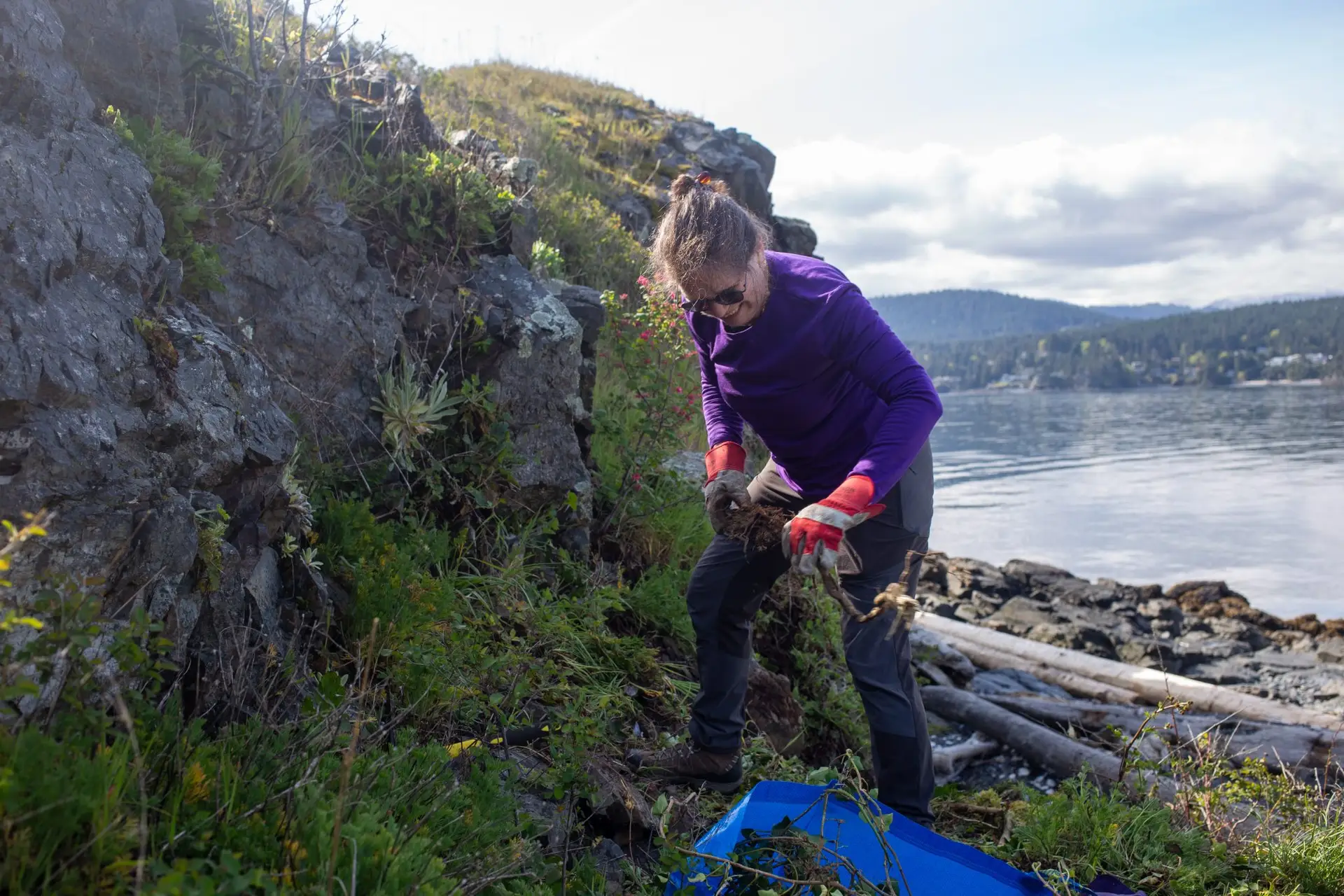
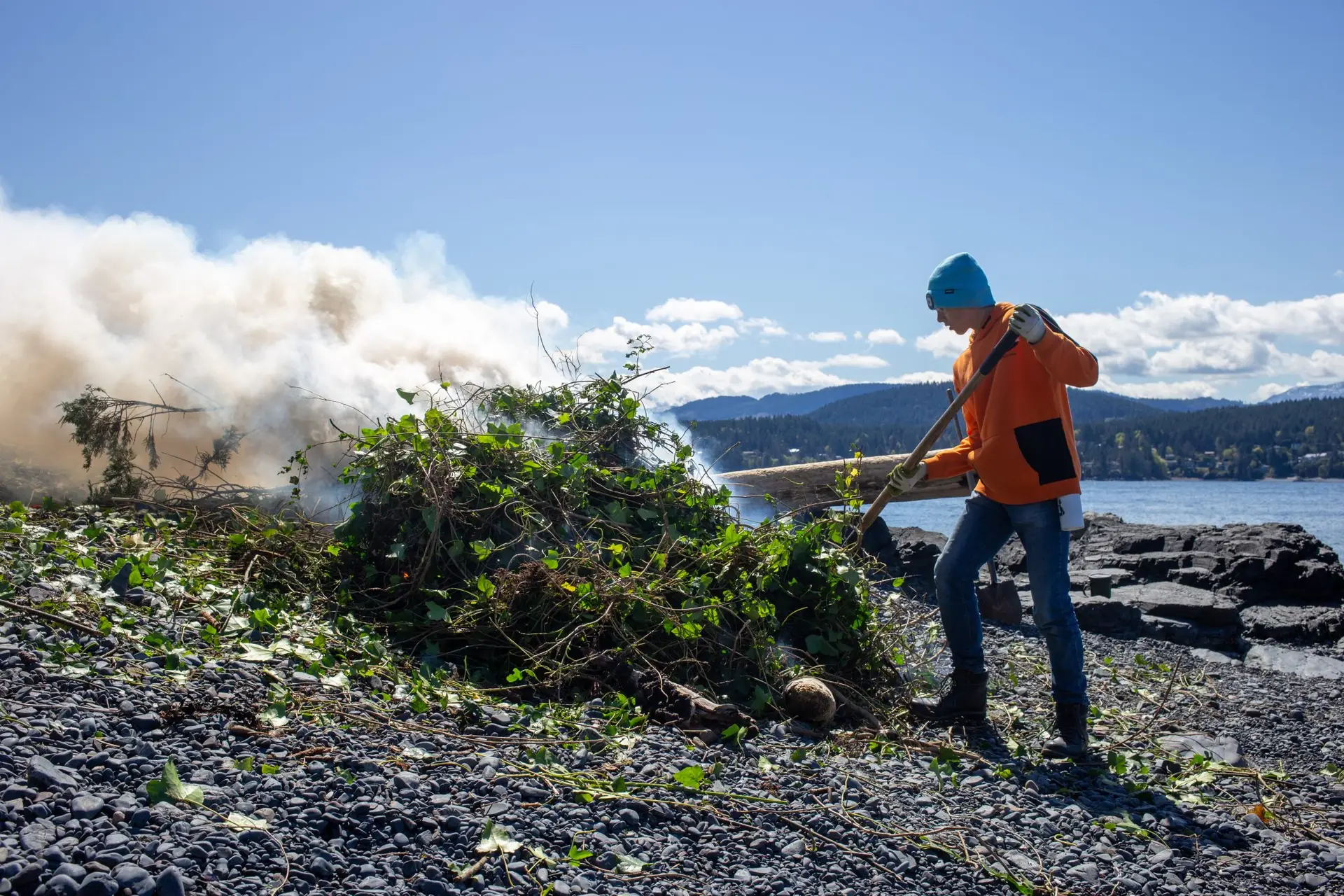
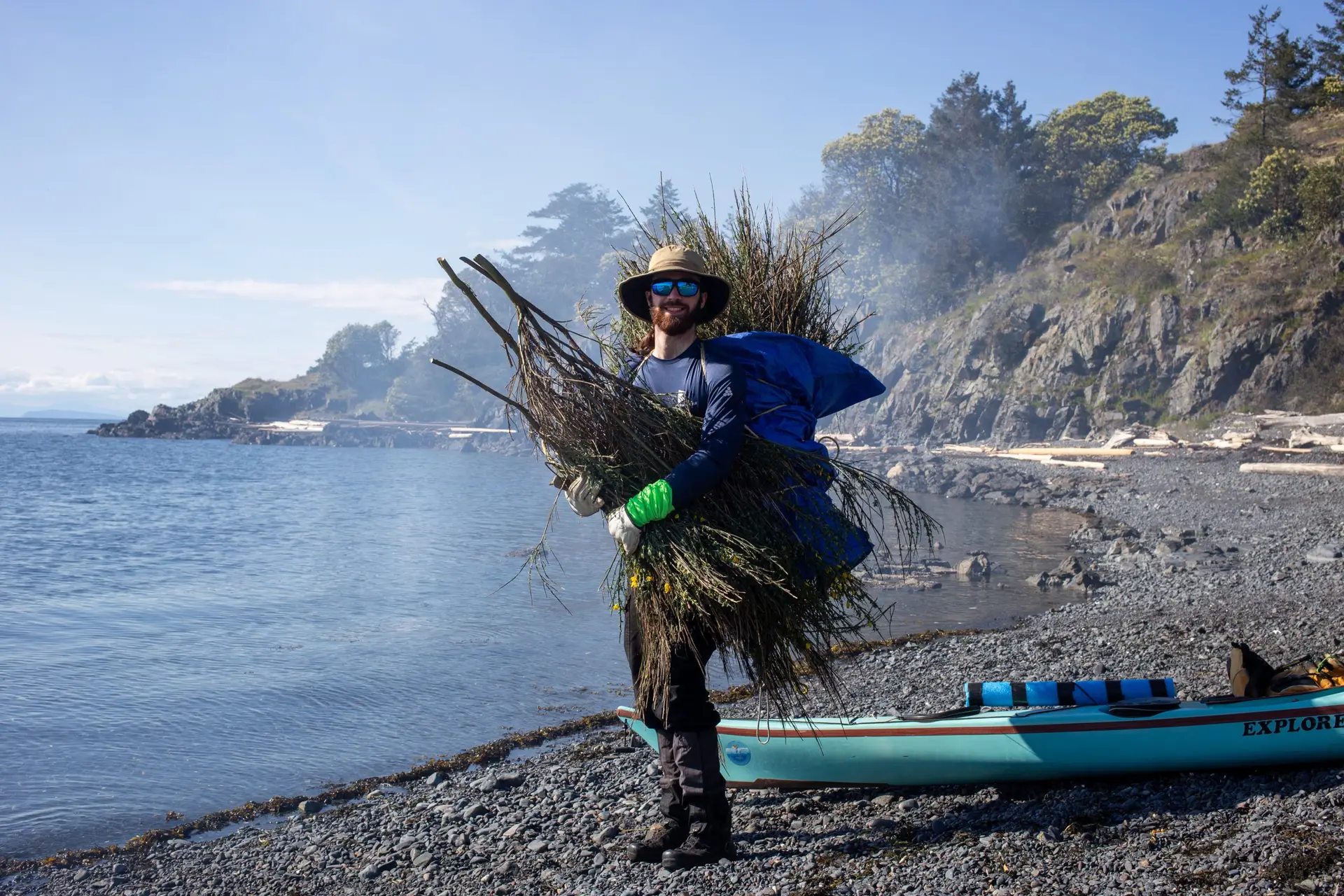
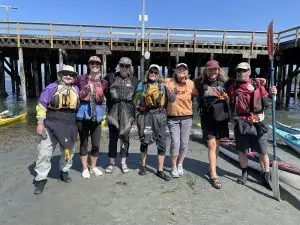
From April 15-20, 2026, a record-breaking 84 volunteers removed and burned approximately eight metric tonnes of invasive species! Primarily English ivy, Himalayan blackberry, Scotch broom, and Periwinkle.
Initially planned for four days, the event was extended after massive volunteer interest and early signups. The extension allowed for volunteers to spread out over the six days, often only staying for 1-2 nights, and for two different school groups to bookend the event.
As Gerald has limiting camping space (and is only allowed during this event), spreading volunteers out was necessary!
We lucked out with weather, with no cancellations due to wind or waves. Other than a light sprinkle on our fourth night, we were treated to calm, warm days, sunshine, and beautiful sunsets.
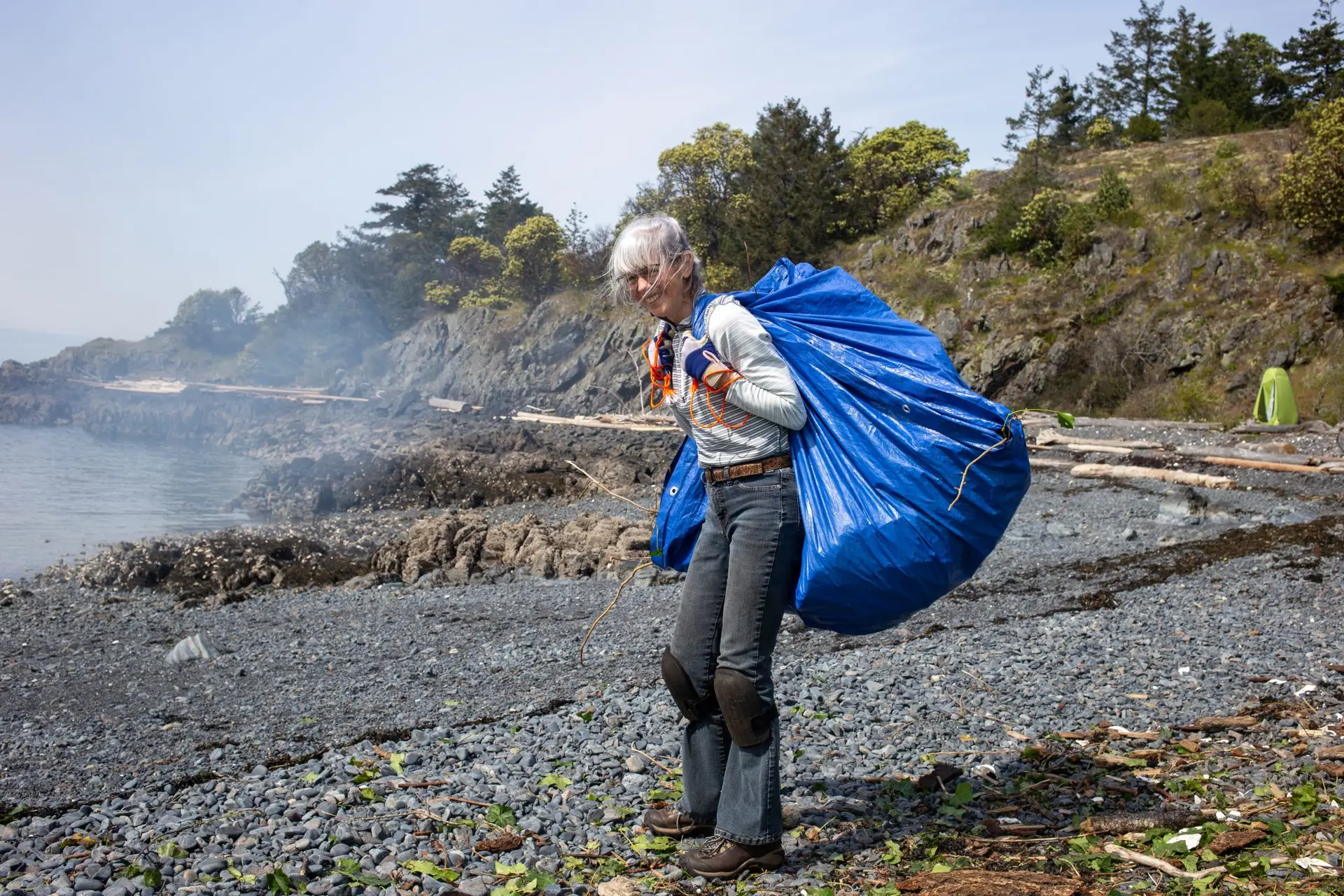
Over the course of the event, volunteers removed an estimated 616 “person-loads” of invasive vegetation. Our counting system is simple: if it takes one volunteer to transport a tarp load, one pebble is added to a hard hat near the burn pile – if two volunteers are needed, two are added and so on.
Using a conservative estimate of 30 pounds per load, the total biomass cleared reached roughly eight metric tonnes, about the weight of two adult orcas!
To illustrate just how monumental this event was, our April 2025 event saw 28 volunteers remove 238 tarploads. This year we practically tripled our typical efforts!
After tracking volunteer hours for each of our 13 Gerald Island events, this year accounted for approximately 25% of volunteer effort over the project’s history!
“At a time when so much in our world feels uncertain, this work offers something tangible. You can see the impact of your effort right away and know you’re helping restore something important.”
— David Littlejohn
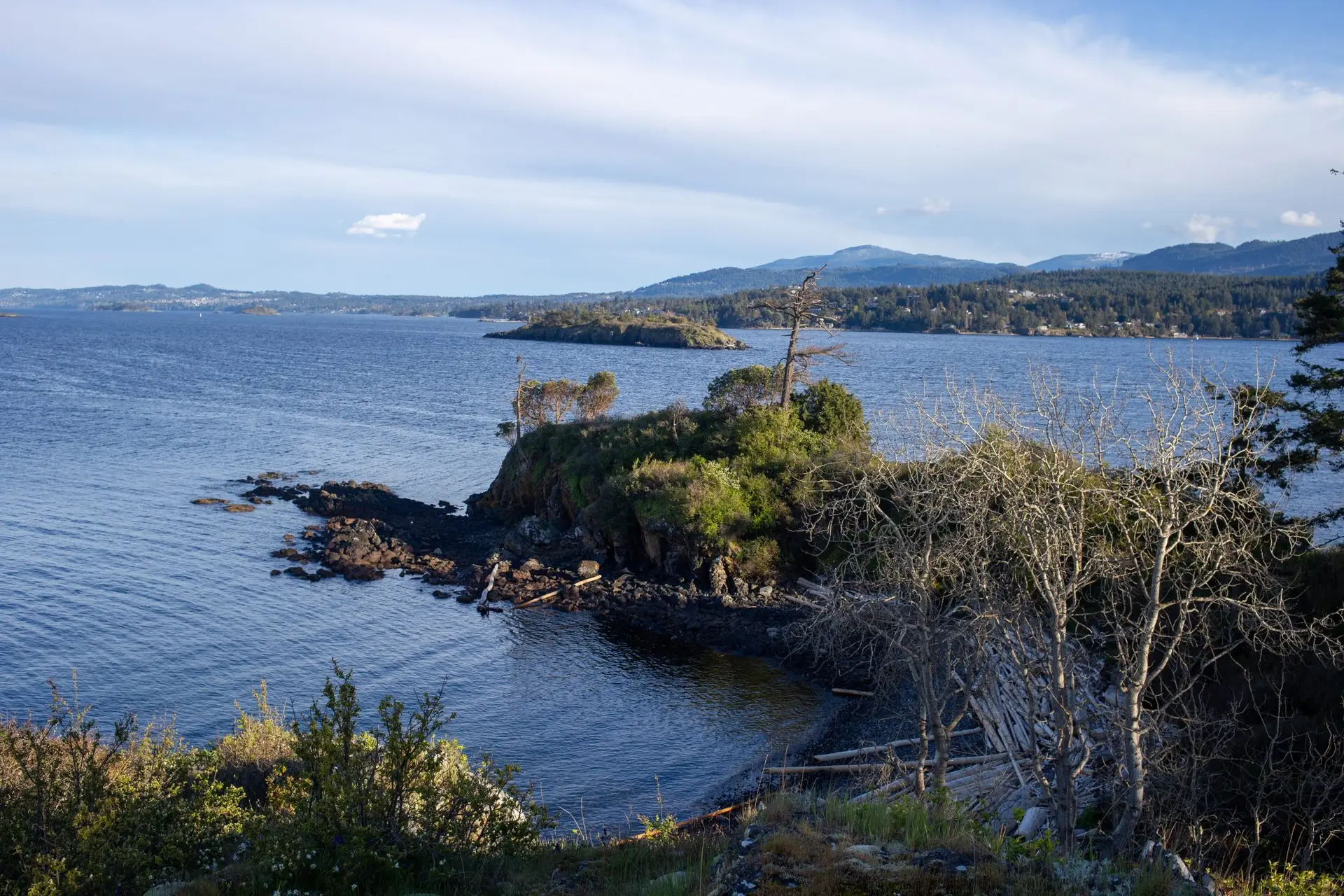
This year’s work also marked a major milestone for the project. For the first time, volunteers were able to fully circumnavigate the nearly 30-acre island using newly established trail systems. These trails improve access for restoration work while helping protect sensitive coastal bluff ecosystems from trampling.
The work also unearthed and removed hazardous debris from a long-abandoned homestead (read more on the history of Gerald Island here).
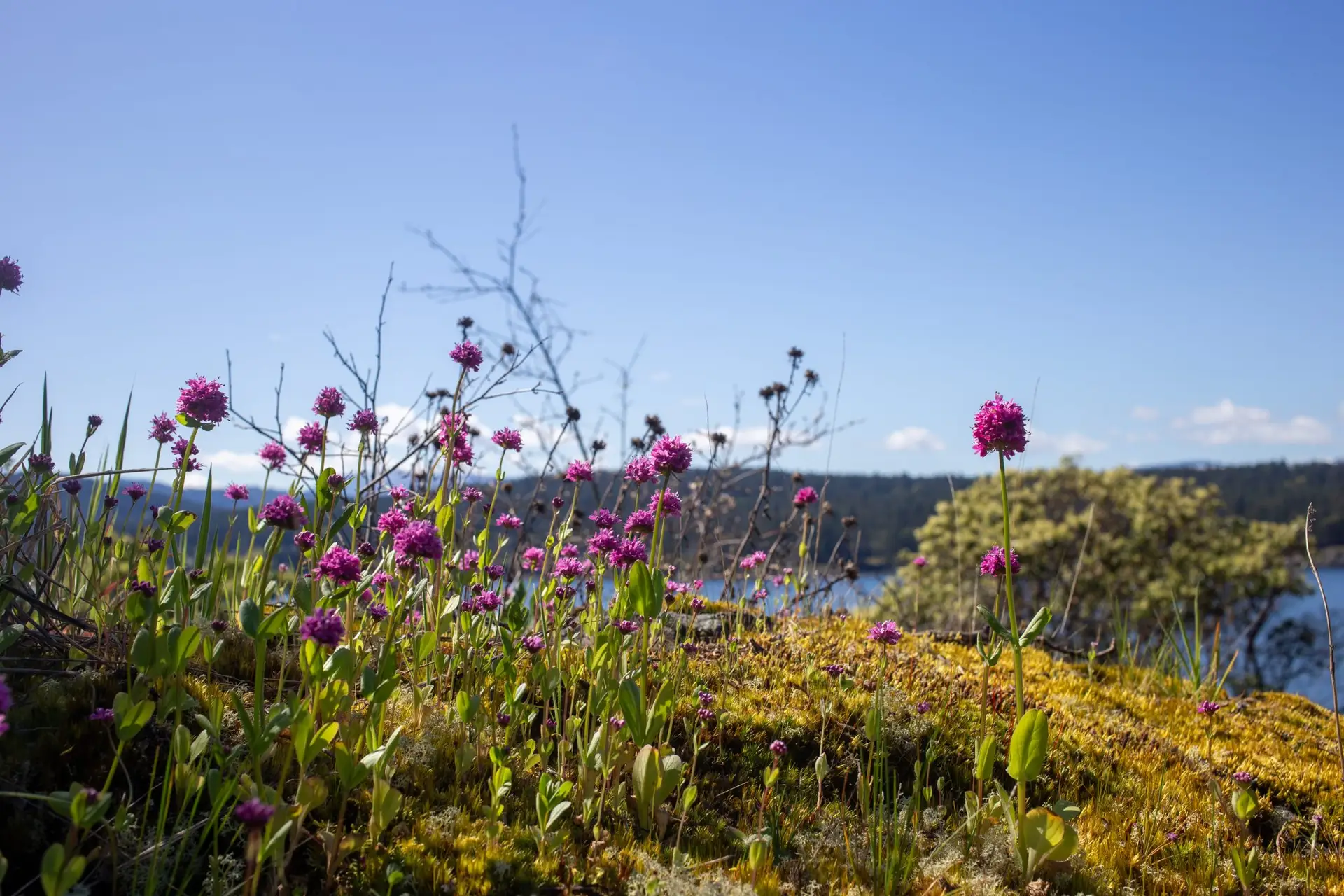
It is incredible to see just how far the project has come since it’s inception in 2017. At that time, English ivy covered multiple bluffs, the entire camping area, and much of the main beach. Now every coastal bluff on Gerald Island is largely ivy & invasives free, with strong indications of ecological recovery. Native species such as chocolate lilies, fawn lilies, camas, and coastal wood ferns are re-establishing across these previously impacted areas.
Before & After
“This project shows what’s possible when community members come together to care for the coast,” explains Sam Cutcliffe, BC Marine Trails Communications & Stewardship Coordinator. “Returning volunteers are continually surprised by the speed of ecological recovery on the island,” he continued.
Volunteers continually remark on the satisfaction received from clearing invasives, and to the strong sense of community found on Gerald Island. Participants are always quick to find new friends on island – easy to do with a common goal, and lots of time to mingle around the campfire!
The next cleanup is scheduled for fall 2026. Stay tuned for exact dates – typically the last weekend of September, or first of October.
This spring’s event was supported by Athletic Brewing’s ‘Two For The Trails’ fund, and 4TVI.