
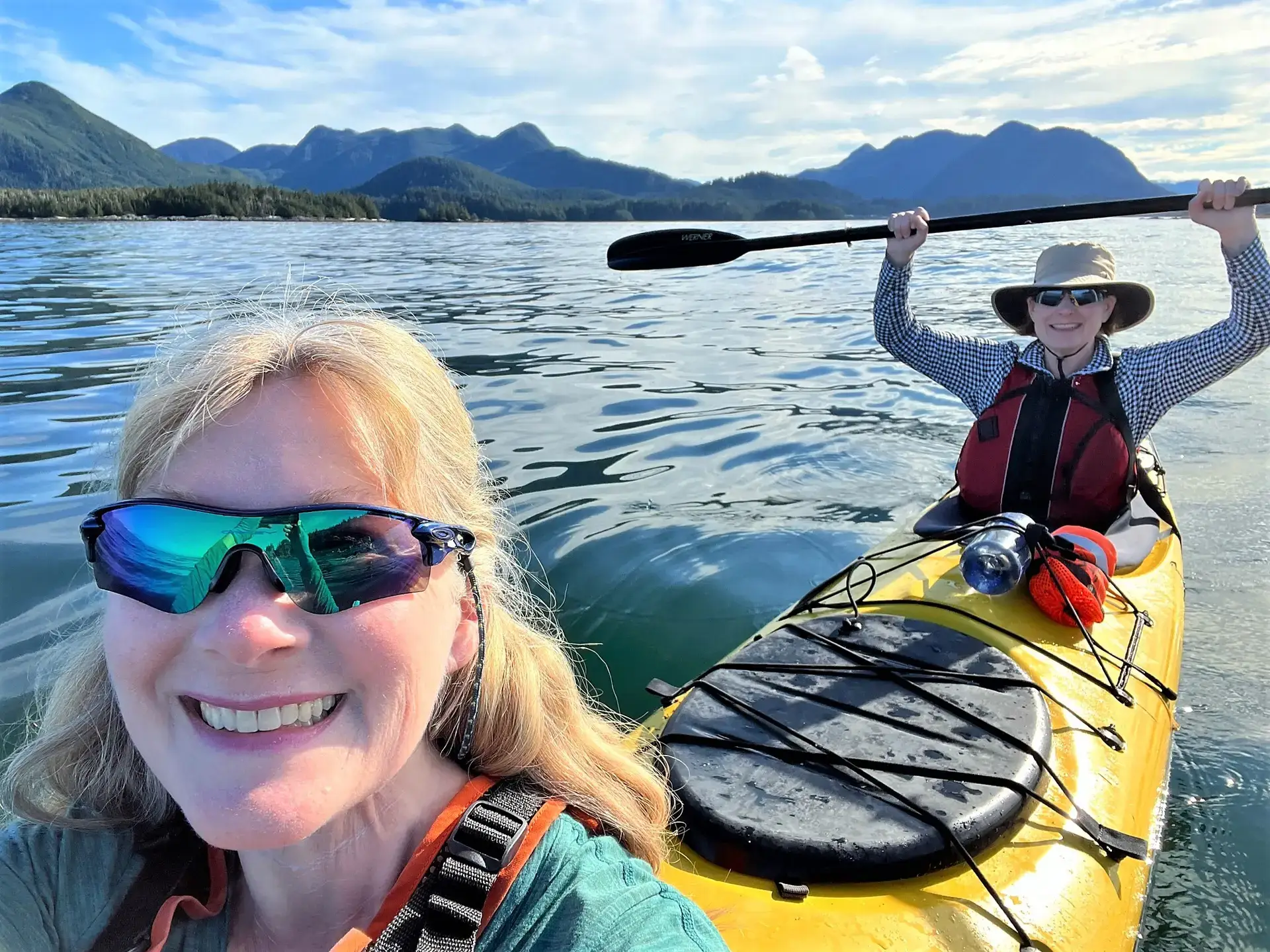
Where the mind goes, the body will follow.
—Arnold Schwarzenegger
It is not true that people stop pursuing dreams because they grow old; they grow old because they stop pursuing dreams.
—Gabriel García Márquez
You’re only as old, or as young, as your next adventure.
—Jerry Kaye
You’re reading about a far-flung paddling adventure, tracing routes on the BC Marine Trails map, or maybe a friend has invited you out for a weekend day-paddle. In an instant, you feel that familiar yearning to be out there. But lately, a part of you wonders: Can I still do this?
The answer is yes—absolutely! But maybe a little differently.
Aging doesn’t mean stopping. It means fine-tuning your travel formula to give your spirit the salt-sprayed adventure it craves and your body the kindness it deserves. For us, that’s meant a more relaxed pace, more trips with friends and family, a few extra comforts, and yes—packing a few more ibuprofen tablets for Jerry.
After conversations with many kindred spirits still paddling in their 70s and 80s, this article contains our top twelve tips for how to keep going as the years roll on.
In a future article, we’ll profile 81-year-old Rick Davies, world adventurer and author of the book Sixty-Five Sunsets: A Canadian West Coast Journey, about his paddle from Alaska to Vancouver. Rick is a cancer survivor and still teaches outdoor recreation at Capilano University. We’ll reveal how he keeps going and what he plans next.
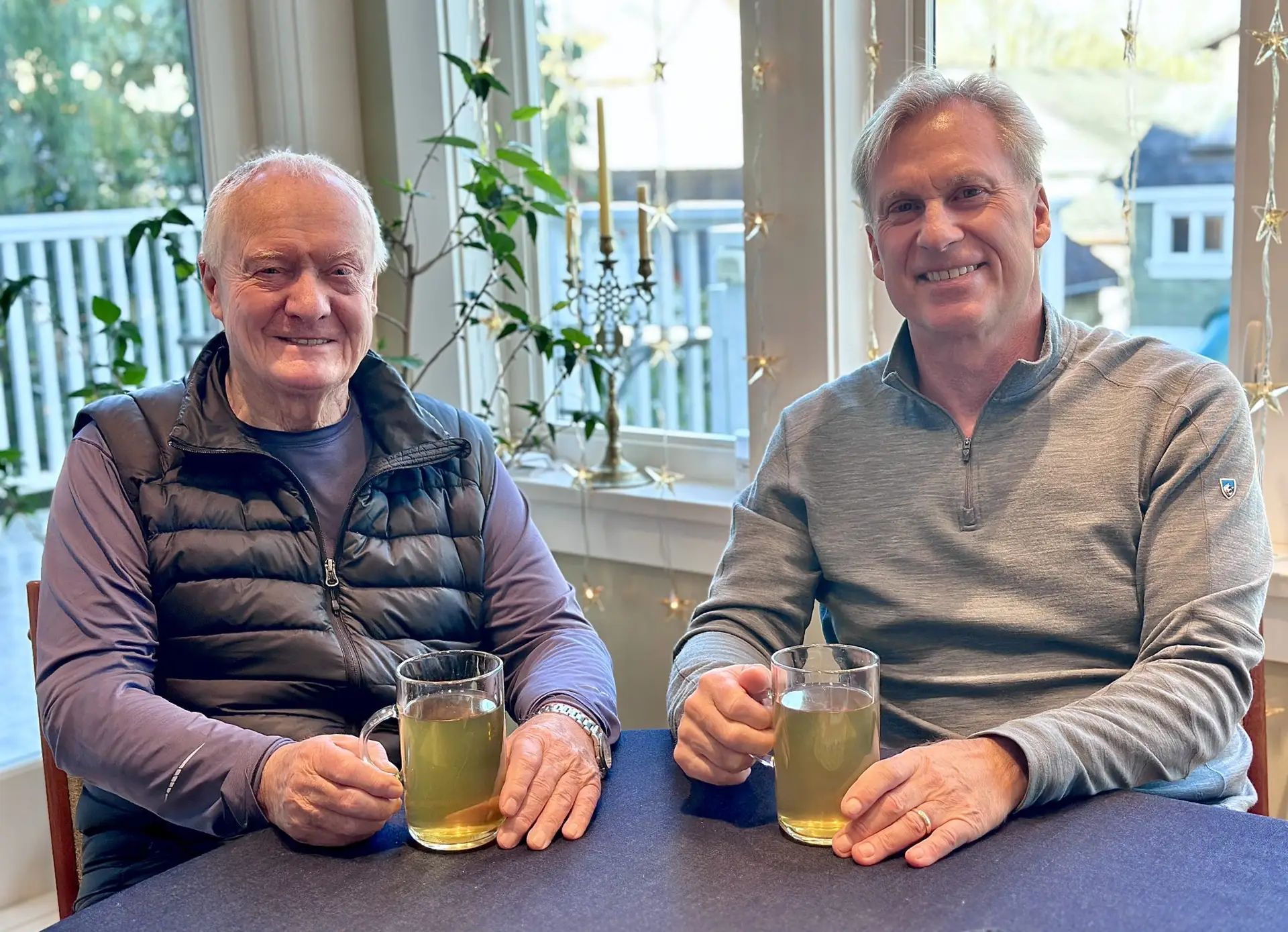
- Keep a Resilient Mindset
Do not go gentle into that good night,
Old age should burn and rave at close of day;
Rage, rage against the dying of the light.
—Dylan Thomas
The active seniors we’ve spoken with have all experienced setbacks, sometimes many of them: cancer, heart attack, stroke, back surgery, hip or knee replacement, job loss, divorce, death of a spouse, or kids lost to addiction. Those who remain active have all found a path through their loss to a vital life on the other side. The obvious lesson: see yourself as someone who bounces back, no matter what. Never give up.
Mindset matters. Don’t think of yourself as “old”, “frail”, or “disabled”. Labels like these can powerfully shape how you see yourself and shrink your adventure horizons. Stand tall, shoulders back. Remind yourself that you are strong, wise and capable. Define yourself by what you can do, not by your limitations. Studies led by Yale researcher Dr. Becca Levy found that individuals with a positive, rather than negative, outlook on aging lived 7.5 years longer on average, even when controlling for age, gender, and initial health.
When Jerry left the hospital after his colon cancer treatments, he had lost 48 pounds. With stooped shoulders and sunken eyes, he looked ill, frail, defeated. But Jerry never saw himself that way. Through it all, he held onto his inner core as an adventurer and someone who “lives strong”. Gradually, he built his body back up, returned to work, and had more adventures. If you are struggling with a setback, try to see yourself not as a victim of misfortune, but as someone who overcomes challenges—the hero of your own life’s story.
2. Keep The Fire Burning.
As we grow older, the spark to keep paddling can feel like it’s dimming. But it never really disappears. You just have to feed it with inspiration, attention, and a sense of fun until it glows again. For inspiration, surround yourself with active friends. Scroll through the BC Marine Trails map and zoom into places that catch your eye. Dive into Coastal Café articles on the BCMT website, paddling blogs, books, YouTube videos, Netflix documentaries, public lectures, and outdoor film festivals. Sometimes a single photo, sentence, or chance encounter is all it takes to light things up. Consider volunteering with BC Marine Trails. Judging by the number of BCMT volunteers still paddling and helping with beach clean-ups late in their 70s and beyond, it just might be a fountain of youth.
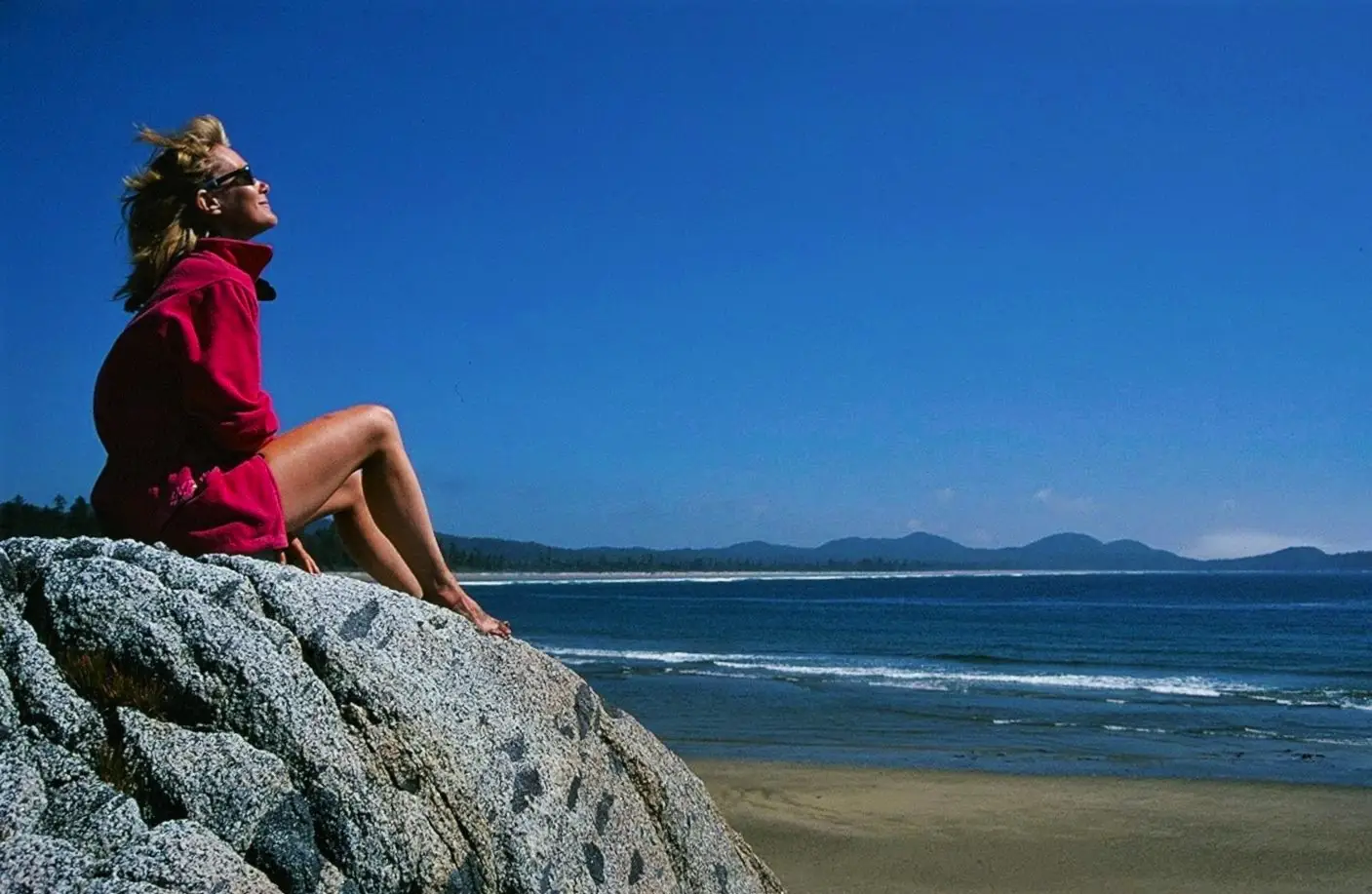
3. Slow Down and Enjoy The View. We used to measure paddling trips in distance. Now we measure in smiles. Shorter days mean more energy for beach walks, more time to savour where we are instead of powering through it, more happy memories in our photo library.
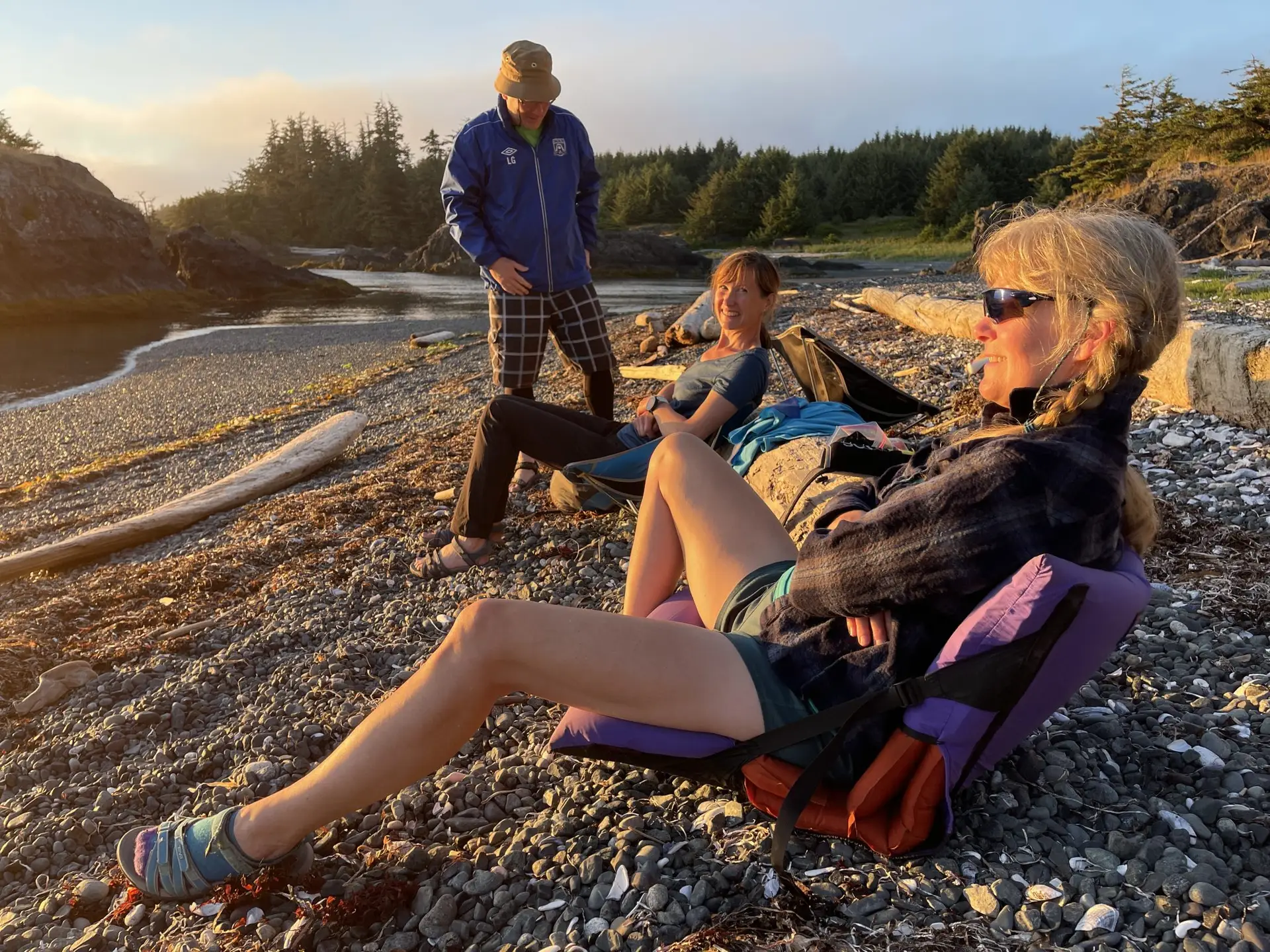
Build rest days into every trip. They let you explore a beach at low tide, photograph wildlife without watching the clock, and actually read that book you brought. Trip satisfaction grows when you stay long enough to call your campsite “home.”
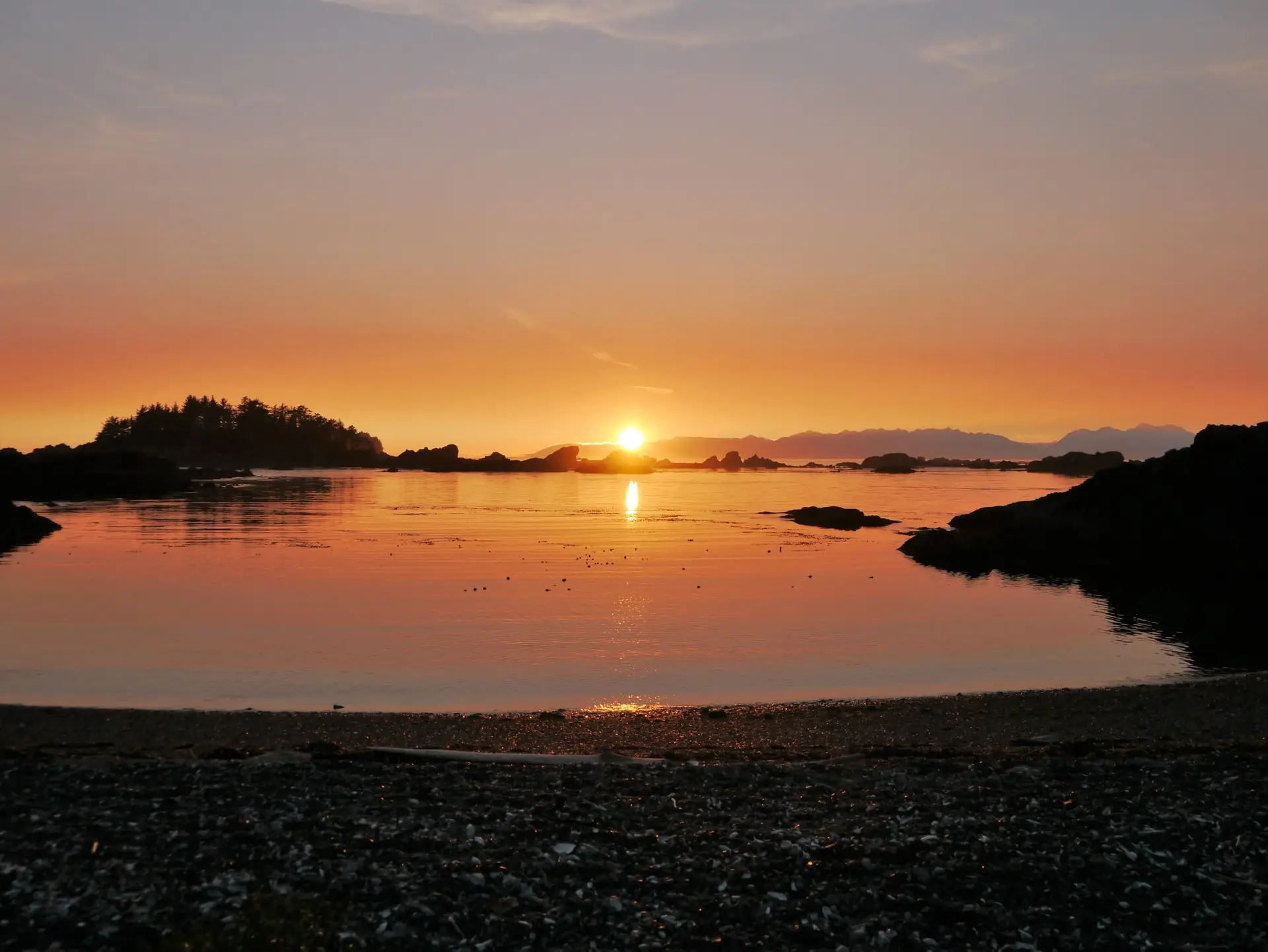
You don’t have to move camp every day. Find a blissful beach—stay there! Two nights is lovely; four can be wonderful! No moving camp, no long carries, no stress about your next campsite. Hang a tarp, get out a comfy chair, and settle in. Let the place reveal its personality in ways that rarely happen on a fast-moving trip. If you’ve stayed at places like Cow Bay, Rugged Point or Burnett Bay, you know the magic.
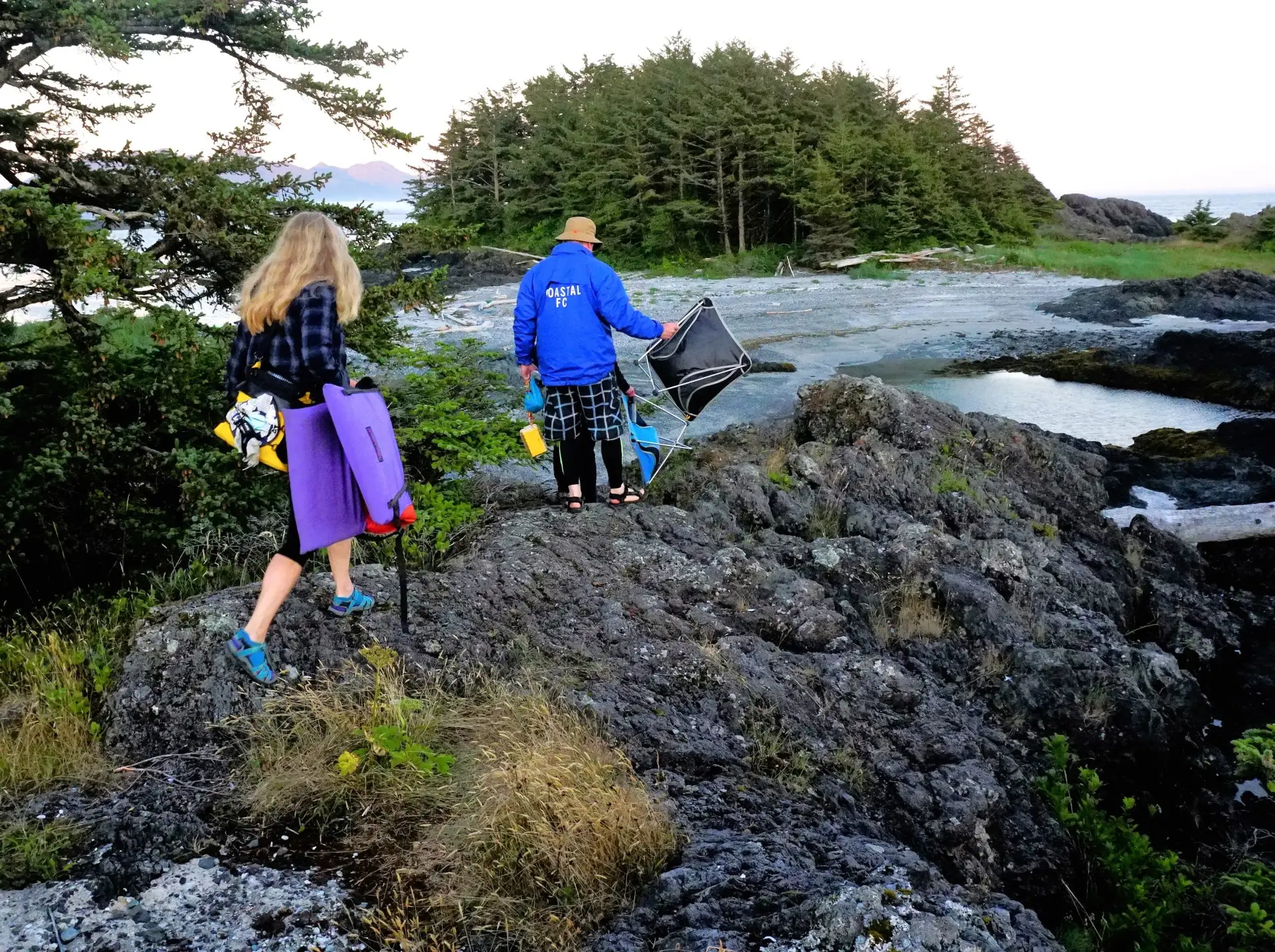
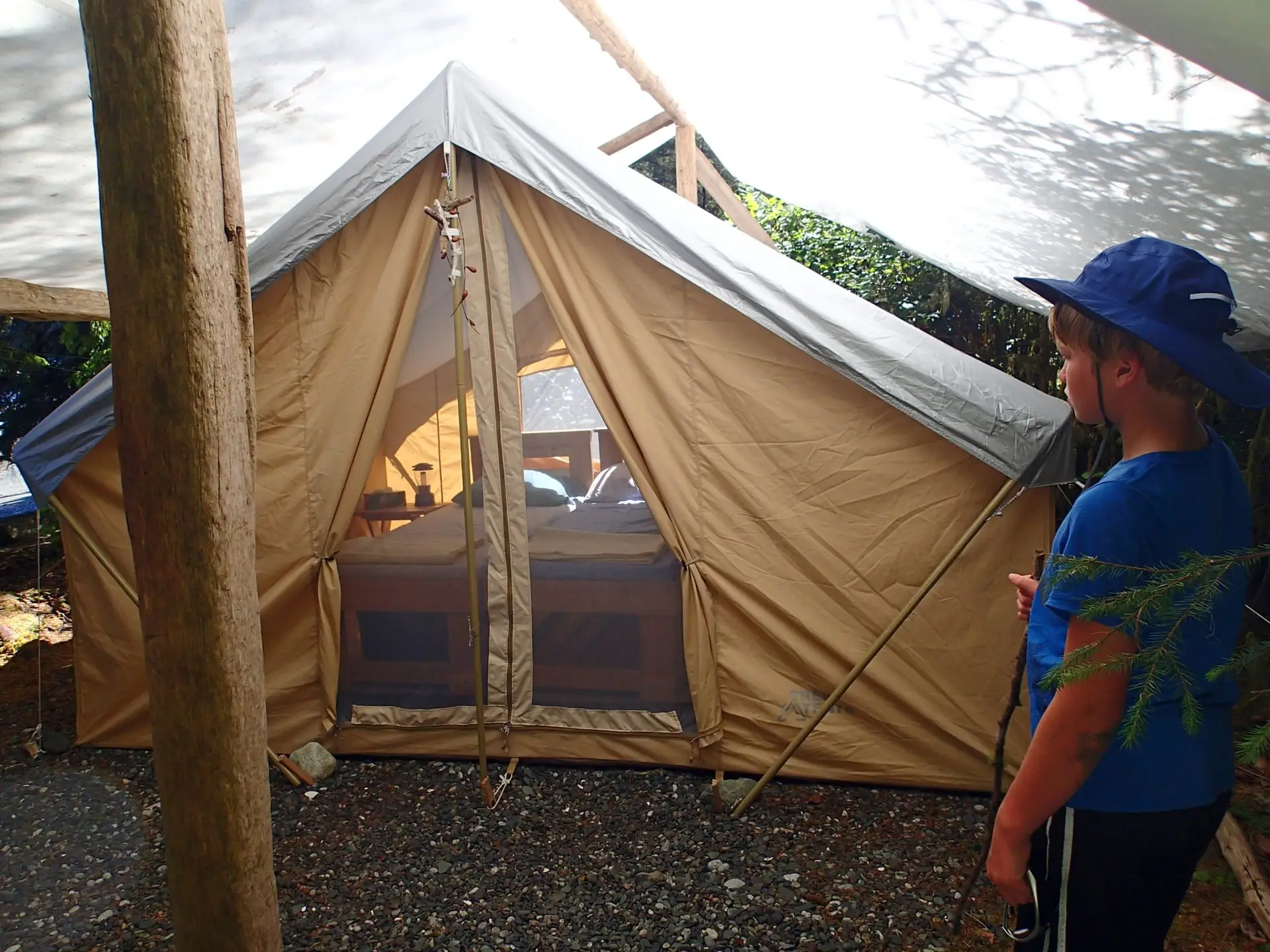
There’s no medal for crawling into the smallest tent, so why not make your camp ridiculously comfortable? Our camp now rivals a small boutique hotel: a roomy tent with vestibule, supportive camp chairs, a tarp big enough to stay dry during a storm, deluxe food and wine, comfortable therm-a-rests and sleeping bags, and an inflatable pillow instead of a rolled-up fleece.
To celebrate Julee’s 60th birthday, she organized a guided trip to Spring Island with her closest friends. A water taxi transported them from Fair Harbour to Spring Island, where luxurious glamping tents and hot showers awaited. Guides did all the cooking, and they didn’t move camp once. A camp guest from California, at 87, had been coming annually for many years. Each day’s paddle delighted her as she paddled in the front of a double kayak with a guide paddling in the rear. Base-camping like this might be the secret to eternal youth: sea otters, friends, and fog horns for the spirit; deluxe meals, hot showers, and comfortable beds for the body.
Try to match your trip’s energy demands to your body’s output. Complex health issues mean Jerry sometimes pushes too hard with negative consequences for all. We are learning to match a trip’s energy demands to what he can reliably summon, good days and bad. Some days, just sitting around camp is enough.
In our 60s, we began paying more to reduce risk, pain, and stress; water taxis and kayak carts instead of long paddles and carries, for example.
Jerry has also mastered another clever energy-saving strategy: “tactical incompetence.” After lighting our camp stove upside down and burning pork and beans in their can, Jerry does not handle much cooking on our adventures. Jerry likes to think of this as conserving his energy and keeping his adventure horizons open.
4. Speed Up Before It’s Too Late
She said, “A good day ain’t got no rain.”
She said, “A bad day’s when I lie in bed
and I think of things that might have been.”
—Paul Simon, Slip Slidin’ Away
Slowing down after 60 isn’t the only option. Some paddlers choose to dial things up. In his motivational book The 12 Hour Walk: Invest One Day, Conquer Your Mind, and Unlock Your Best Life, author Colin O’Brady invites us to ask “What’s your Everest?”—the biggest challenge on your radar. His advice: go on a 12-hour solo walk where your entire focus is on only one thing—how to do it. This kind of thinking is what allowed Susan Conrad to paddle 1200 miles from Anacortes, Washington, to Juneau, Alaska, and write a book about it—Inside: One Woman’s Journey Through the Inside Passage. Conrad’s hero, Audrey Sutherland, continued paddling her inflatable kayak thousands of miles into her 80s.
In the bestselling book Die With Zero: Getting All You Can From Your Money And Your Life, author Bill Perkins notes that many activities fit only in certain stages of our lives. An adventure that fits now might no longer fit in five years. If you dream of active paddling adventures, it will never be easier than right now. You’ll have plenty of time to sit on a cruise ship when you’re 80, if you’re still alive. But if your dream is to paddle from Port Hardy around Cape Scott or walk the Camino de Santiago, better put it on the calendar now. Aim to experience your hardest adventures while your health is best—no regrets. For inspiration check out Kayaker’s Creed: Quotations to Inspire Your Next Paddling Adventure.
To help visualize how precious your remaining time is, get out a drinking straw. Its full length represents how long you can expect to live on average—in Canada, 83 years for women and 79 for men. Online longevity calculators can offer an estimate tailored to your specific heath situation. [Note: the figures cited here are longevity from birth; for people who have already reached 60, expected longevity is a few years longer.]
Now cut off the portion of the straw that represents your age now—in Jerry’s case, almost 65. That long piece of straw represents how much of your life you’ve already lived. The short piece represents what you may have left, if you are lucky.
In football terms, you may be in the fourth quarter. In baseball terms, in the 8th or 9th inning.
It gets worse. Your healthy life expectancy in Canada—68 for women and 66 for men—is a full 12-15 years shorter than your full life expectancy. On average, you can expect your final 12-15 years to be limited by loss of muscle, worsening cognitive function, and health issues that limit your outdoor adventures. So, from your shockingly short piece of straw, cut off the portion that represents the 12-15 years when you may be limited by ill health.
Sobering, isn’t it?—but not hopeless. If you’re not already eating well and in a serious health and fitness regime, get started. Extending your “health span” should be your goal. Health, not money, is the only real currency in retirement. Every year you let slip through your fingers is a year you’ll never get back.
Whatever the number of healthy summers you have left for paddling, treat each one as precious. After the “go-go” years come the “go-slow” and “no-go” years. Beyond age 75, very few of us will be willing to sleep in a tent or take risks on the water. [Editor’s note: There are options for those who want to go on kayak adventures but prefer not to sleep in a tent. See this article.]
5. Adjust Your Definition Of Adventure
When we were younger, we collected Type 2 adventures—the hard ones that feel awful while they’re happening but make good stories later. Big miles. Not much rest. Weather we probably shouldn’t have been out in.
These days, we’re more interested in Type 1 adventures—ones that are enjoyable while they’re happening. A long beach walk with our partner. Sitting in camp reading. Laughing over dinner with family and friends.
Here’s the thing: when we were young, we could face grueling paddles with greater energy reserves. They took less out of us, we recovered more quickly, and the reward was worth it. Now, the risk and physical cost might outweigh the reward.
As Jerry likes to ask, “Is the juice worth the squeeze?”
In our 60’s, our adventures have become less about mile counting and more about “ruby moments,” as described in our article Kyuquot Sound Revisited. Bathing in a wild stream. Quietly watching the sun descend into the Pacific. These moments, and the stories and photographs we create from them, will continue paying dividends long after the mileage fades.
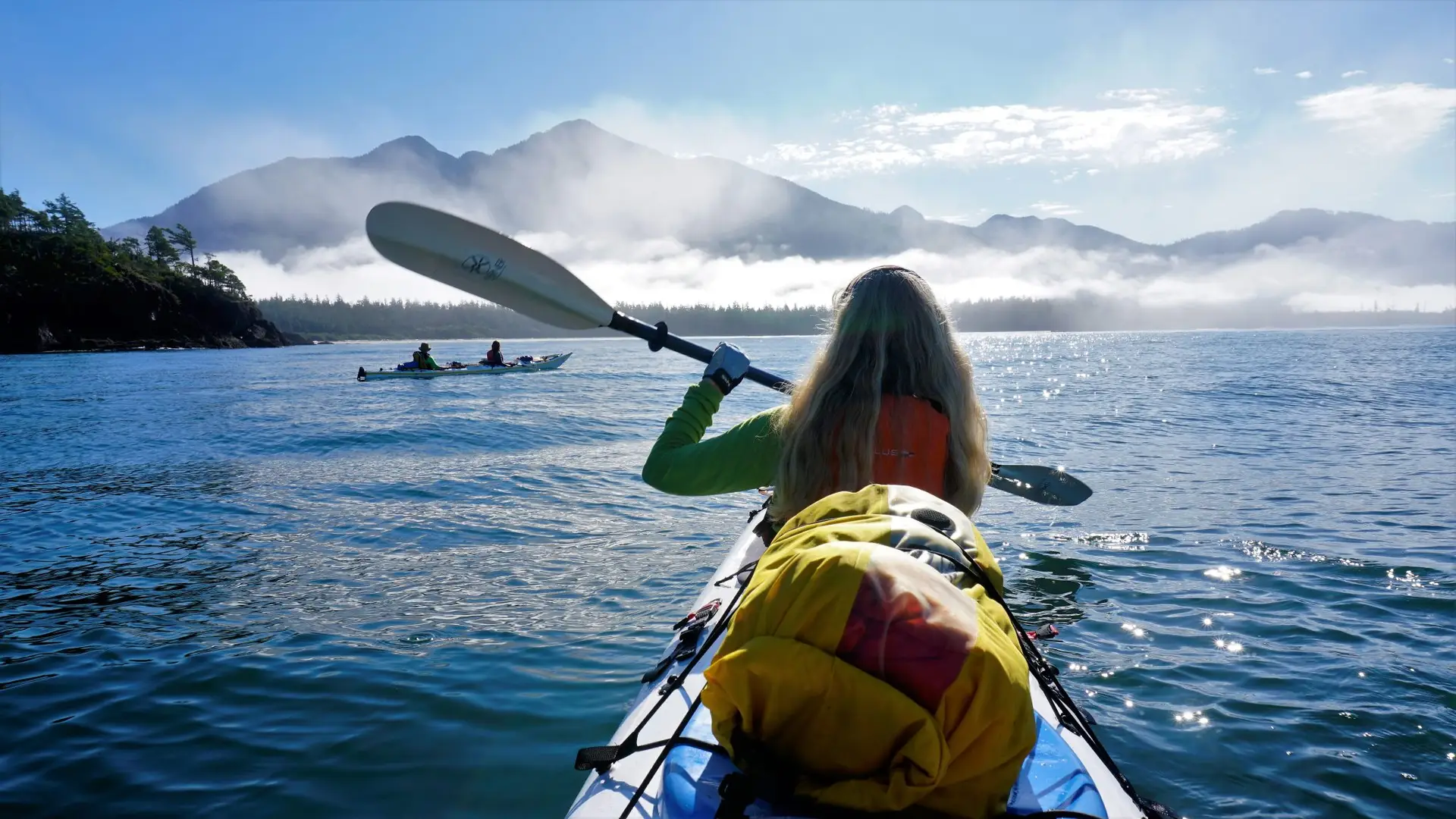
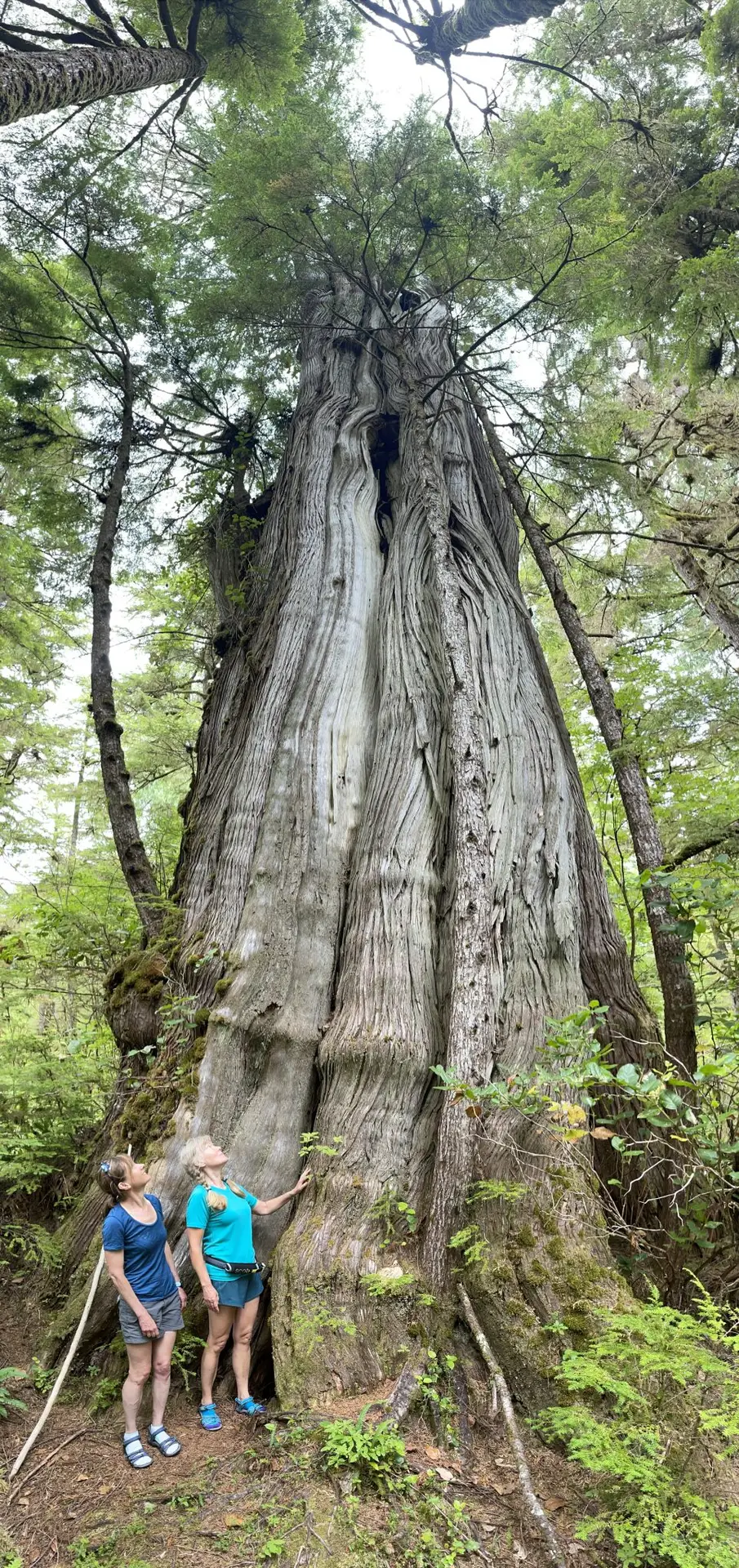
There’s a line in the movie Ford v Ferrari that sticks with us: “If you’re going to push a piece of machinery to the limit, you’d better know where that limit is.” Bodies are no different. Jerry’s doctors have encouraged him to reach a “gentle accommodation” between his adventurous spirit and his physical limits. We try to live near the outer edge of what we can still do—but we no longer pretend the edge isn’t there. We plan trips with off-ramps and bailout points where we can quickly get off the water if we need to. We’re not giving up adventure—we’re ensuring we can keep doing it.
6. Always Have a “Next”
Active seniors always have a “next”. They have a menu of possibilities they’re curious about and might want to try. When they feel a strong emotional connection to one of these, it moves to the head of the line and becomes “next”. Sometimes the choice is left-brain and logical, coming from a spreadsheet of pros and cons, but often it’s a feeling that comes from the heart.
Another spin on this comes from Jerry’s 77-year-old Scottish friend Graham. Like many engineers, Graham thinks not of feelings, sparks, or itches but rather projects. This year, Graham’s “project” is to ride his motorcycle from Vancouver to Anchorage, Alaska, and take a ferry back, not something many men his age are up for. To pick his next project, Graham uses what he calls his “PJ Meter”. It measures the “potential juice” coming back to him from the project—both from the hour-by-hour work itself, and the expected feeling of accomplishment once done. His mantra for the motorcycle ride to Alaska: “Ride the juice”.
Active retirees have a bias for action. They don’t let fears freeze them into inaction. And they don’t just dream about it. They commit to make it happen, let others know, put it on a calendar, make a plan, and go. Nootka Sound? Haven’t been there in decades—just scratched the surface last time. This year, we’ll arrange a wet drop-off from the Uchuck III and revisit the sea otters.
There is no single formula that works for everyone at all stages of life. The trick is to find the formula that works for you—and be ready to adapt if things change. A paddling formula that fits at 50 must bend to fit at 70 and bend again to fit at 80.
So what’s “next” for you?
7. Create A Positive Quest
I had always wanted an adventurous life…It took a long time to realize that I was the only one who was going to make an adventurous life happen to me.
—Richard Bach, The Bridge Across Forever
When he started sea kayaking over 40 years ago, Jerry’s initial quest was to explore every sound on the west coast of Vancouver Island. He started by working his way north from Barclay Sound. On our two-month-long paddle from Bella Bella to Tofino, our quest was to bag all the best beaches on the outer coast. In 2022, Jerry needed a quest to add structure to a European adventure. Inspired by the Netflix documentary 14 Peaks—but knowing he was more into water than mountains—Jerry landed on this exciting quest: dining at 14 waterfront patios. By the time he finished his trip, he had tripled his goal and dined at 42. Yum!
One of Jerry’s enduring quests is to populate his photo library with happy memories. He hopes that when he’s put in a dementia ward—iPad on his lap, a nurse wiping spittle from his mouth—he’ll be able to scroll through a photo library populated with a lifetime of magnificent adventures.
It doesn’t really matter what your quest is — paddling, photography, birdwatching, teaching your grandkids how to fish from a kayak, learning aboriginal navigation skills (Rick Davies’ quest)—just find something that energizes you and adds zest, structure, and meaning to your wanderings.
8. Minimize Friction
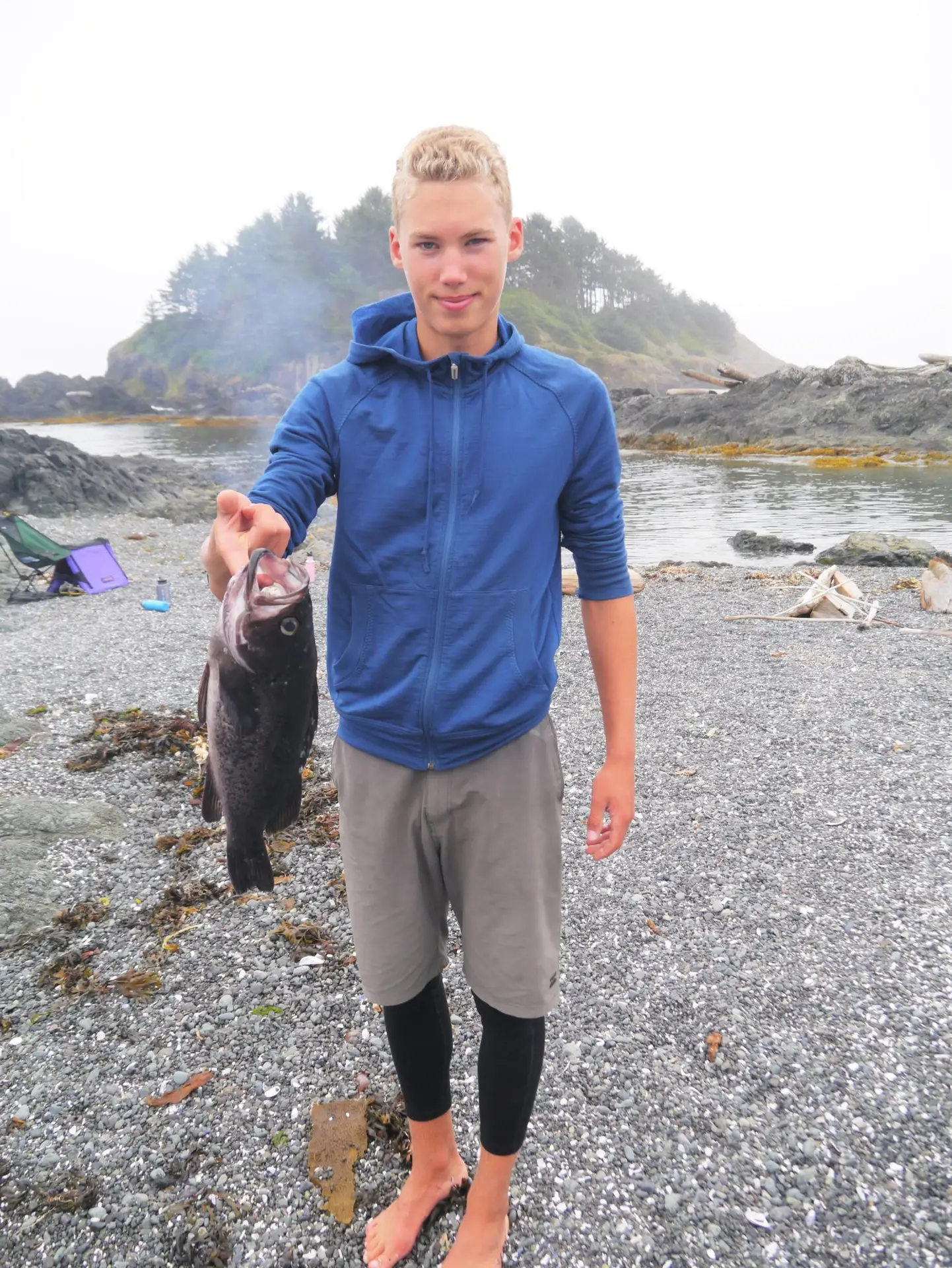
Few paddlers stop kayaking because they can’t do it physically. They stop because it feels like too much effort. The joy of being out there isn’t worth the hassle of planning a route, getting all your camp gear ready, checking if your weather radio still works, preparing a week’s food, and getting your kayak onto the roof of your car. By the time all that’s done, the spark is gone. So find ways to lower the barriers: buy a lighter-weight kayak made of Kevlar, a kayak cart to roll your kayak up and down the beach instead of carrying it, or a “side-loading lift-assist” roof rack to more easily load and unload kayaks from your vehicle roof. Both Thule and Yakima make such racks. Paddle closer to home, or simplify your packing lists and meals. If the barrier to getting out is too high, you won’t go—no matter how much you love paddling.
Pain is one of the biggest friction points for aging paddlers—especially back spasms and arthritic joints. After many abdominal and joint surgeries, Jerry continues to rely on ibuprofen and other medications to keep doing what he loves. Without them, paddling simply wouldn’t be possible. He’s found that a well-timed anti-inflammatory is often the difference between participating joyfully in an activity and staying on the sidelines.
9. Set up Nudges
Even a tiny nudge can sometimes be the difference between a day on the water and another day lying on your sofa staring at screens. So set up little nudges to push yourself off the sofa and out onto the water.
Surround yourself with active friends and role models. Swap adventure stories and invitations back and forth. Inspire each other with the implicit message that it’s never too late to have another adventure.
If you have friends like these, hang onto them. If not, go out and find them. Hang out with glass-half-full people, not the coulda-shoulda-woulda-but-didn’t crowd, always complaining about their ailments.
If you’re lucky enough to have an active spouse to share your adventures with, treasure them! There is nothing so wonderful. Give them a big hug right now and let them know how much you appreciate them.
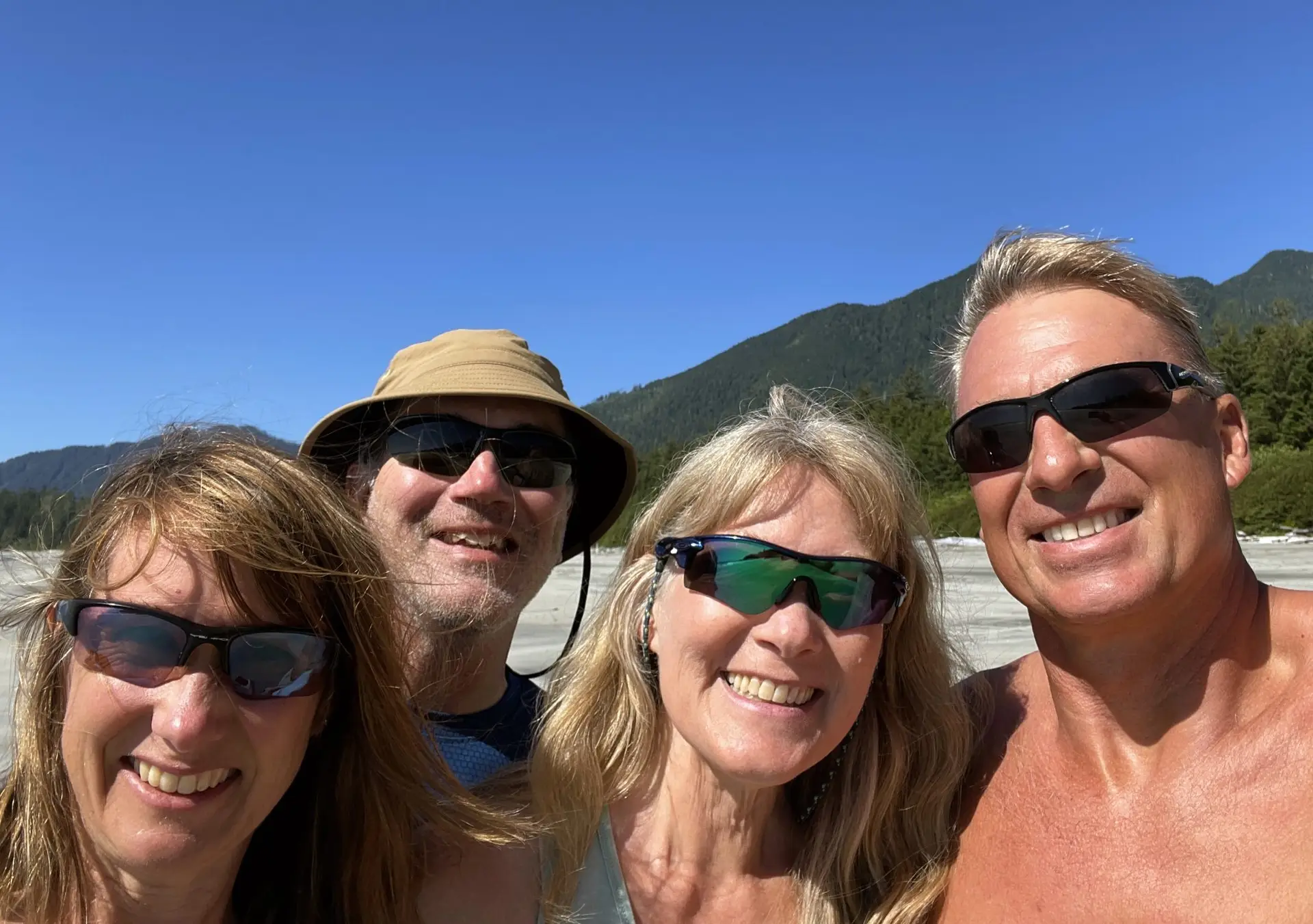
Finding an exercise buddy is a powerful way to help you stick with a paddling or exercise program. When you’re feeling sluggish, an exercise date with a buddy can make all the difference. And sticking to a training routine is critical after 60. Training in this phase of life isn’t about becoming stronger than you were at 30. It’s about staying capable enough to keep going. The rule is simple: use it or lose it. Protect your joints—you’re going to need them. Carve out time to maintain your muscle strength. A few minutes a day can add years to your paddling life. And when you’re exercising, connect the hard work you’re putting in today to the goal of paddling out there later this year, and in the years to come.
Jerry likes to nudge himself with music. He has created a “heading out” playlist he listens to in the car or on walks. If you haven’t got a playlist of your own to nudge you toward your personal “next”, check out his, at the end of this article.
10. Get the Right Gear
In their book Younger Next Year: Live Strong, Fit and Sexy—Until You’re 80 and Beyond, the authors state that if there’s one piece of gear standing between you and your goal, don’t hesitate, just get it. Buy it new or used, rent it, or borrow it from a friend. The idea is to remove barriers to your core program of exercise and healthy living. Physical activity is an investment in your future, and the cost of necessary equipment is negligible compared to the benefits of health and vitality.
Keen to do some winter kayaking? Try a drysuit. Wrists hurt? Try a smaller paddle blade. Back hurt from cooking over a camp stove? Try a compact folding camp table. Painful cramming your arthritic knees into a narrow cockpit designed for 20-year-olds? Trade your kayak for a wider one with an XL cockpit. Whatever you lose in “performance,” you gain in years on the water. In short, if there’s an adventure dream you’re chasing and you need a piece of gear to make it happen, just give yourself permission to go for it.
11. Prioritize Agency, Meaning, and Connection
Thriving is about agency, meaning, and connection…
it requires engaging with risk, not retreating from it.
—Jon Rosenberg, A Guide to Thriving
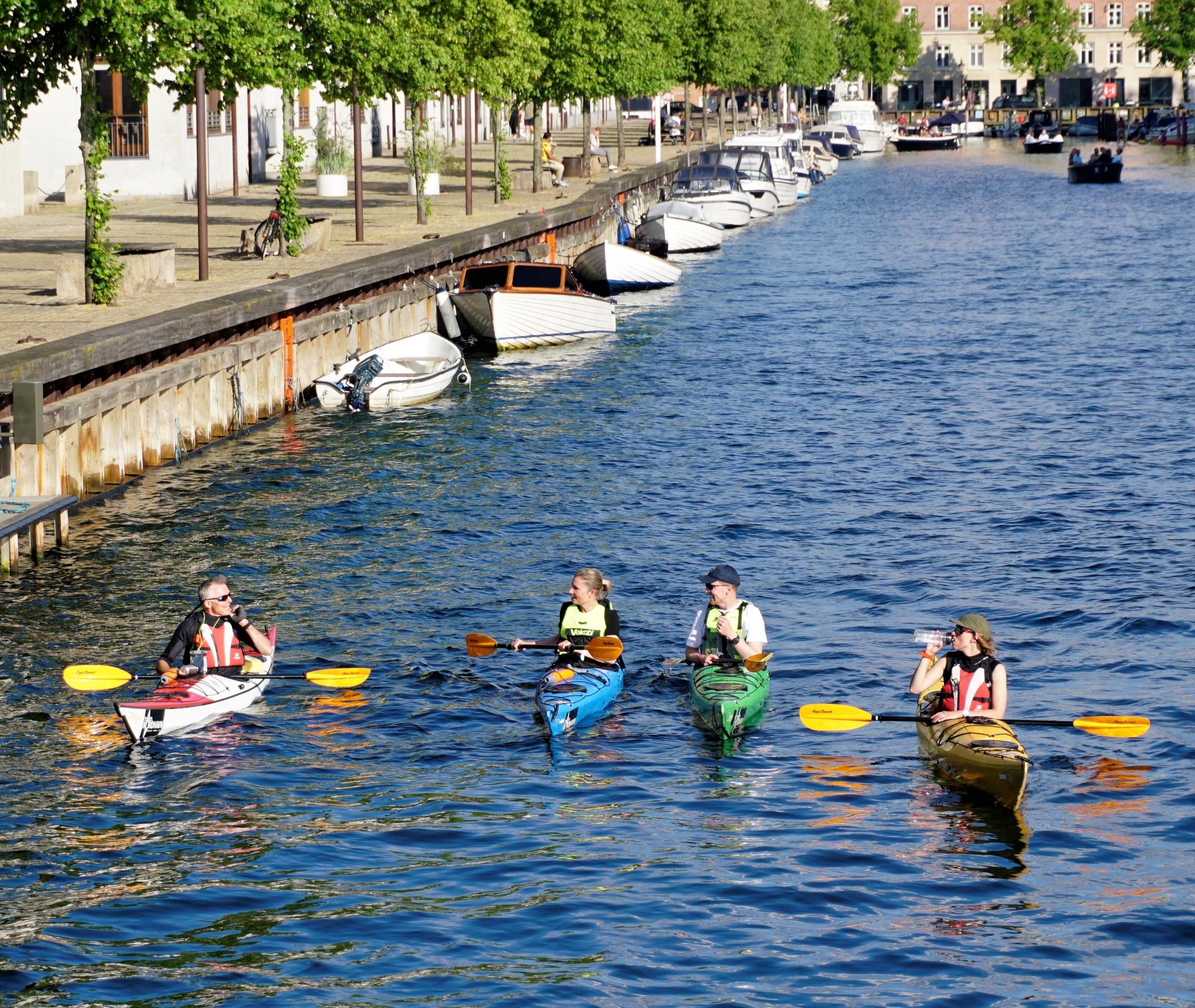
Every trip is a choice—to remain active, curious, and engaged with life—or to retreat from risk and become passive and inactive. Yes, kayak trips involve different risks as we age—but choosing to engage with that risk and paddle anyway, thoughtfully and within our health boundaries, is a powerful act of agency. It lets us decide for ourselves what adventure looks like.
Add friends, family, and fun whenever you can. Everyone we know still paddling late in life makes social connections a top priority. Make it playful. Set up a frisbee game on the beach. Explore tide pools with grandkids. Share meals, stories, and laughter. The coast can be your playground.
Social connection and a sense of community matter. The loneliness that often accompanies old age can take years off your life, equivalent to smoking 15 cigarettes a day. If this is a concern, try visiting the physical paddling hubs and paddling clubs that keep the paddling community alive in British Columbia (there’s a list in this article). Sign up for evening group paddles out of Jericho Beach or Deep Cove in Greater Vancouver, or Ocean River Sport in Victoria. If you have regular paddling buddies, be generous with your encouragement and appreciation. As Jerry concludes in his article on how sea kayaking boosts mental health: “Be the spark that spreads joy in the universe.”
Look for a future article in the Sea Kayaking After 60 series about the Sidney North Saanich Geriatric Paddling Group.
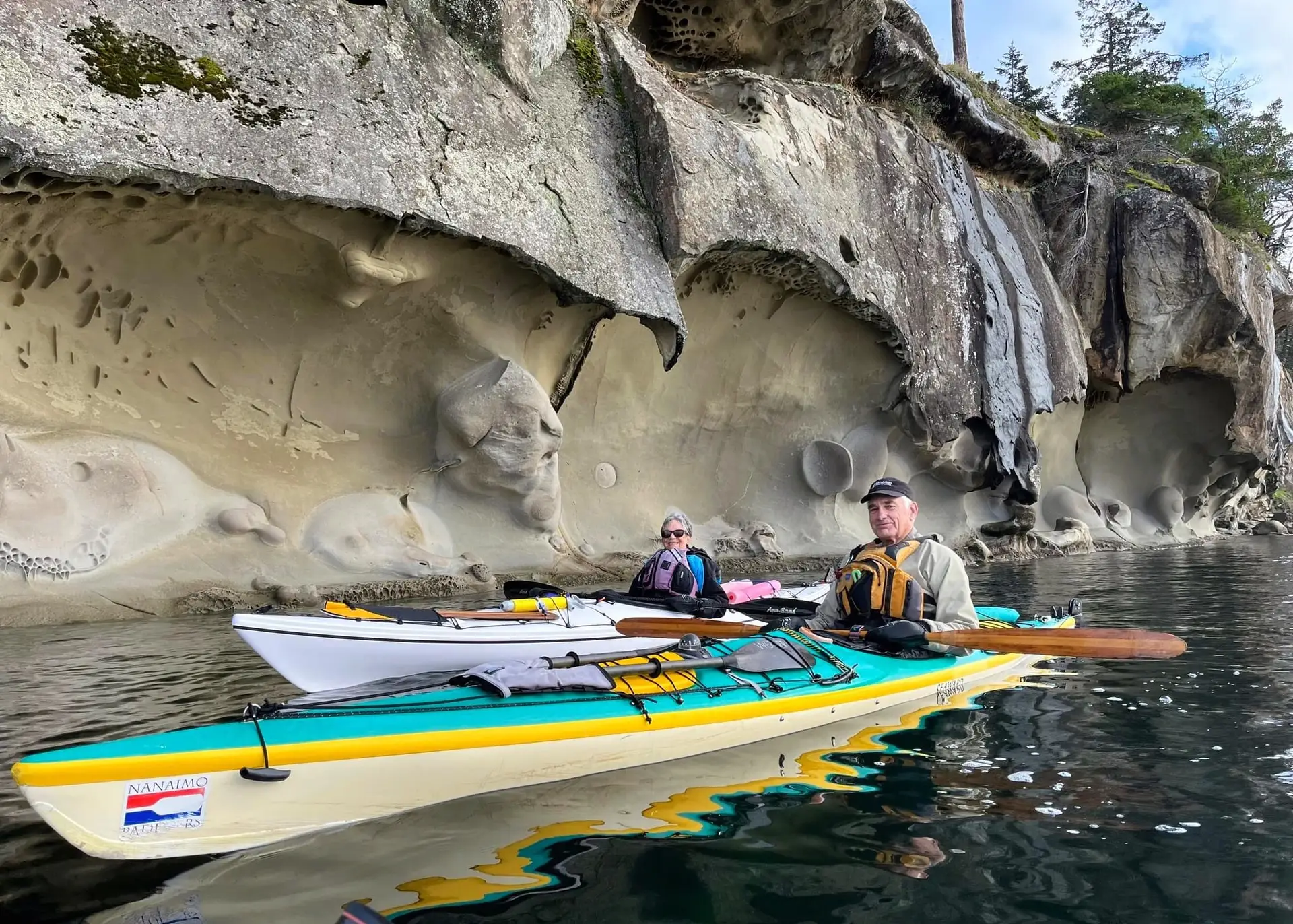
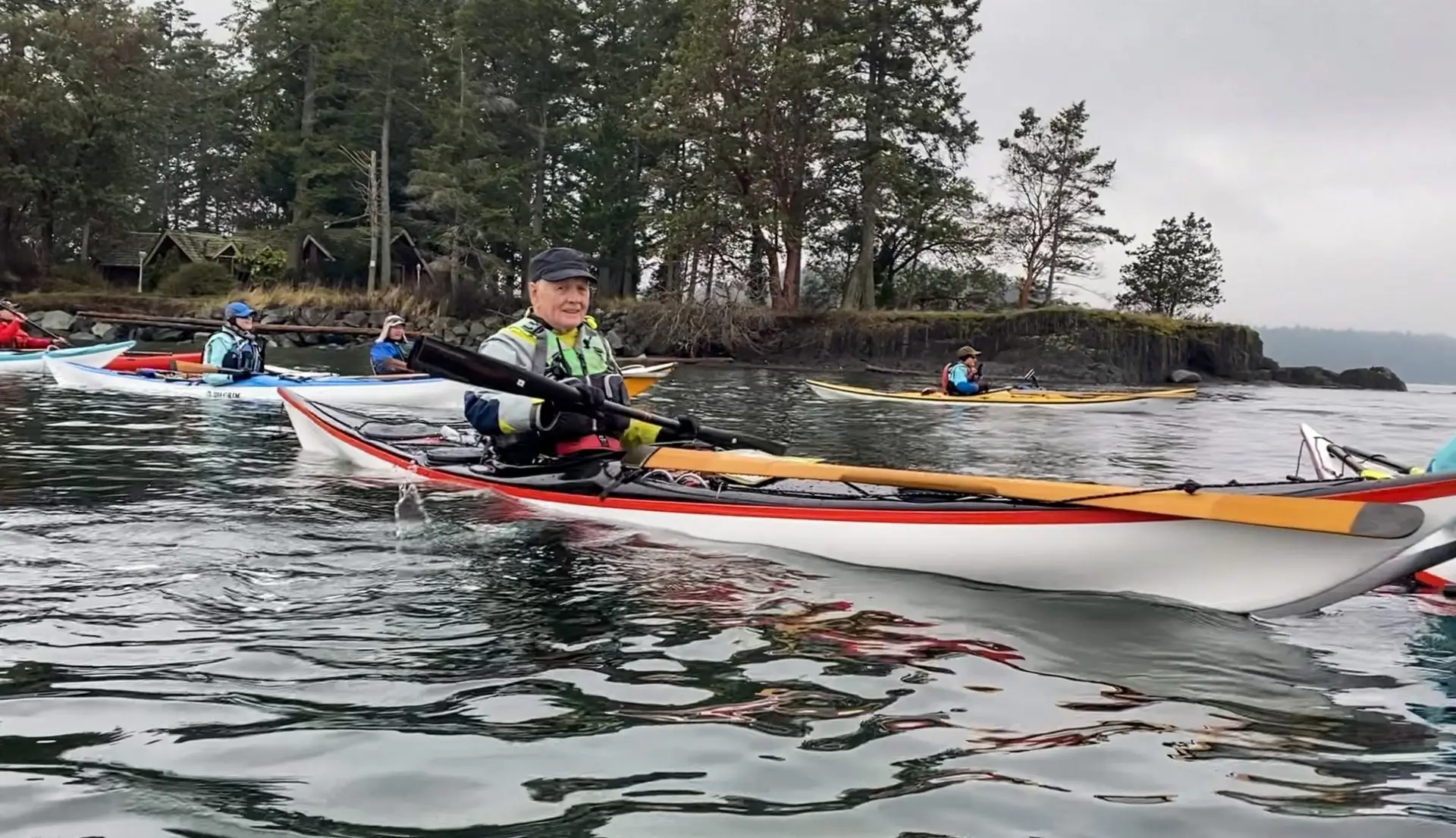
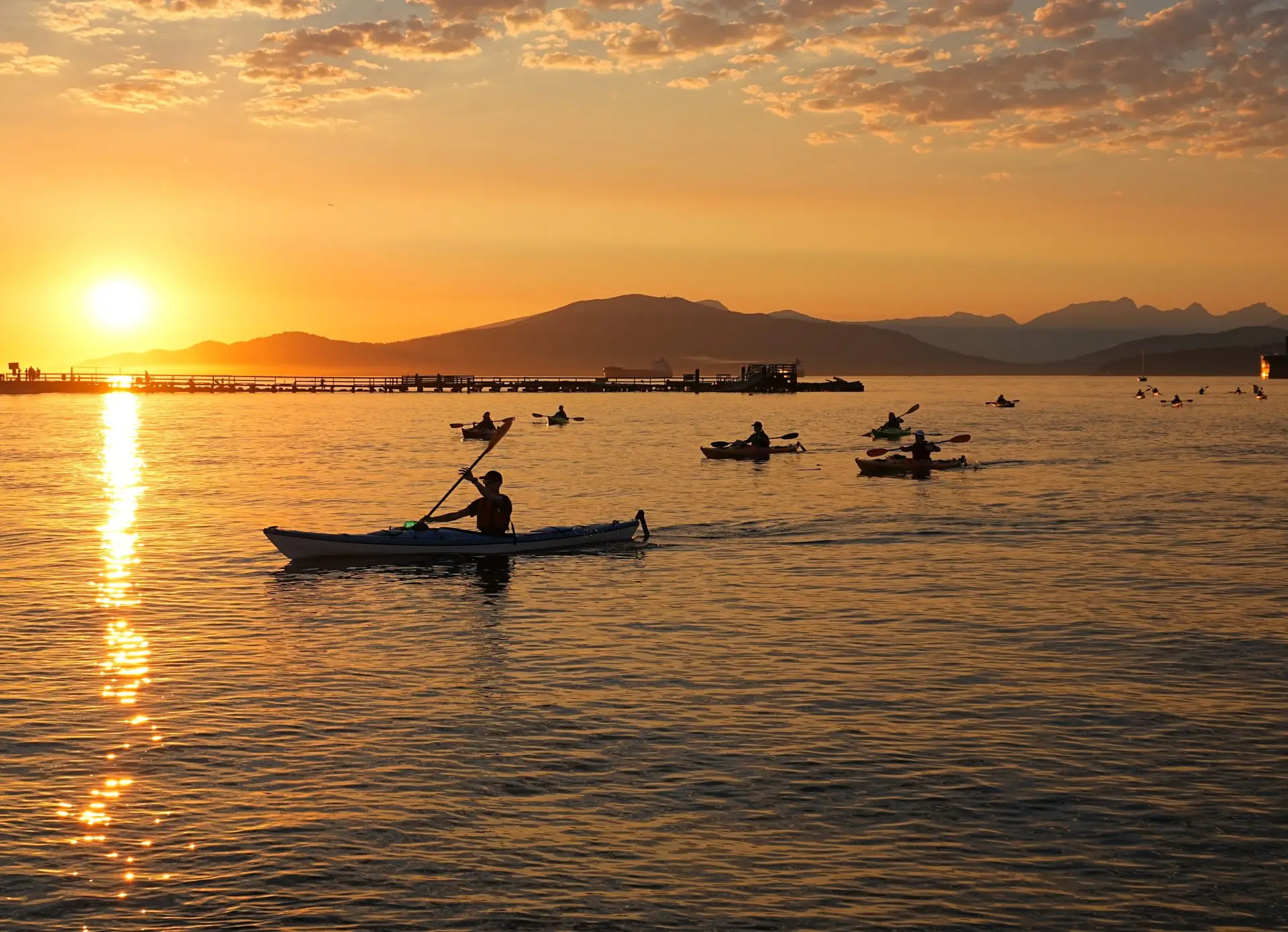
12. Give Back
He is a bad man who does not pay to the future at least as much as he has received from the past.
—A.W. Pollard (1859-1944)
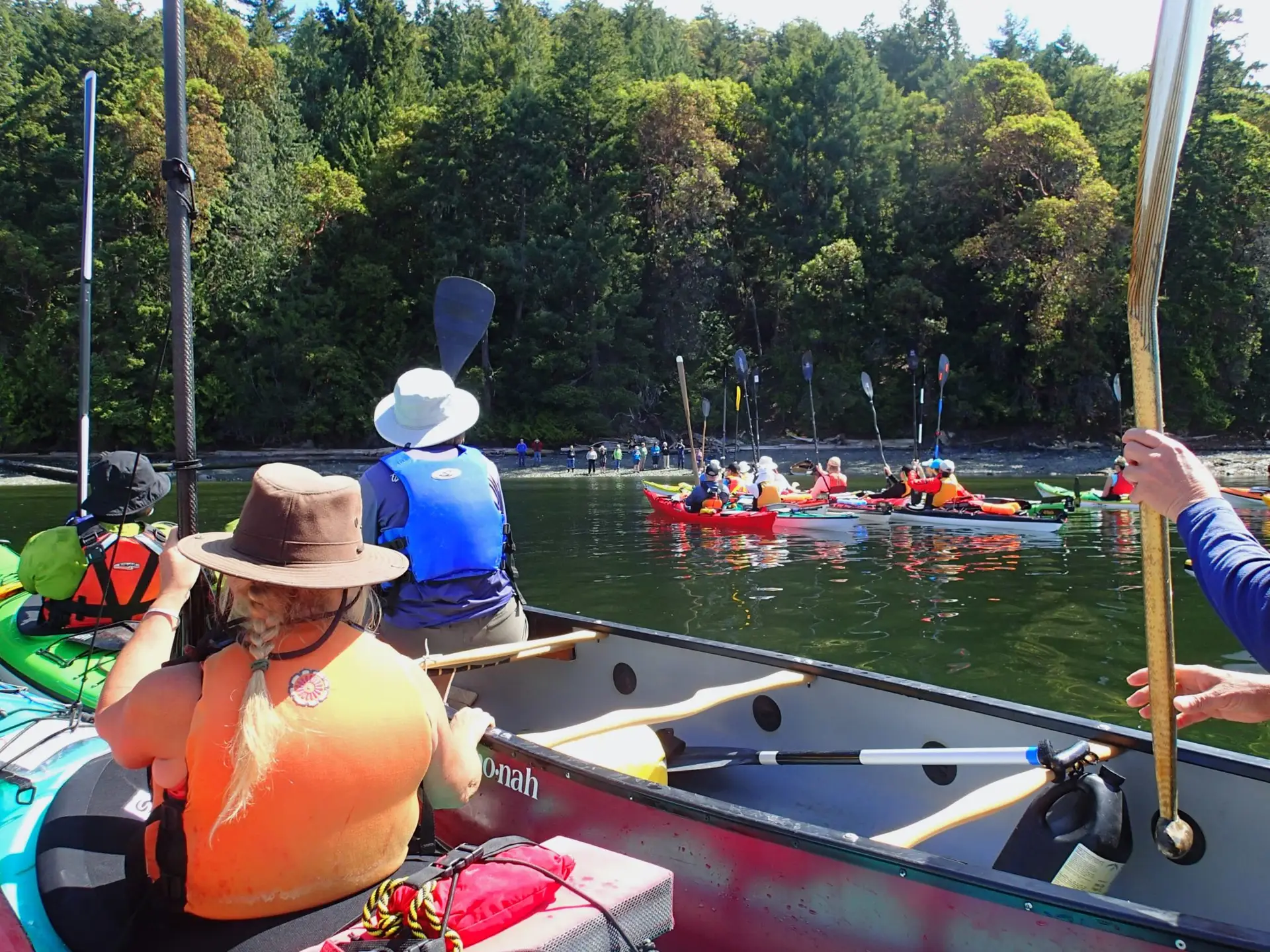
This coast has shaped who we are. It’s been the backdrop to our love story, the classroom where our boys learned confidence and resilience, and the wild, salt-sprayed sanctuary we’ve returned to again and again over the decades (and not just because it’s a uniquely affordable vacation after you’ve acquired the necessary gear). The marine trails that once launched our adventures are now the canvas on which we’re painting our legacy—one we hope will endure long after we’re gone.
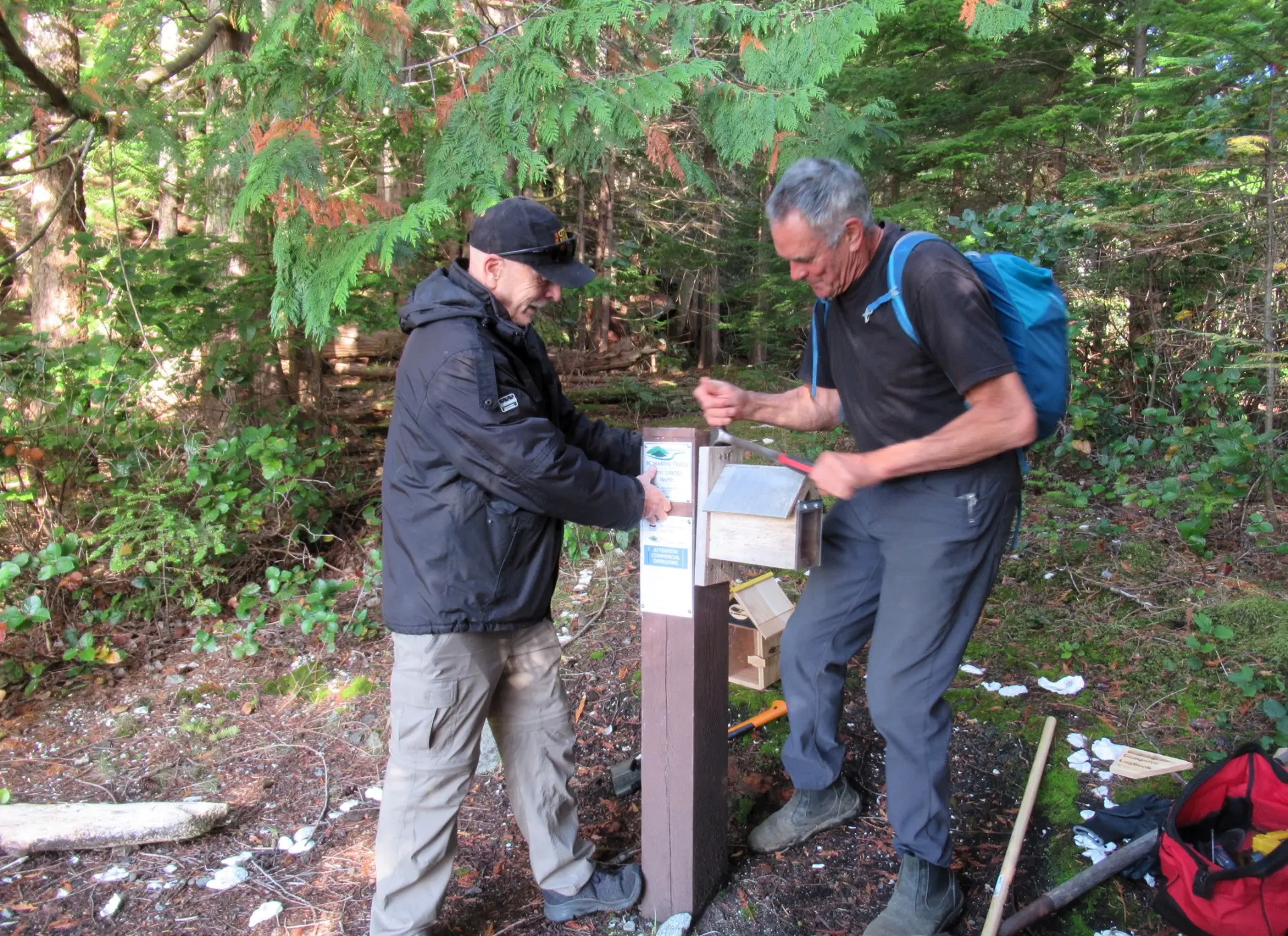
To give back—and maybe meet some new adventure buddies—try volunteering with BC Marine Trails or your local paddling club. An annual donation of $250 or more makes you an official “Trailblazer,” and it funds the critical work of trail development, First Nations engagement, and coastal stewardship. You can read more about why we became Trailblazers here.
Consider writing BC Marine Trails into your will as legacy gift for a portion of your estate. It’s a simple clause that costs you nothing today yet helps preserve safe, respectful access to this extraordinary coast for future generations. BC Marine Trails is the only organization devoted to advocating for marine recreation in British Columbia, negotiating with governments, industry and First Nations to keep the coast open, protected and usable for recreational boaters.
Psychologist Erik Erikson wrote, “I am what survives me.” A legacy gift is how to ensure access to the coast outlasts us. It’s how we pay it forward so that future paddlers will feel the same tug in their hearts, set a course for some distant beach, and discover what it means to be out there.
Final Thoughts
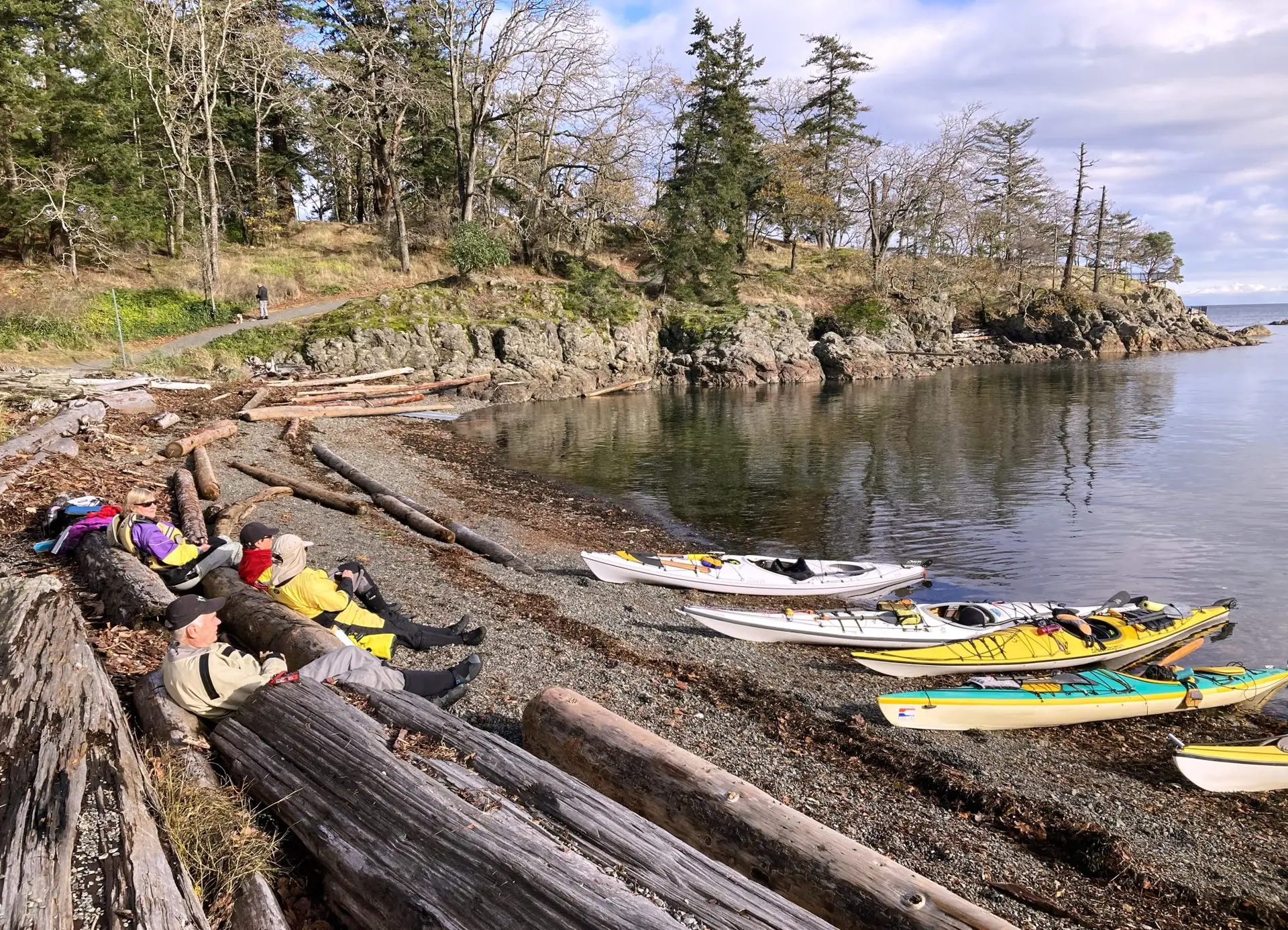
We’re not done paddling—not even close. We’re paddling smarter, at a slower pace, with a roomier tent, better camp chairs, and a whole lot more laughter. As we get older, we build more rest days and off-ramps into our itineraries so we can enjoy ourselves more and wait out poor weather instead of pushing through it.
We’ve found that staying on the water is about resilience, adaptability, courage, and celebrating what’s still possible. It’s about creating itineraries where our adventurous spirits and aging bodies work together in gentle partnership to create joyful journeys.
Mindset shapes everything, so have a positive one. Time is limited, so don’t waste your days. Pace yourself: slow down to enjoy the view, but plan your paddles with a sense of urgency, hardest first, while you still can. Always have a “next” in mind, as a standalone adventure or part of a larger quest. Keep yourself on track by minimizing friction, programming nudges for yourself, and giving yourself permission to get any gear you need. Health is fragile, so protect it fiercely. Relationships matter more than ever as you get older, so invest in them. And when you realize legacy matters more than accumulation, find a way to give back and make the world a better place.
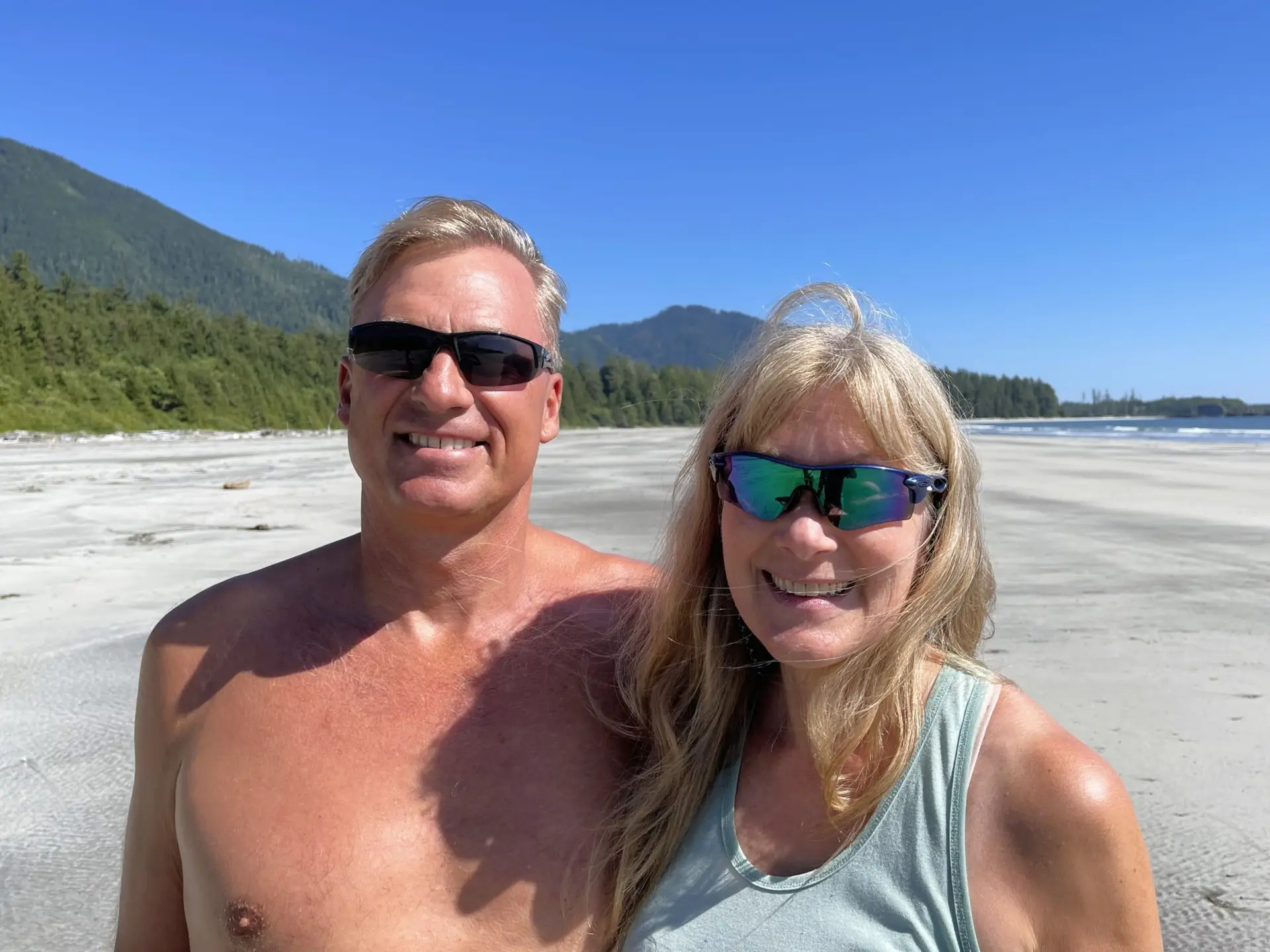
Our shared coast is out there, waiting for you. So grab a paddle and head out. The sea will take care of the rest.
If you want to create a musical nudge for yourself, check out some of these songs on Youtube.
- On the Way by Hollow Coves
- Follow the Sun by Xavier Rudd
- Take a Trip With Me by Lightnin’ Hopkins & Sonny Terry
- Are You Having Any Fun by Elaine Stritch
- Knee Deep (feat Jimmy Buffet) by Zac Brown Band
- Where the Streets Have No Name by U2
- Best Day of My Life by American Authors
- Summertime Is in Our Hands by Michael Franti and Spearhead
- I’m Alive by Michael Franti and Spearhead
- Can’t Stop The Feeling by Justin Timberlake
- Happy by Pharrell Williams
- Feel It Still by Portugal The Man
- Swimswimswim by Tosca
- Who You Are by Steelings
- A Bossa Love by Tape Five
- Café del Amour by Marga Sol
- A Summer Song (English Version) by Emi Meyer & Shanghai Restoration Project
- Gypsy in My Soul by Connie Evingson
- Enjoy Yourself (It’s Later Than You Think) by Guy Lomardo
- Council Meetin’ by Naomi & Goro
- Don Quixote by Gordon Lightfoot
- Walk on the Wild Side by Lou Reed
- Son of a Son of a Sailor by Jimmy Buffet

Great thoughts in a great article. Something for everyone who loves some adventure. I’ve embraced some of this already, but much more to add …just do it. Overcoming inertia!
Loved your article! I just turned my “Bryan Adams Birthday” so your advice hit to the bone. Just figuring out ways to make it all happen, and your article offered a lot of great ideas. Thanks!