There is a special kind of magic that exists between the salt spray of the Pacific and the impenetrable green of the Great Bear Rainforest. Our 12-day sea kayaking expedition around Campbell and Horsfall Islands out of Bella Bella exemplified that magic. This was a journey defined by rugged coastlines, high-stakes wildlife encounters, and the profound joy of carefully packed simple pleasures after a long day on the water.
With gratitude and respect to the Heiltsuk Nation, the original stewards of these lands and waters on British Columbia’s Central Coast. We travelled in awe and left no trace.
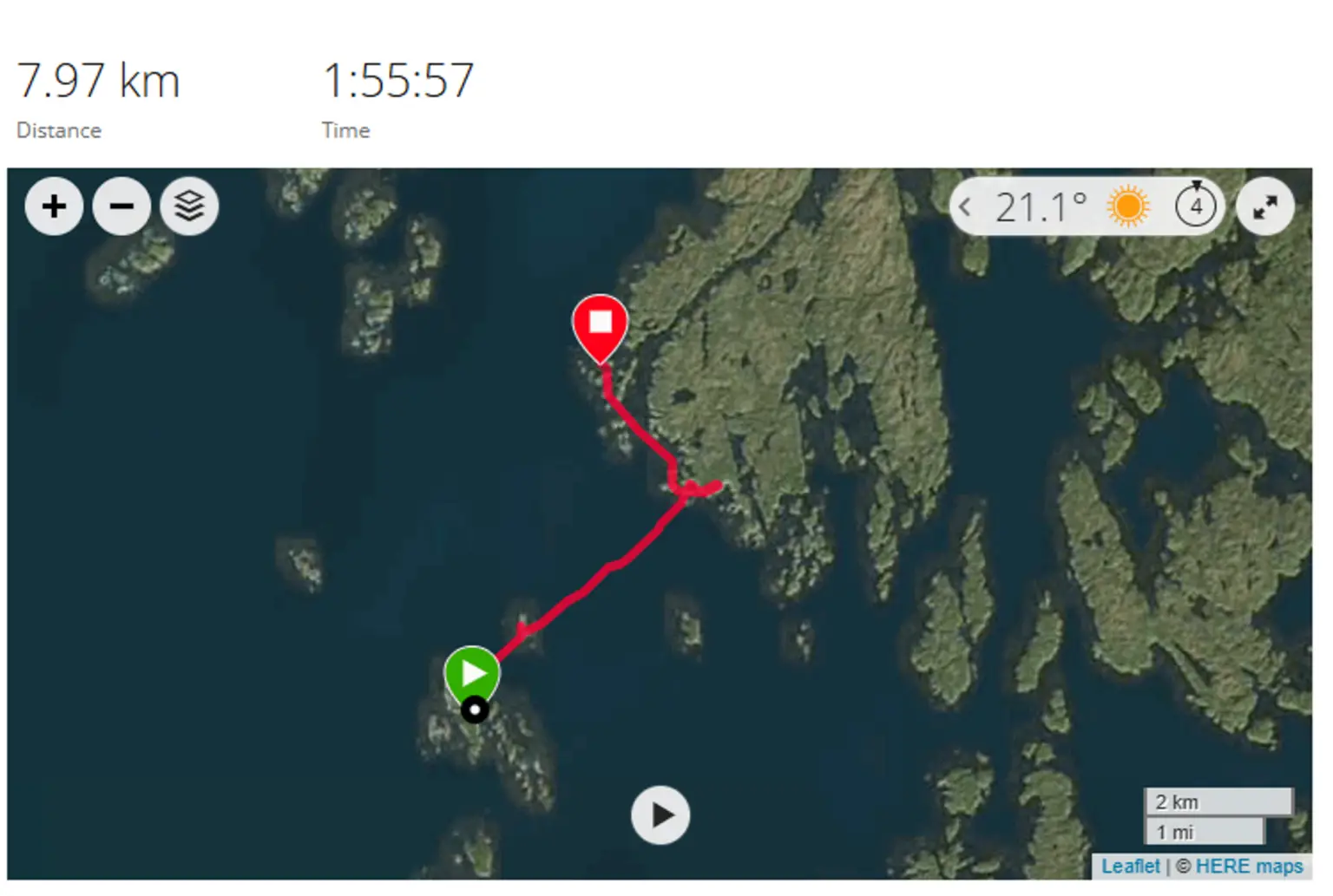
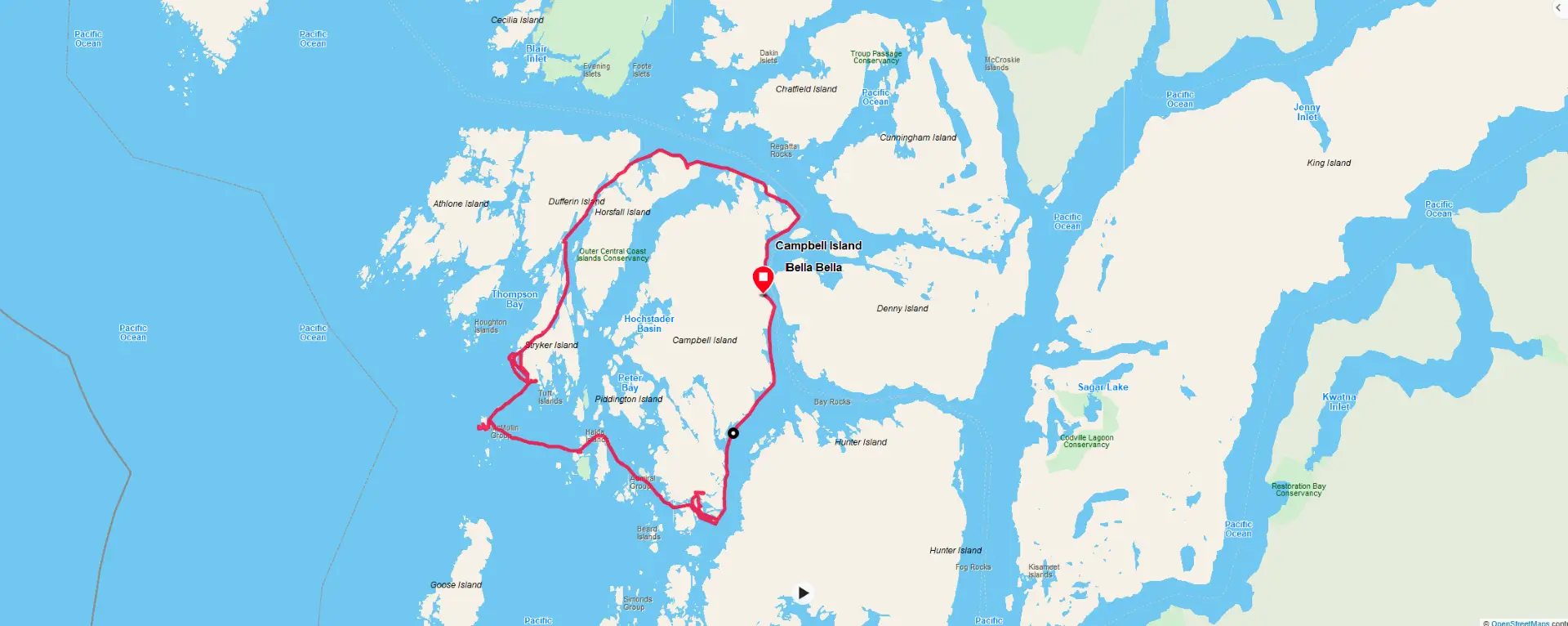
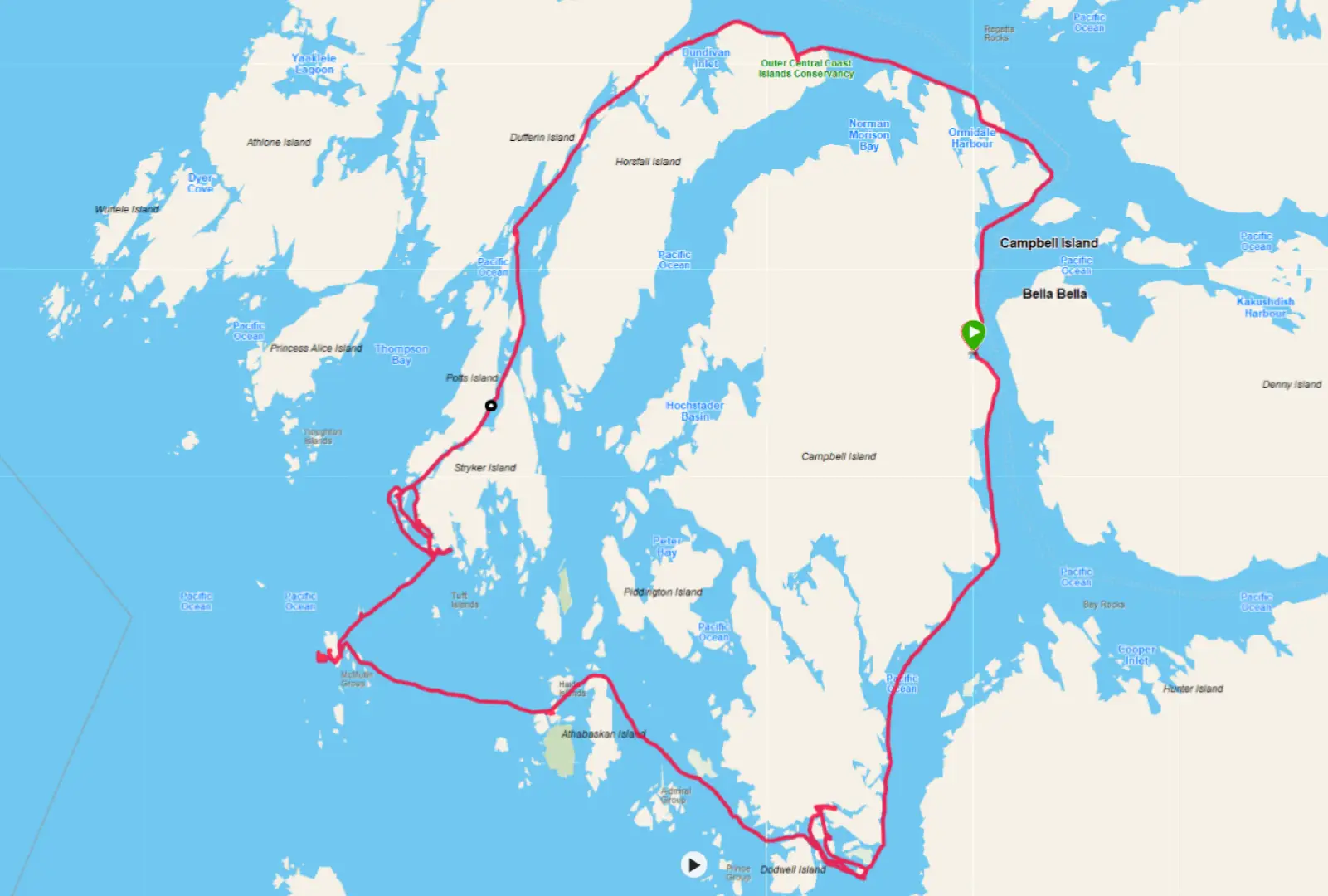
In total, we tracked 96.5 kilometres across the water, navigating everything from glassy lagoons, big open crossings, fjords, and tidal rapids. Our trip was also blessed and haunted by the presence of a mother grizzly bear and her cub that we encountered twice on the outer islands.
The Launch: From Chaos to Coastal Bliss
We spent the first day driving to the northern tip of Vancouver Island from Victoria. Hoteling in Port MacNeil, we spent the late afternoon doing a trial pack of the kayaks and organizing countless dry bags. I have never packed for a trip this length and was trying to imagine what I had forgotten.
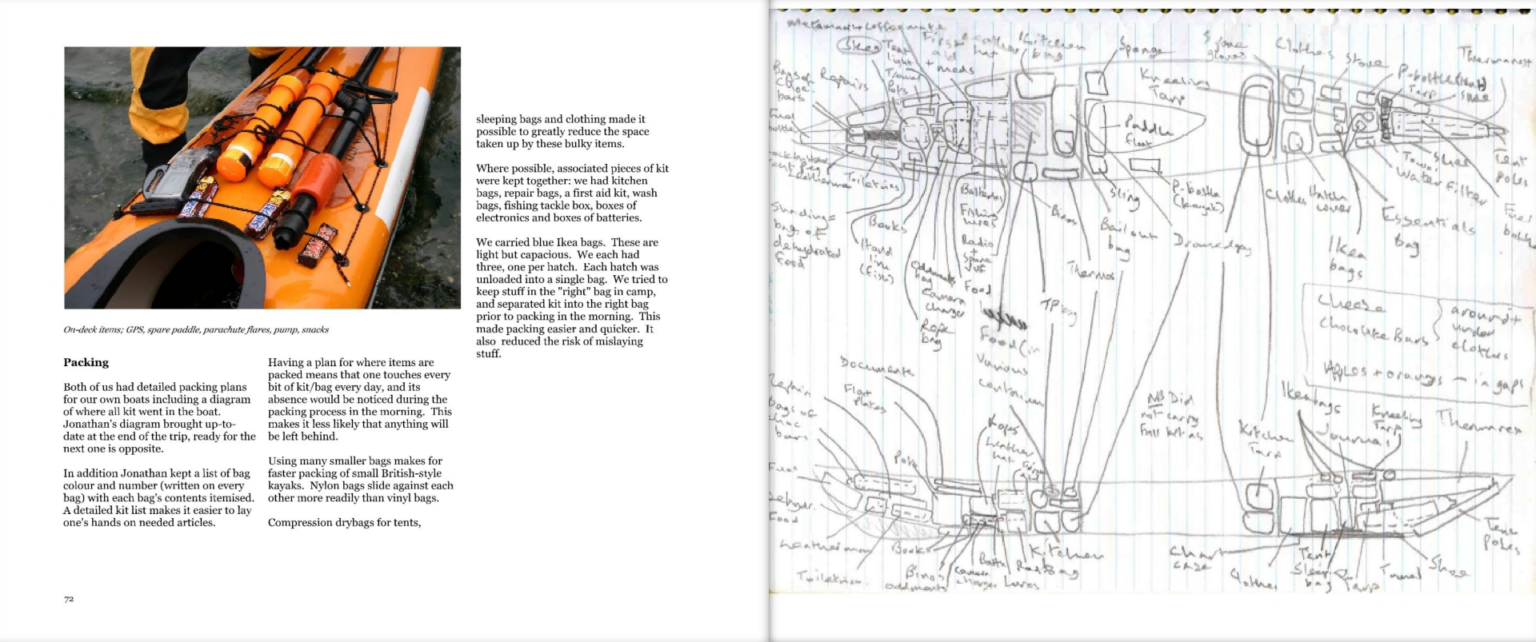
I followed the advice of Jonathon Reggler and Doug Taylor in their excellent book, ‘An Everyman’s Circumnavigation of Vancouver Island by Sea Kayak‘ to pack in an intentional way, keeping a document that tracked bag colour and size and listed contents. While I also tried to keep things packed in order for easy access, this practice quickly faded along the journey due to the chaos of the daily pack and items finding new places in the bags that made more sense.
Image from An Everyman’s Circumnavigation of Vancouver Island by Sea Kayak by Jonathan Reggler, Doug Taylor
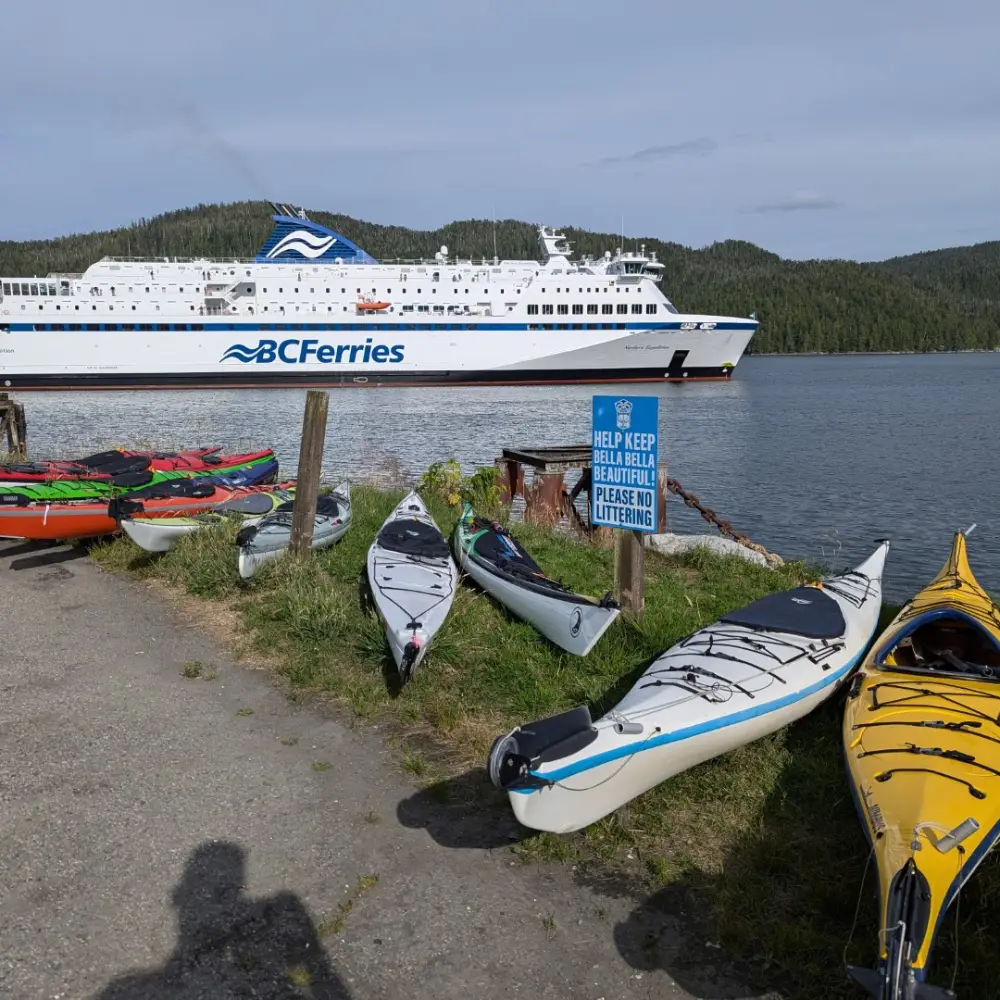
Our journey began the following morning with a “ferry scramble” at the crack of dawn in Port Hardy. We arrived a little later than desired, so had very little time to get aboard. It was a frantic dance with dry bags and paddles as we loaded. Since we were leaving the car in Port Hardy, all of the gear had to get from the car, parked some ways away, to the deck of the ship on a cold morning. It was hectic, but the BC Ferry crew were very supportive and kind.
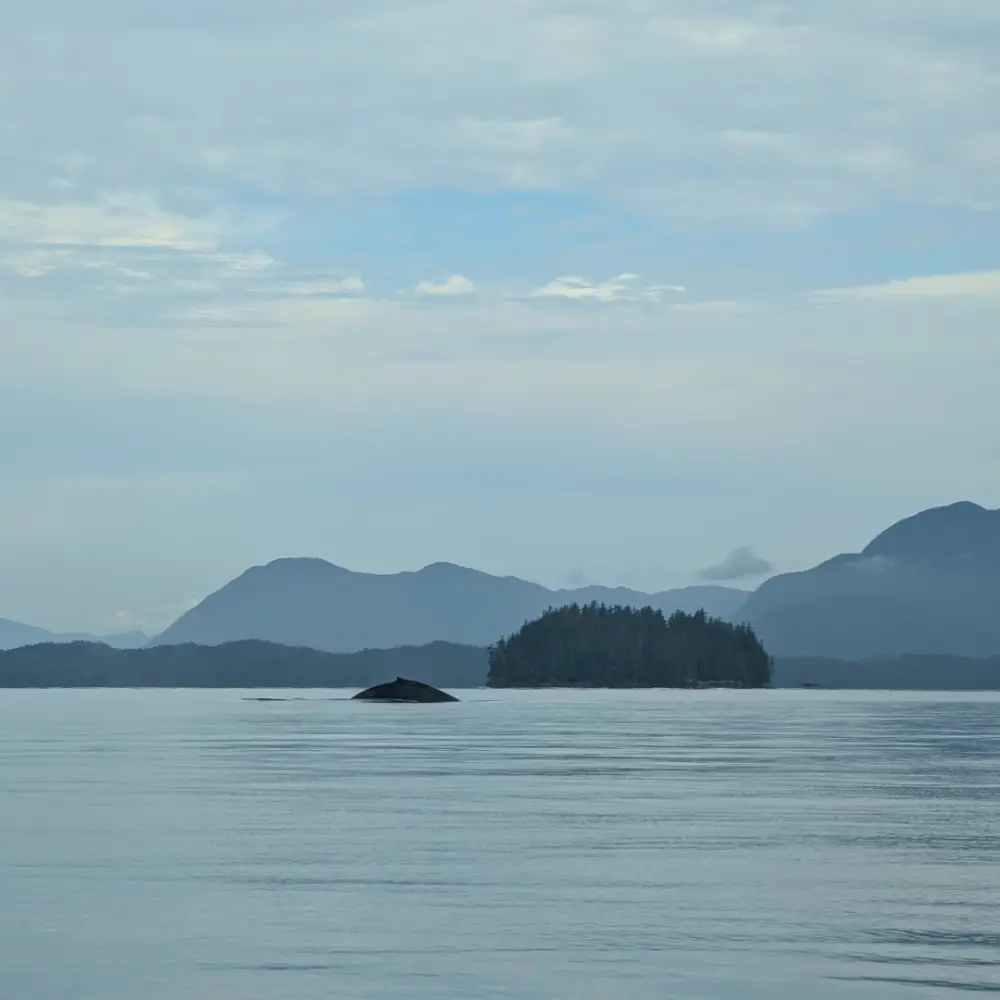
As soon as the ferry pulled away from Port Hardy heading north, the adrenaline faded into astonishment. We sailed past remote islands and coastline, viewed porpoises and whales, and watched the rugged coast of British Columbia unfold with a promise of a wonderful trip ahead.
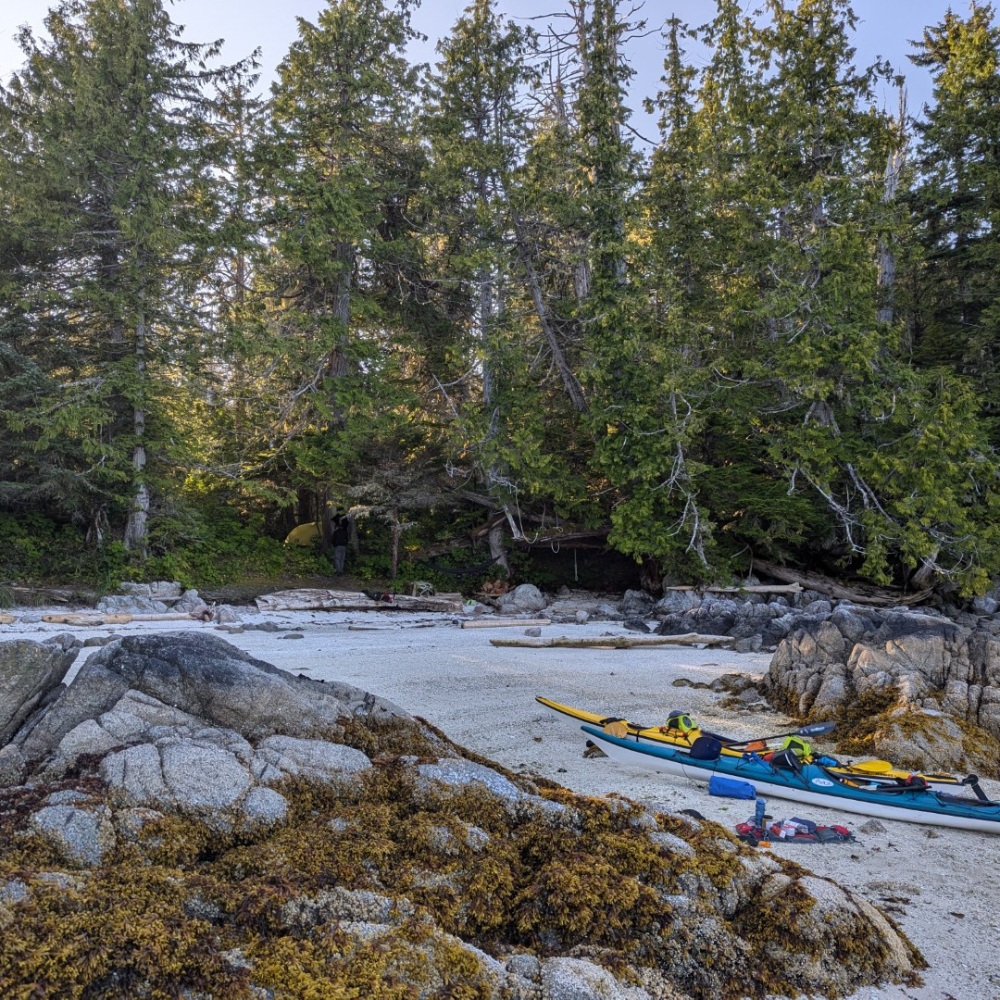
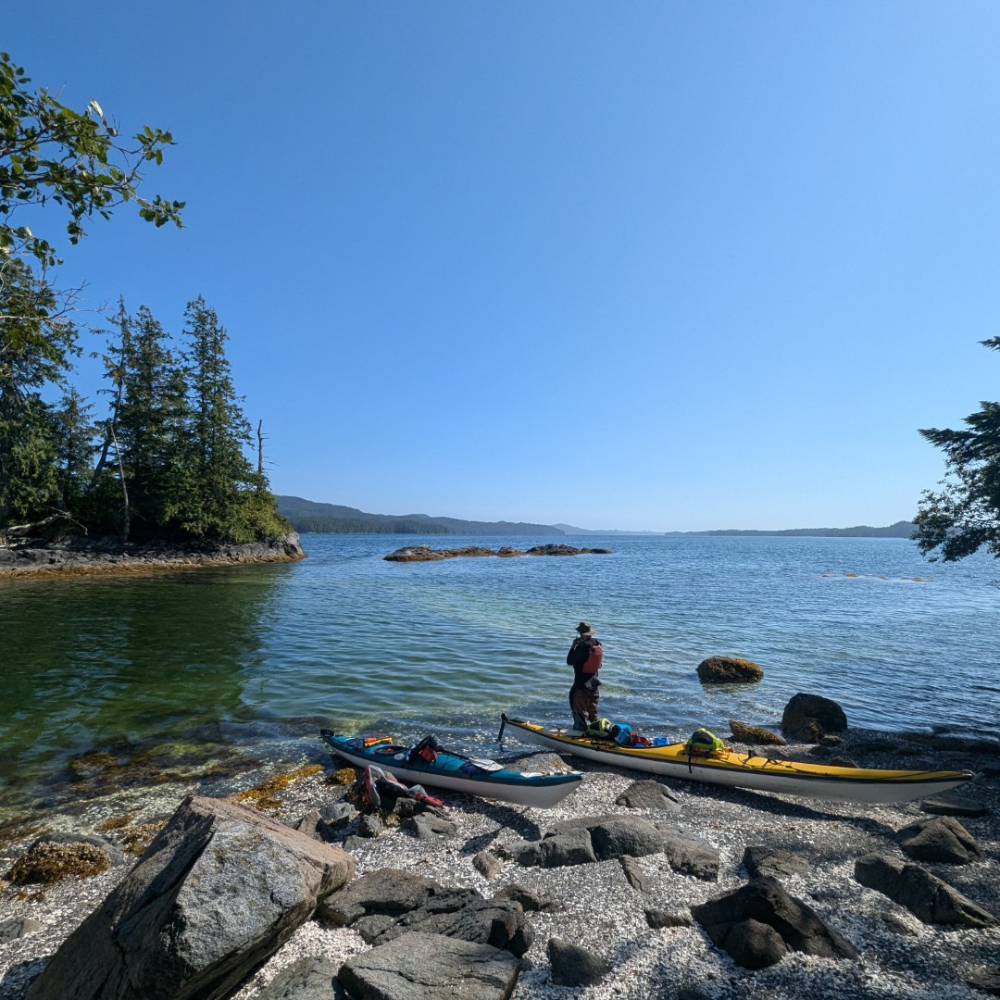
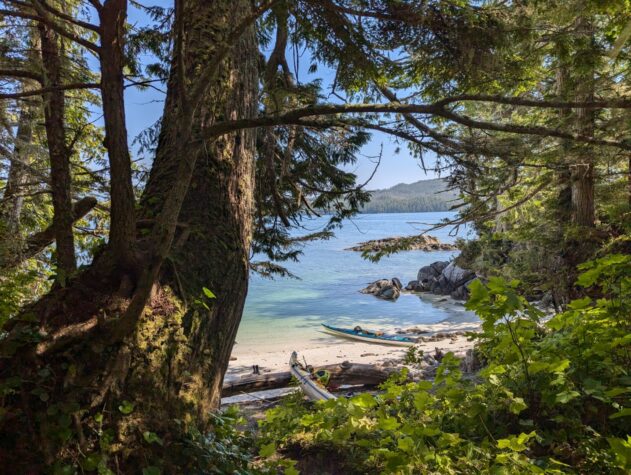
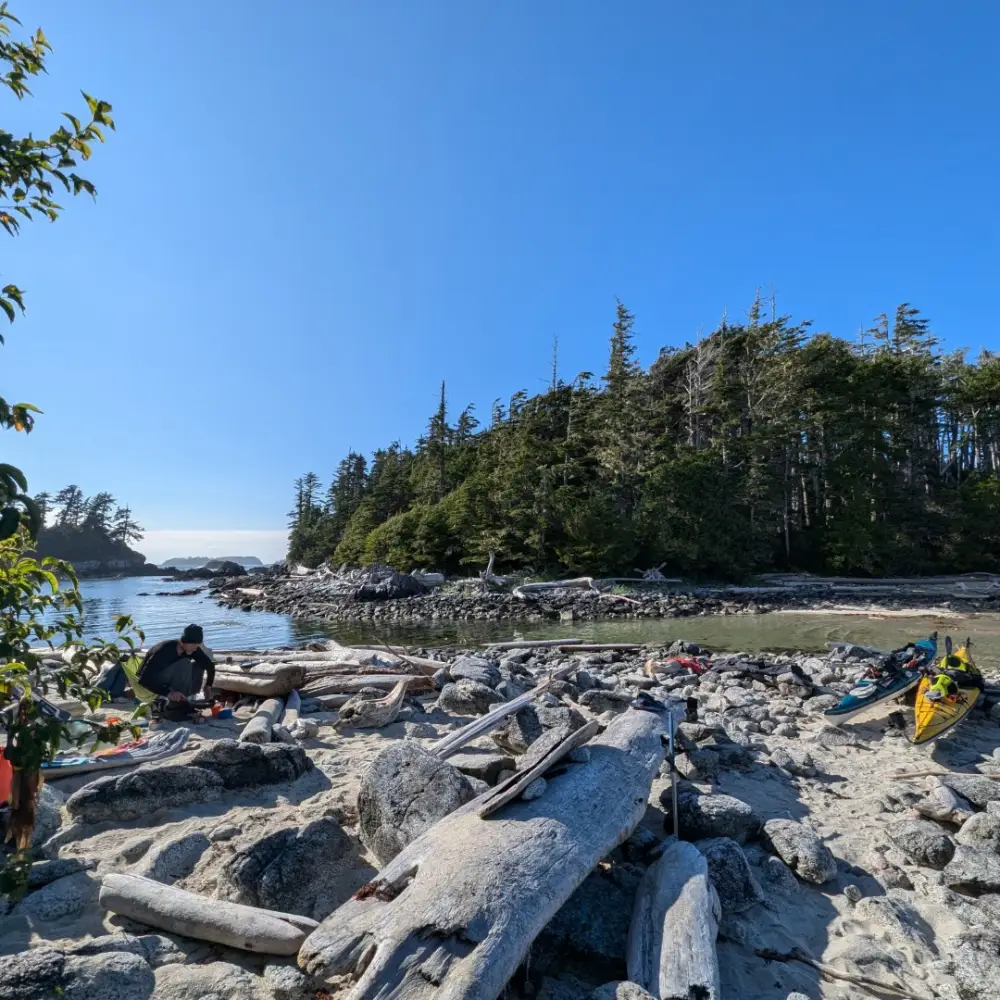
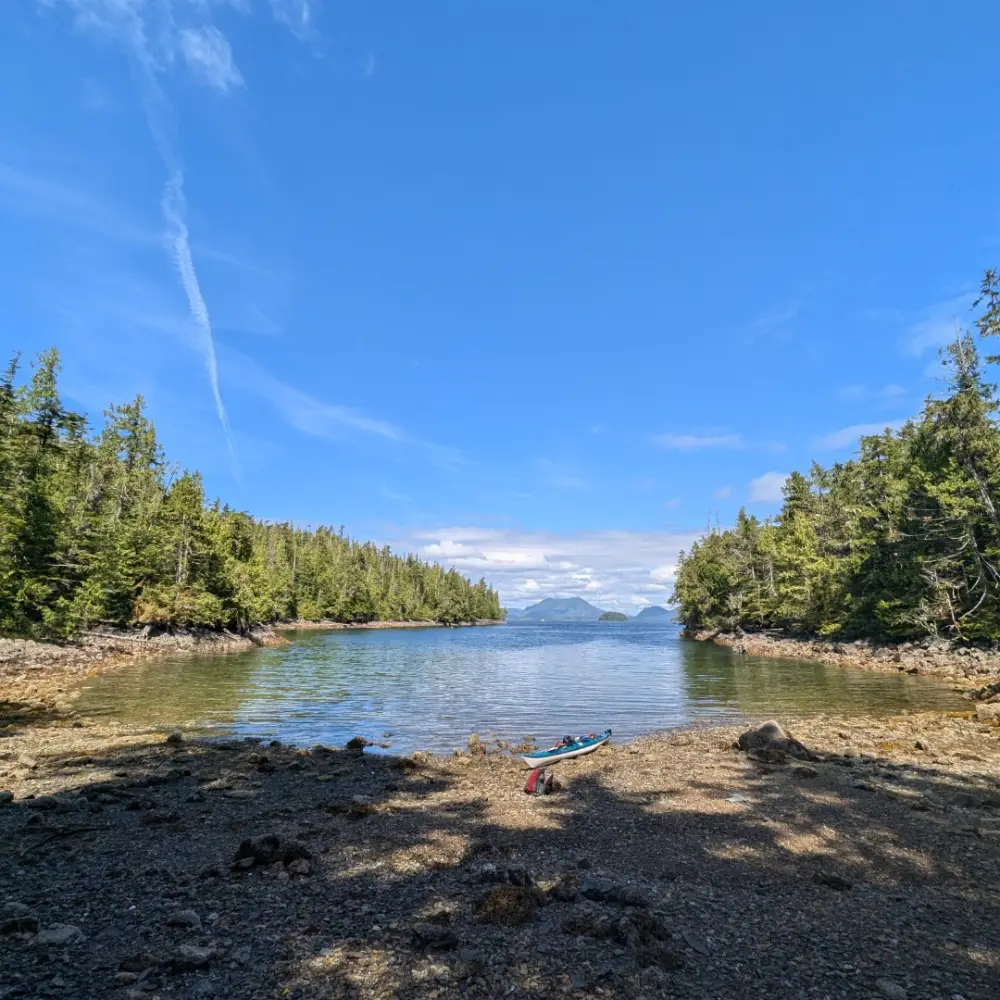
We officially launched our kayaks from McLoughlin Baywhere the BC Ferry docks, just south of Bella Bella. Kayaks and gear are unloaded from the ferry, we pack the boats, and begin the paddle heading south down Hunter Channel, aiming for Solesby Island. Day one was a “trial by fire” 17km paddle after a long day of ferry travel and (un)loading. However, the conditions were flawless with clear skies, light winds, and beautiful sights ending at a stunning shell beach campsite where we setup camp.
The following day, we decided to stay put on the shell beach for a second night. We spent the day exploring Campbell Lagoon just north of our position and enjoying the sunshine.
The Tribal Group
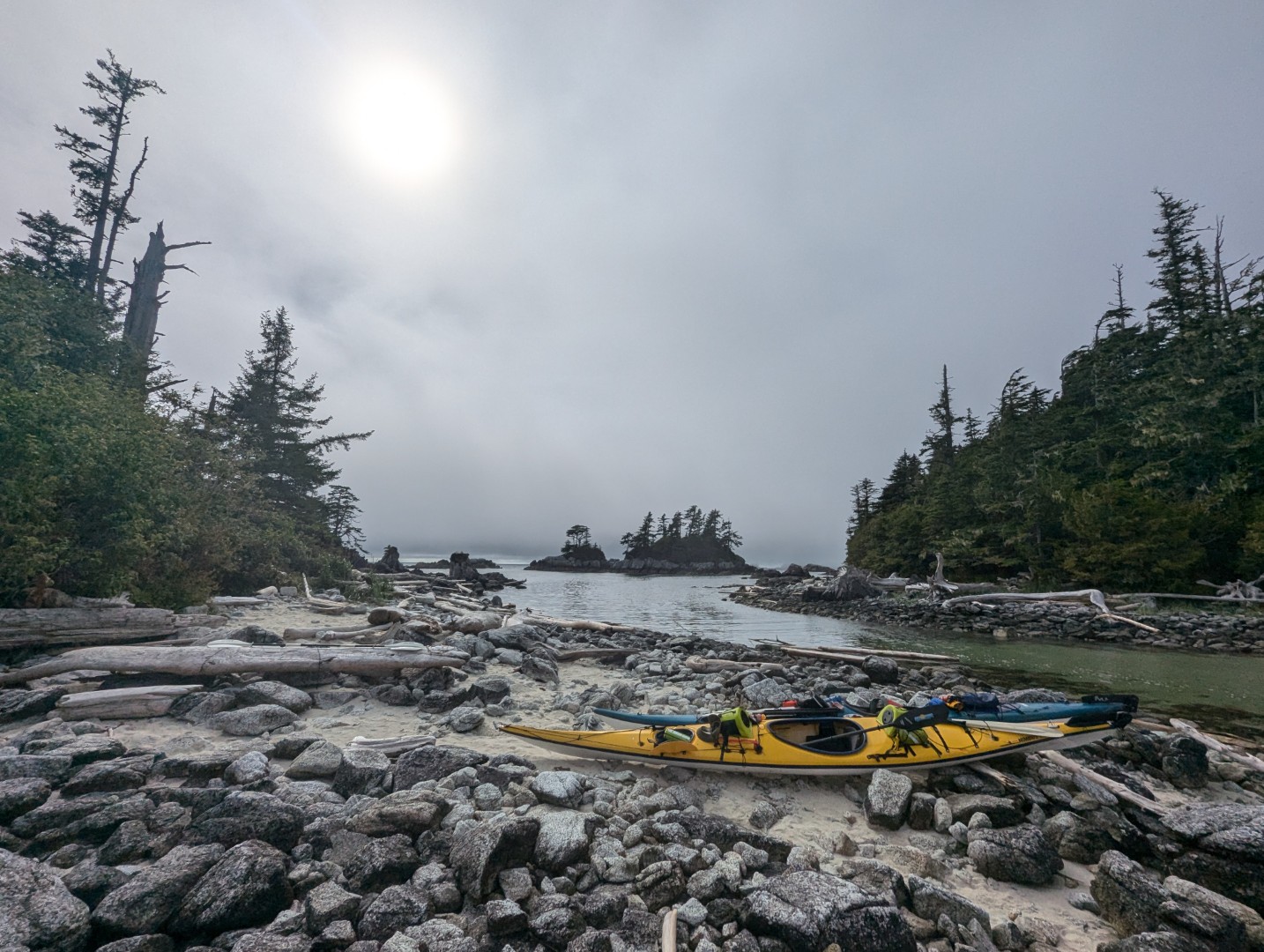
On day three, we travelled north past the Admiral Group of Islands, and into a section of islands known as the Tribal Group. Conditions were good but the sun had left and we paddled under grey skies.
The McMullen Islands: Fog, Flora, and … Grizzlies
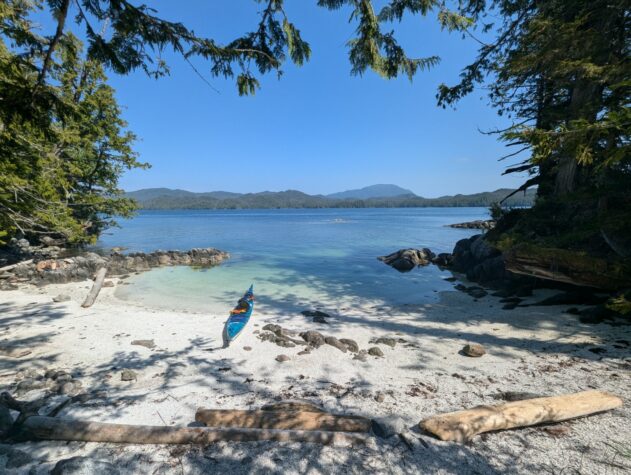
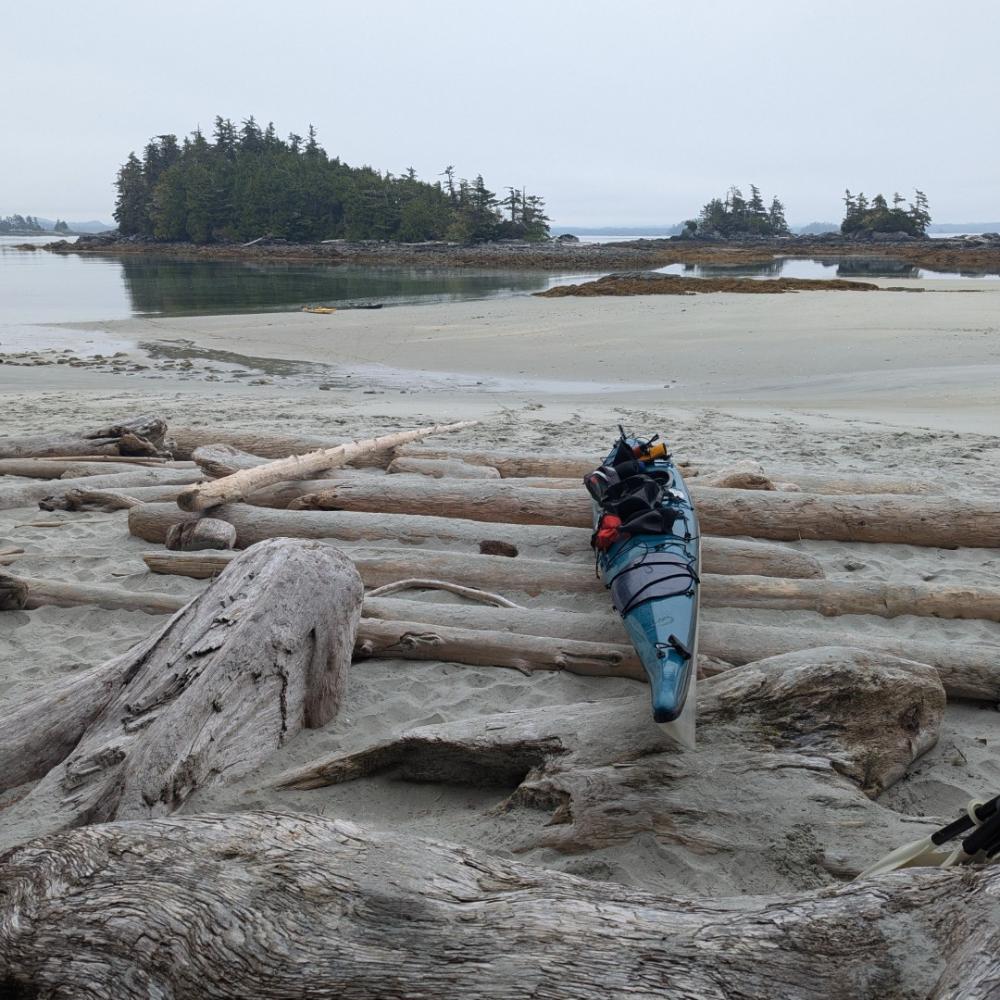
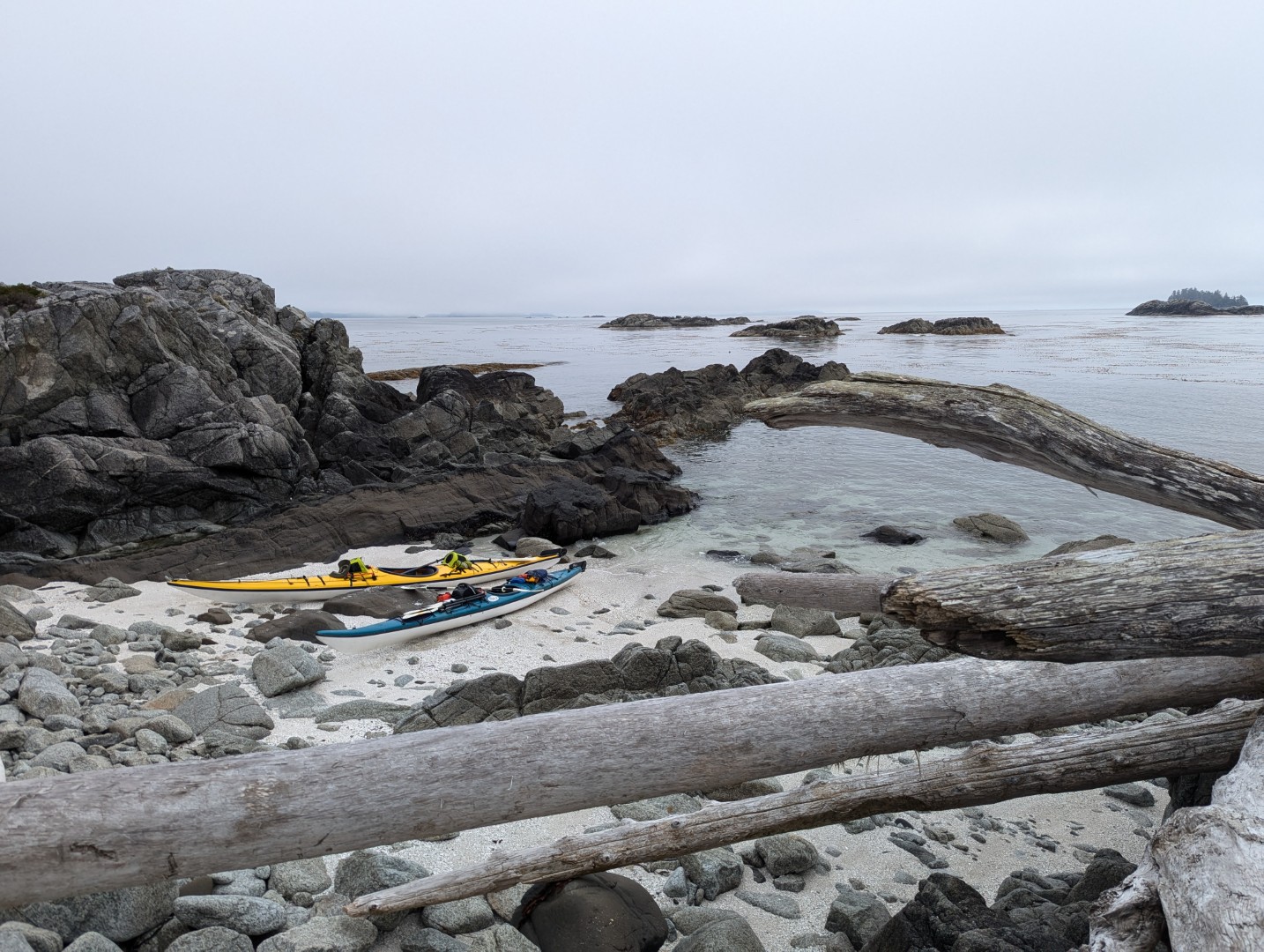
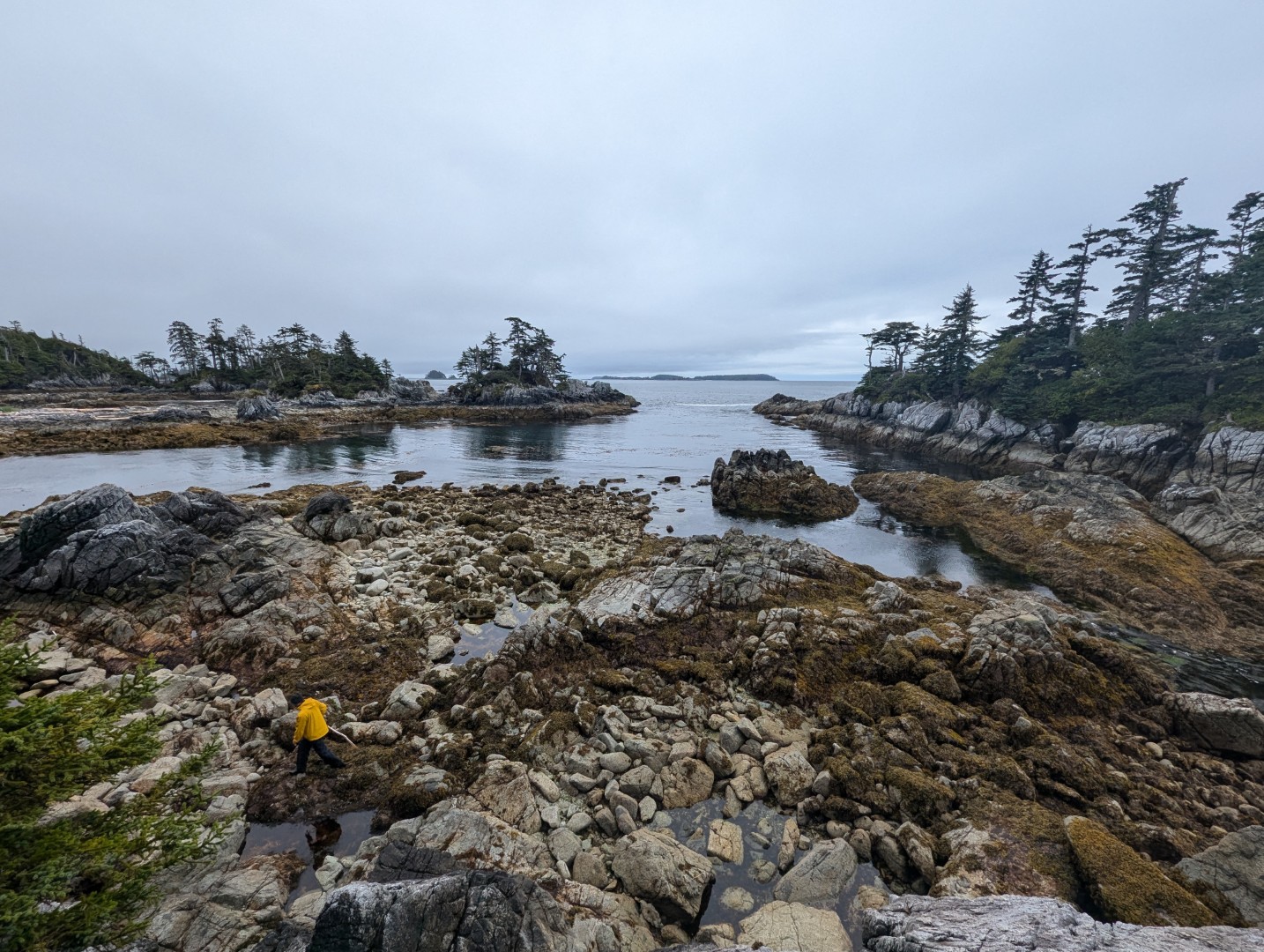
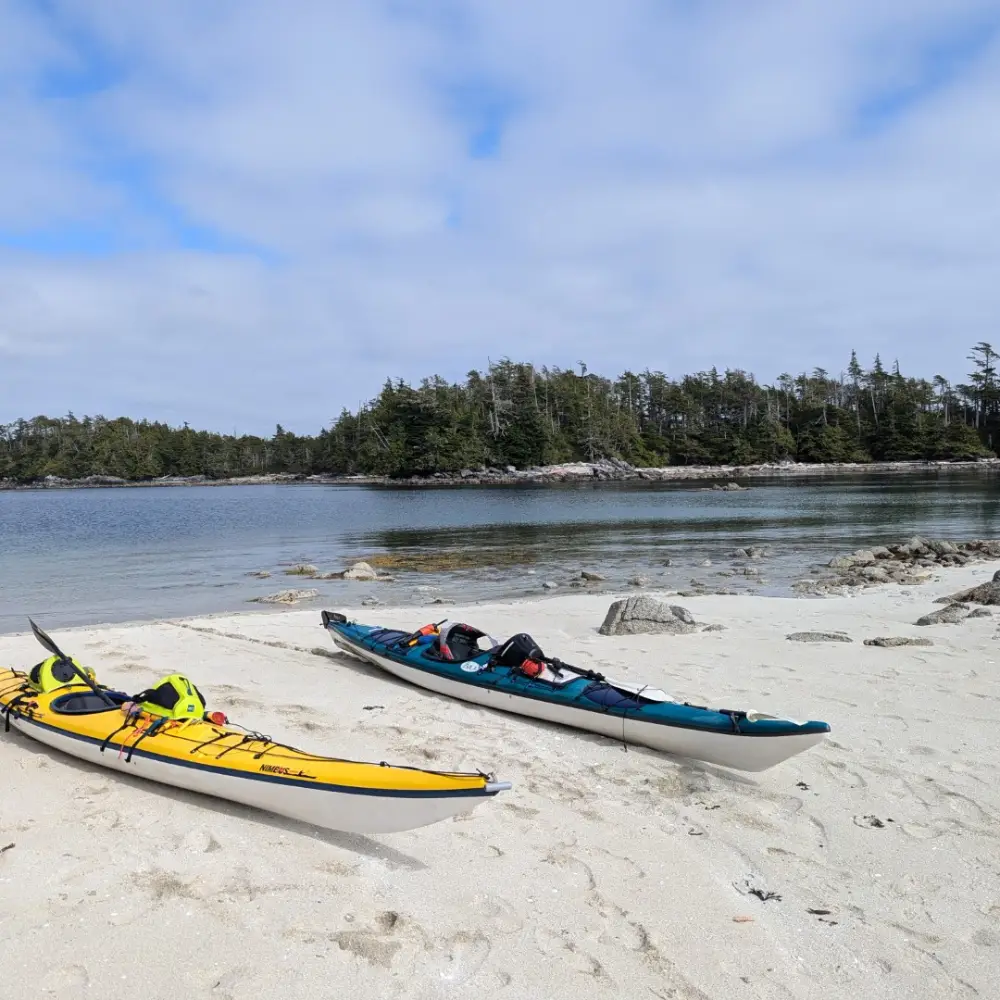
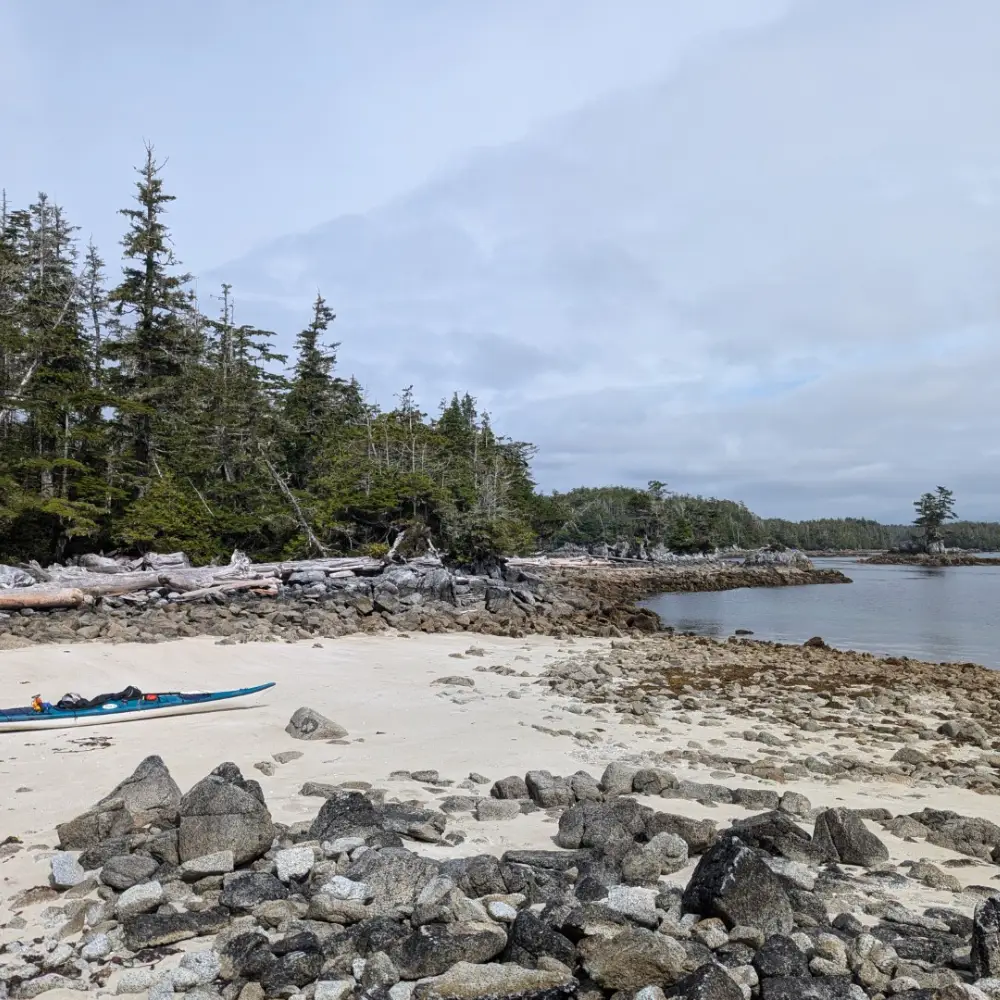
The midpoint of our trip was spent at the McMullen Group of Islands. This was the westmost point in our journey to the Outer Central Coast Islands Conservancy. The McMullen Group is known for their “tropical-looking” white sand beaches and complex reefs. The group consists of several small islands and numerous rocky islets. At high tide, they appear as a cluster of separate landmasses, but as the tide drops, many of the islands become connected by massive, soft white sand beaches and tidal flats.
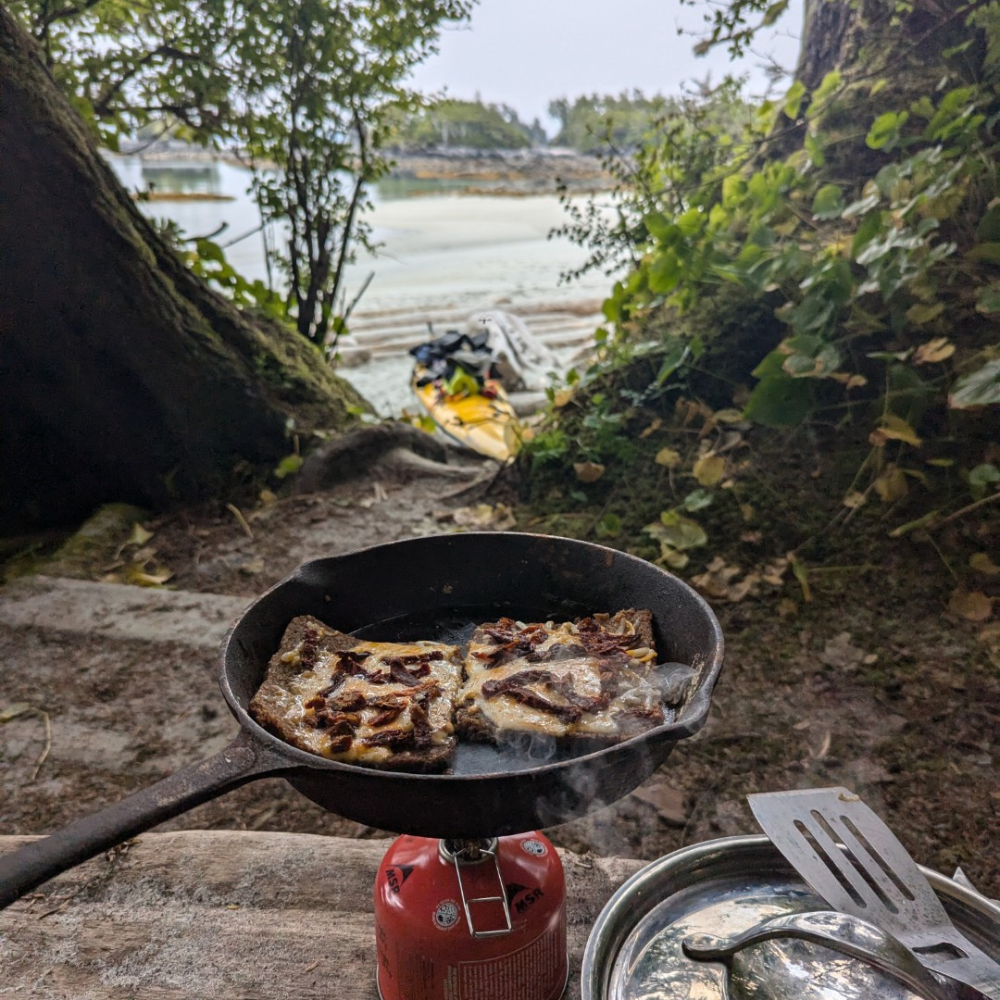
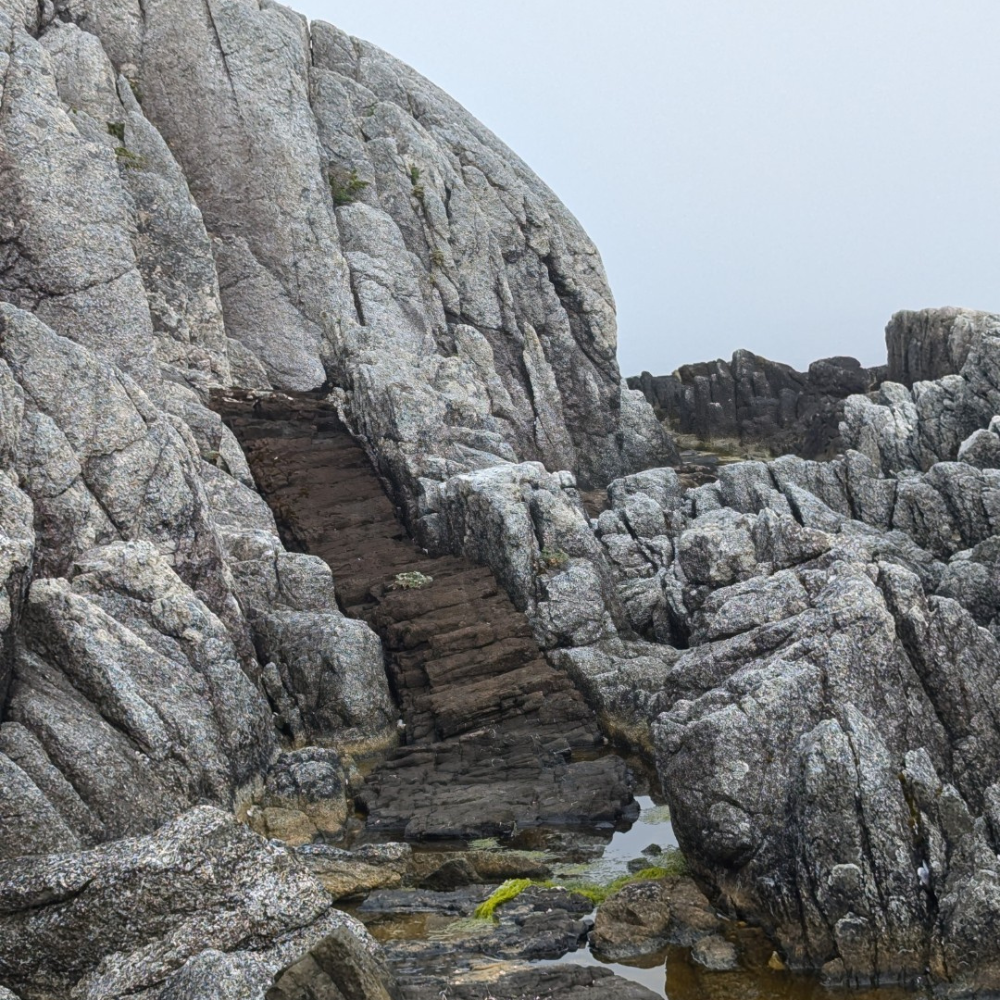
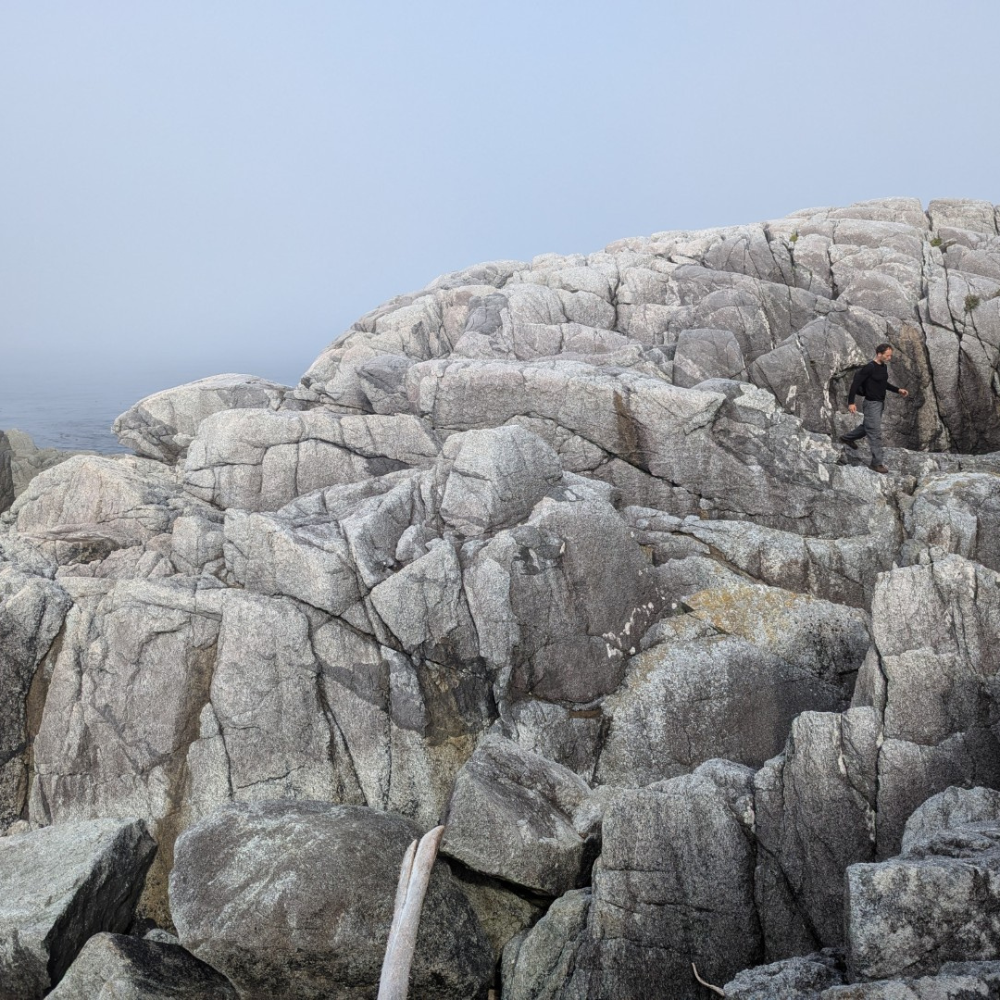
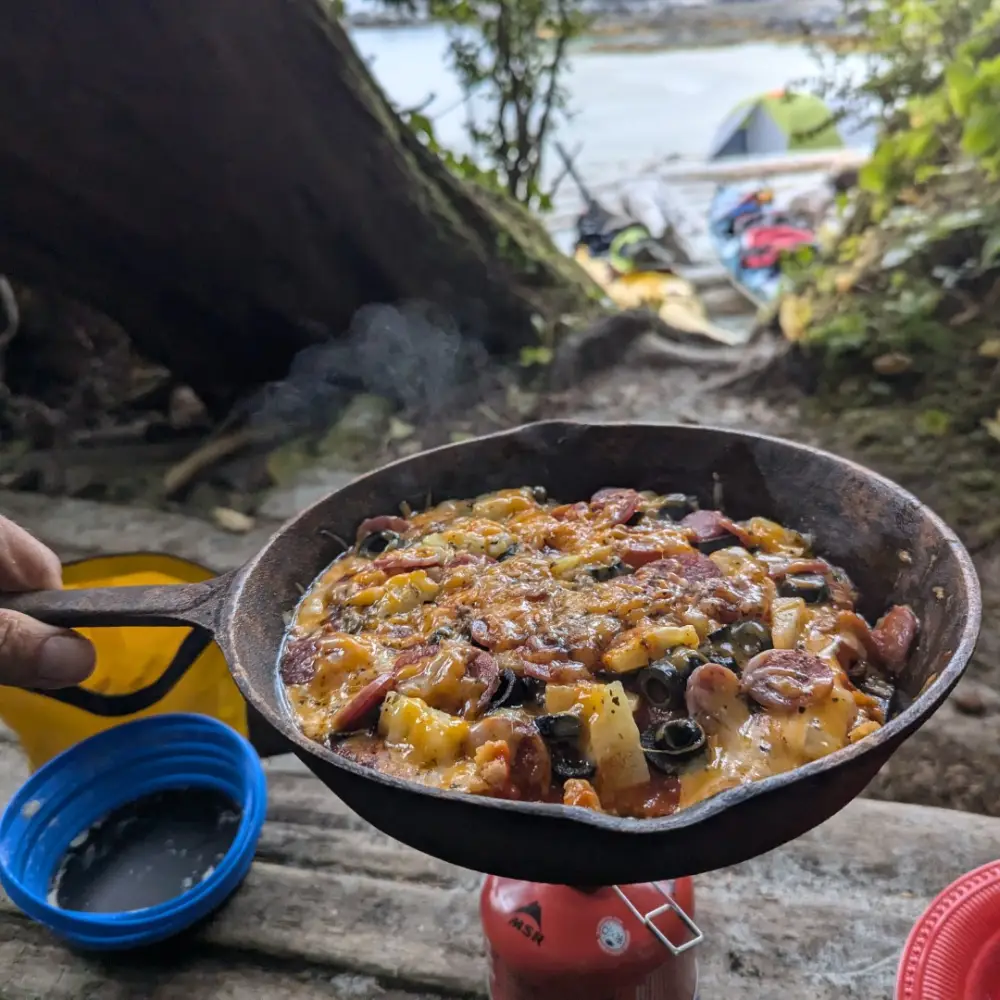
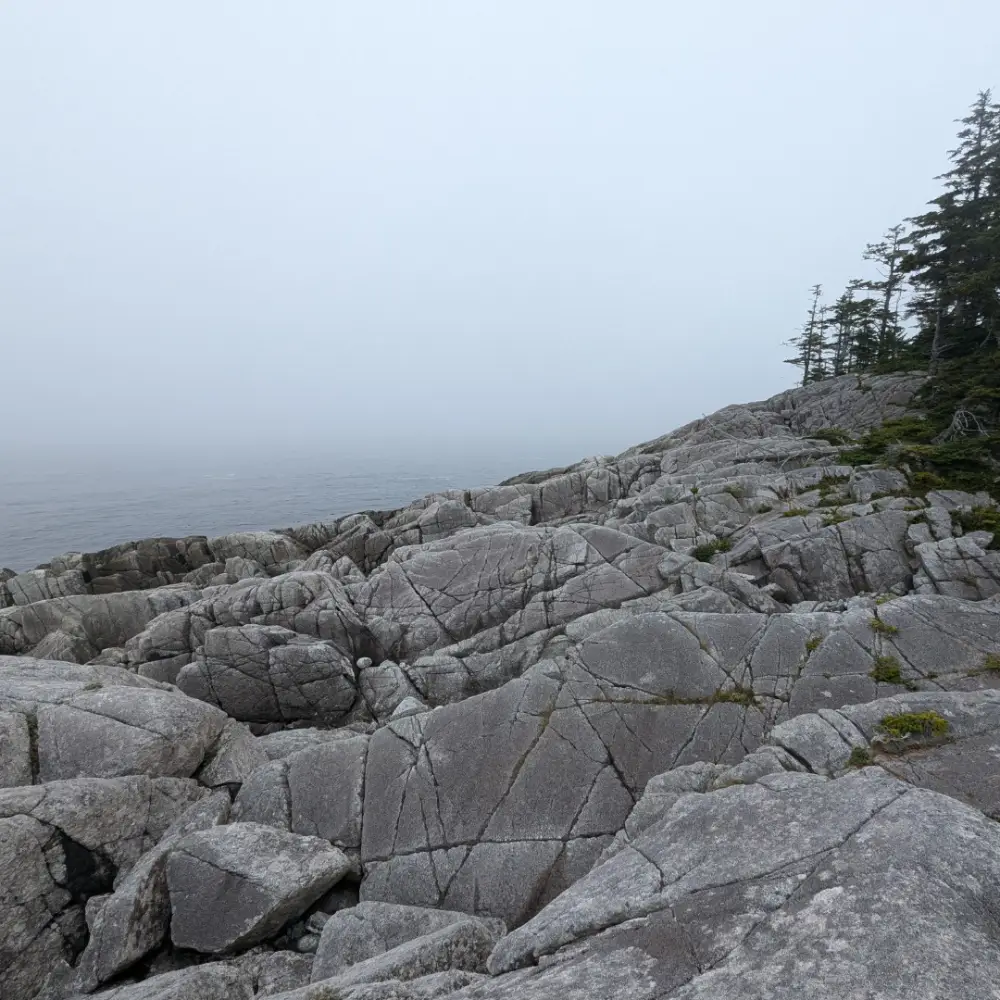
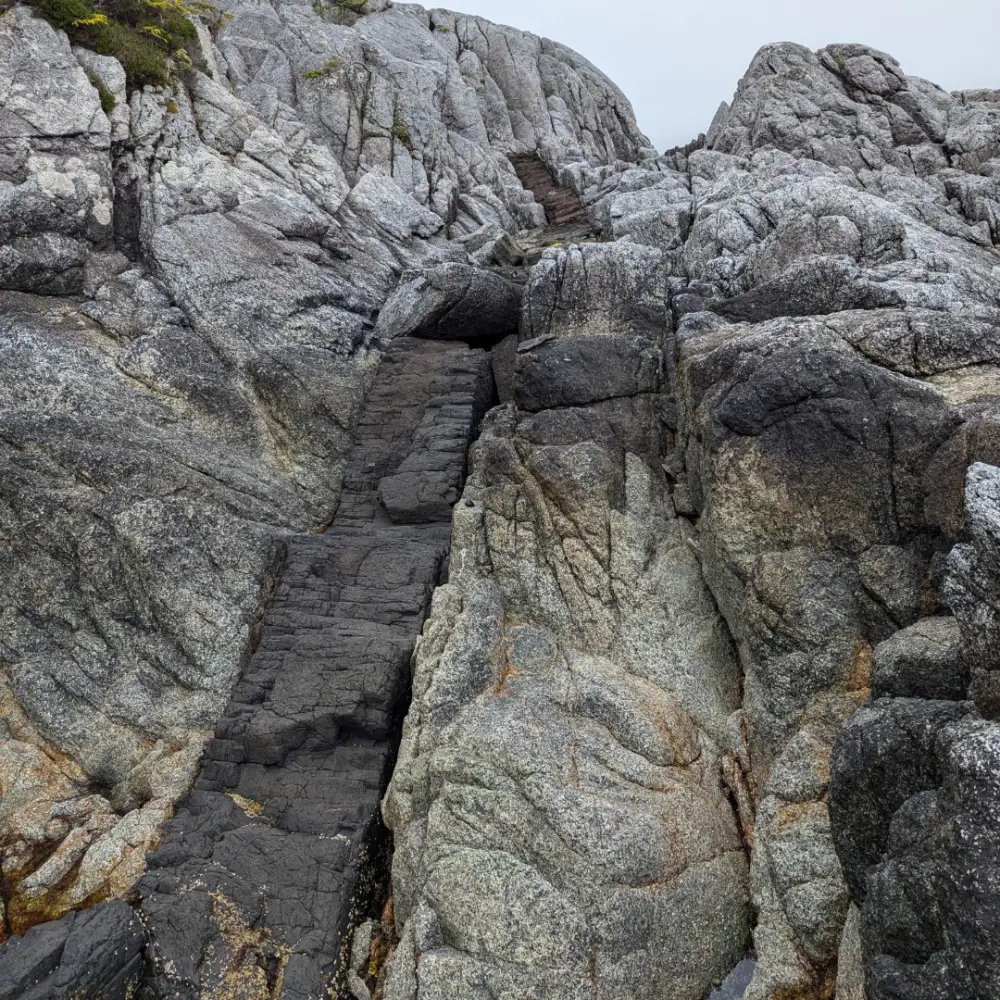
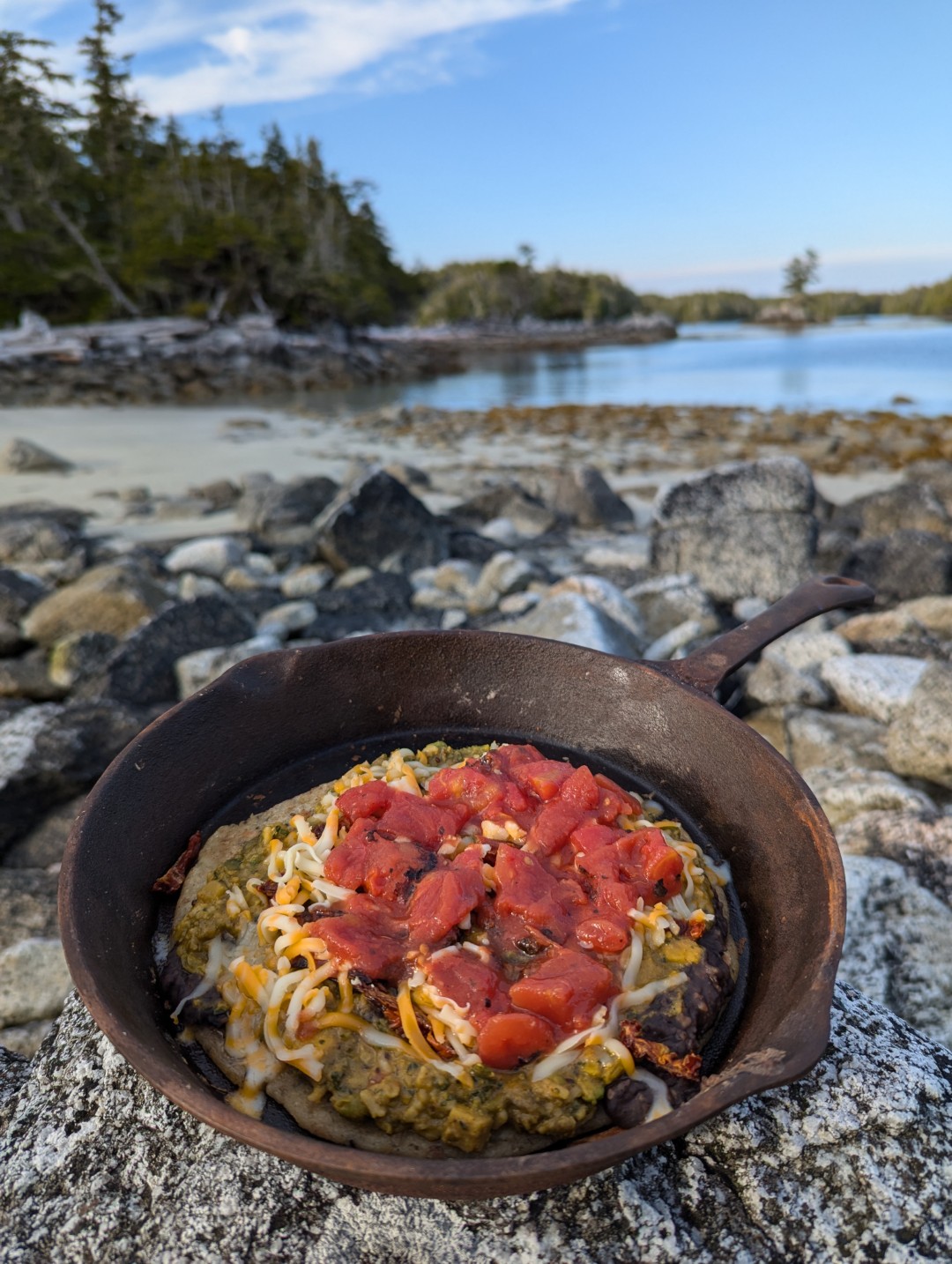
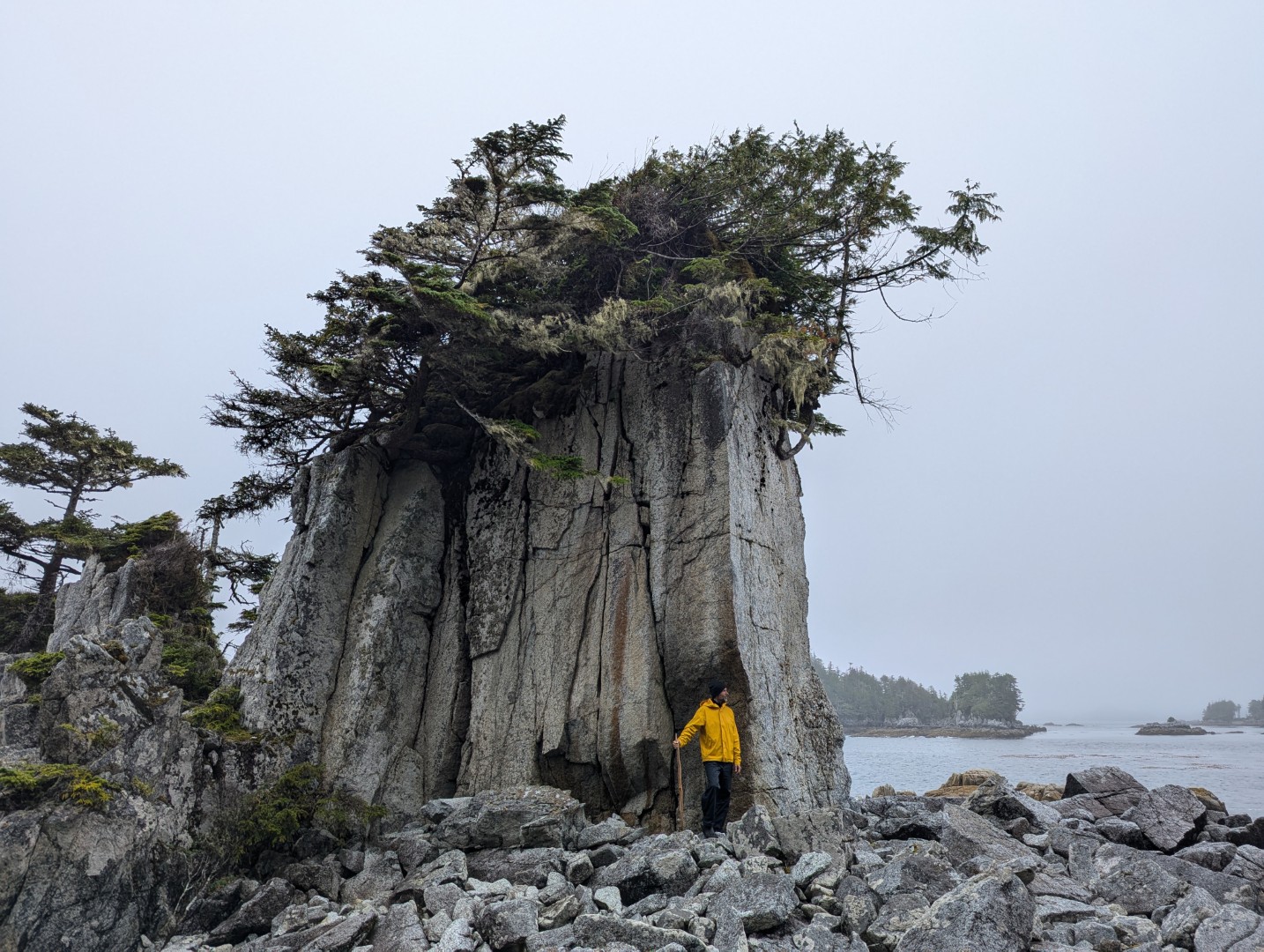
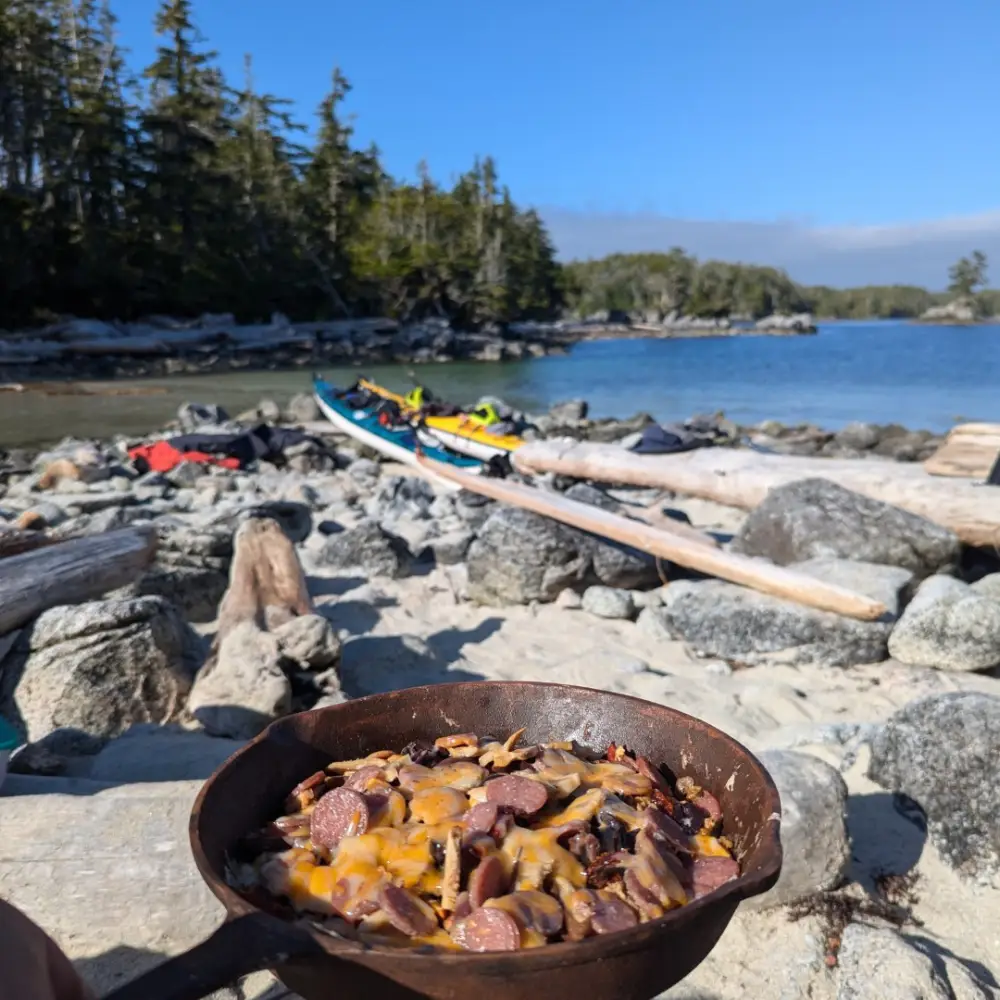
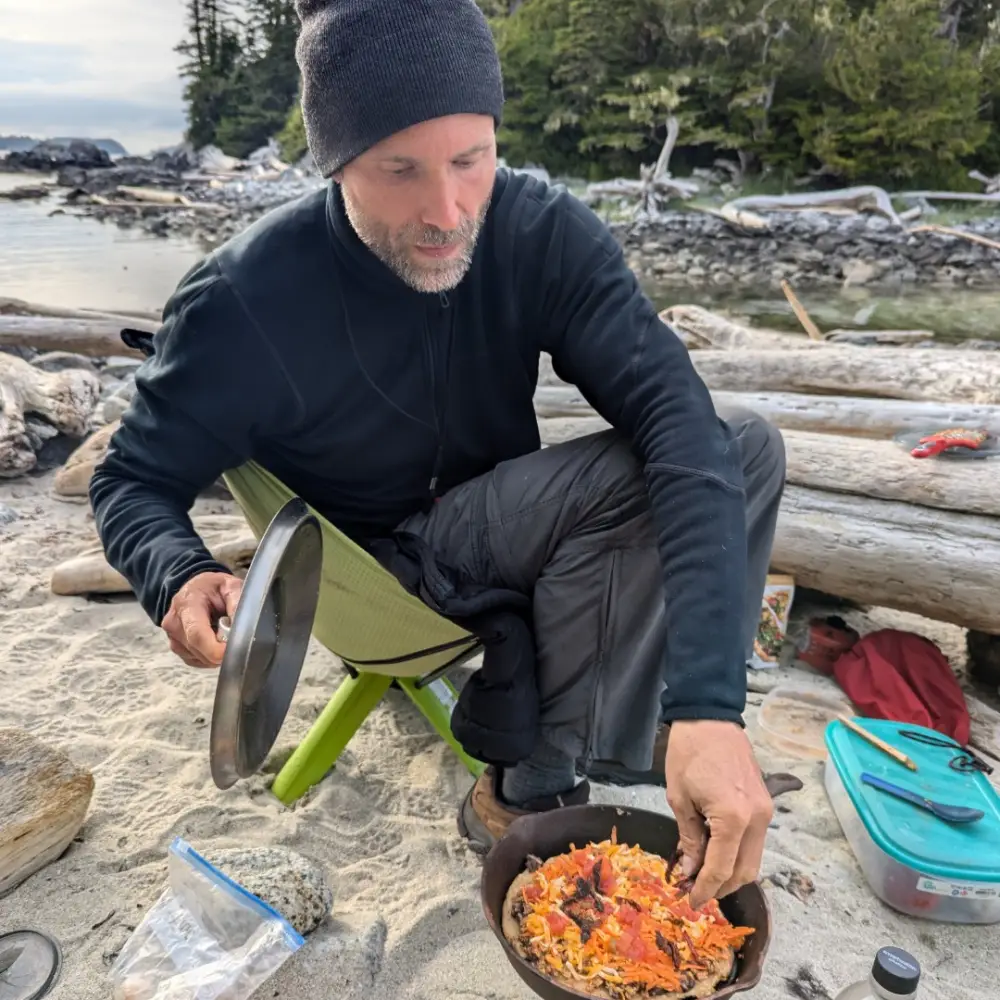
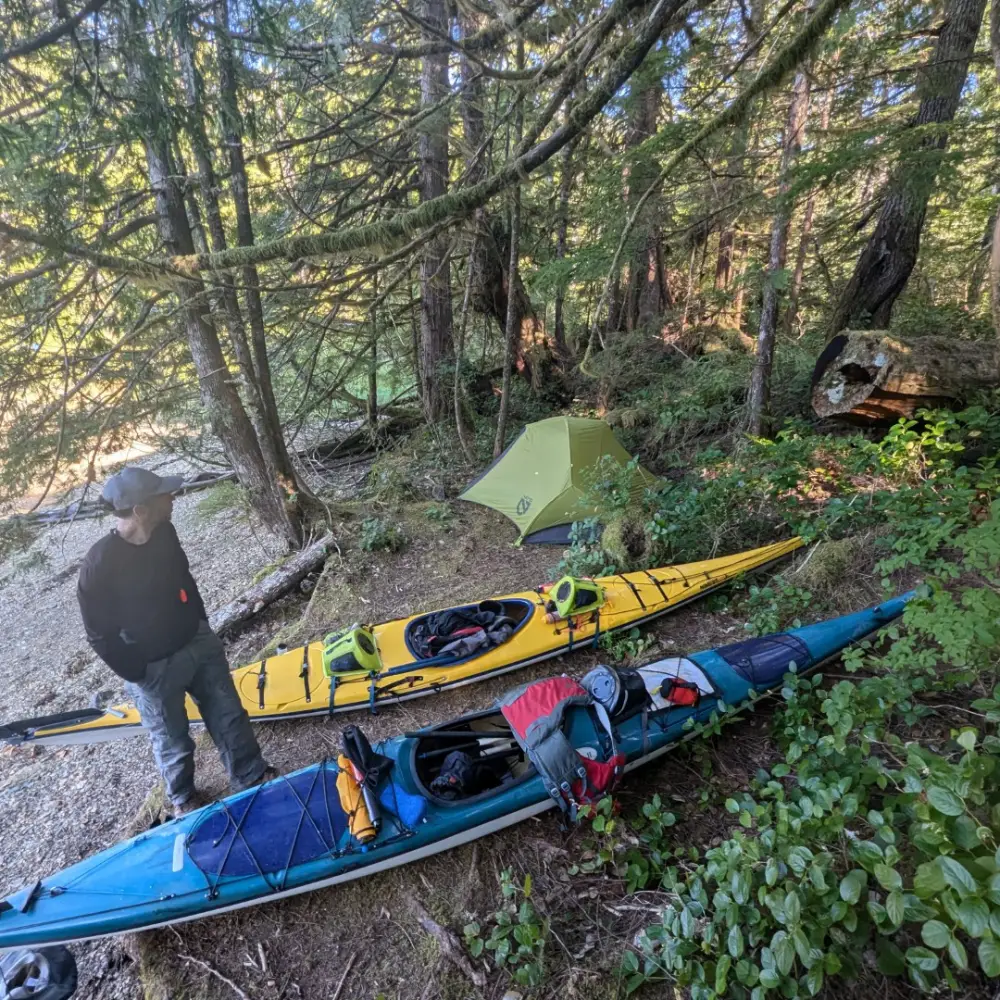
We explored the beach here and crossed the island to explore a neighboring island that was accessible at low tide. Here we found a massive granite cliff facing the west coast. The rock was remarkable and contained paths and staircases of dark stepped bands of rock cutting through the lighter granite which we believe to be basalt. We explored the island before returning for rest and sleep. Shawn made a cast iron pizza that was shared and my mind was blown at enjoying such a treat out here in the wild.
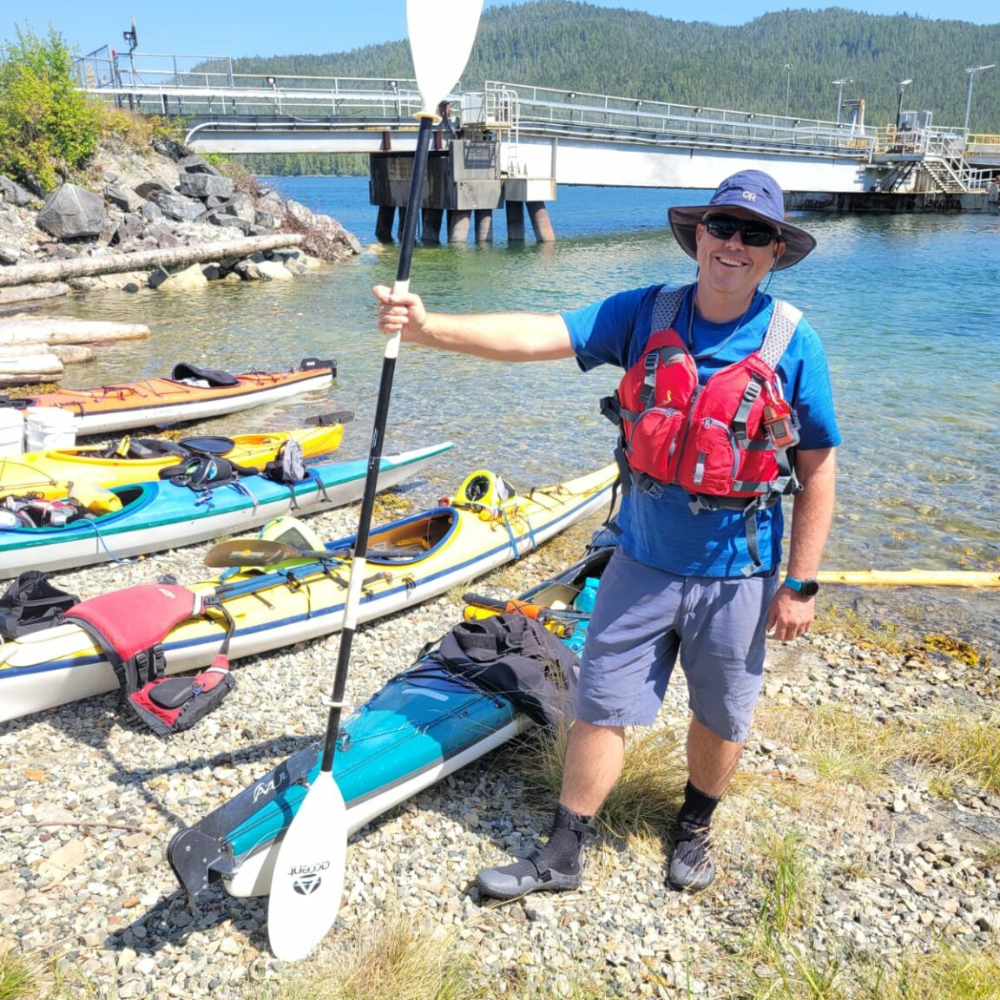
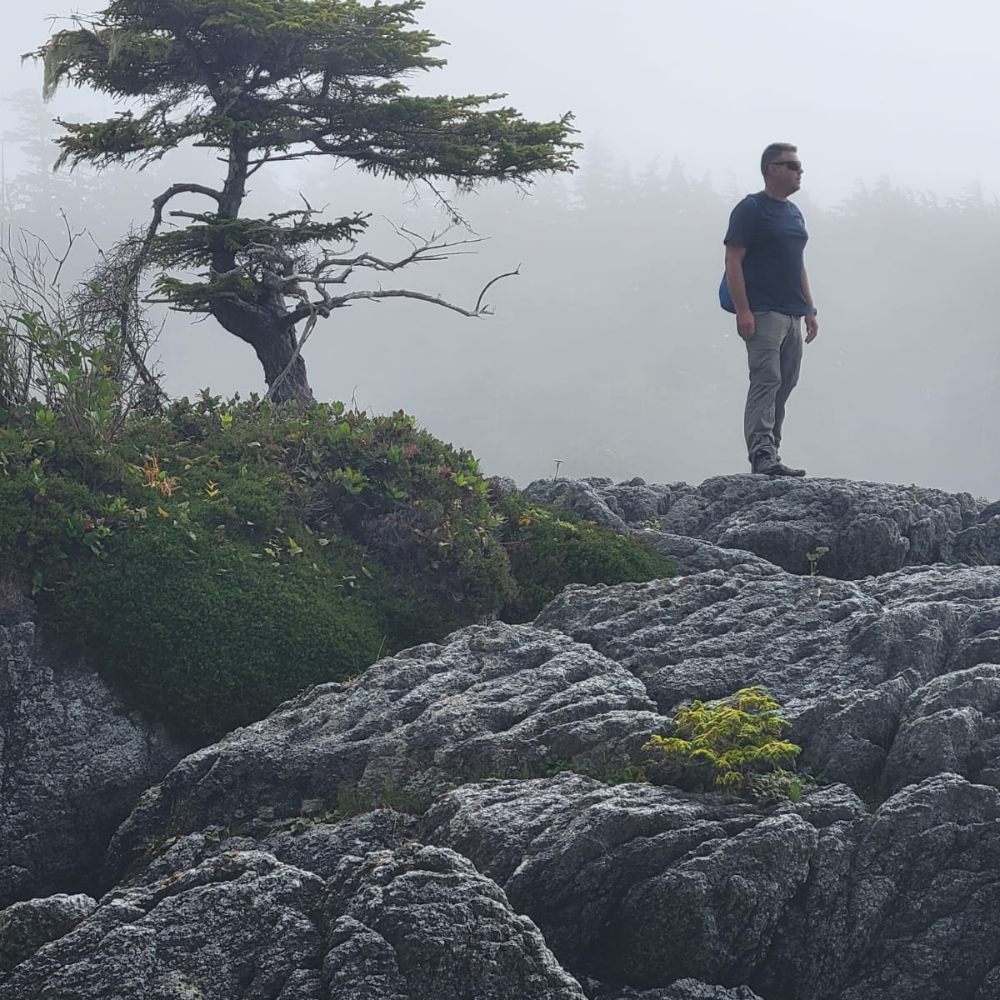
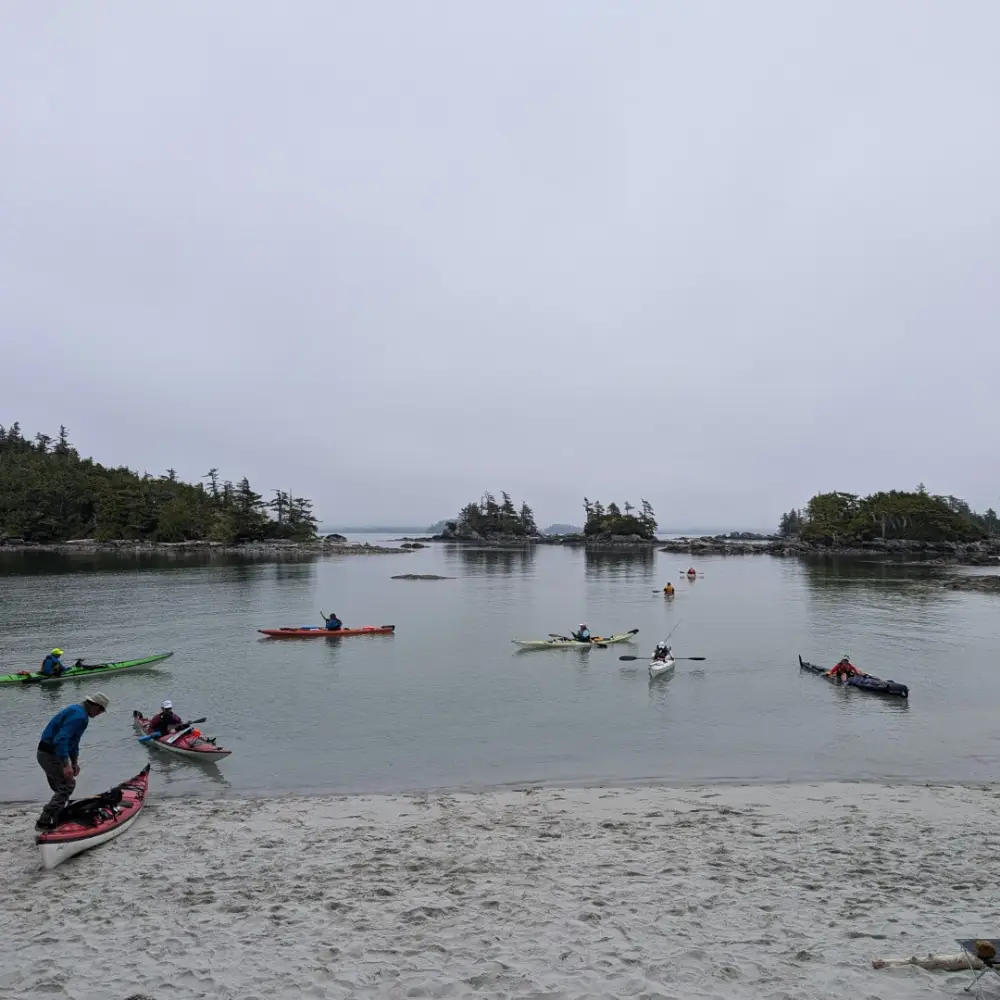
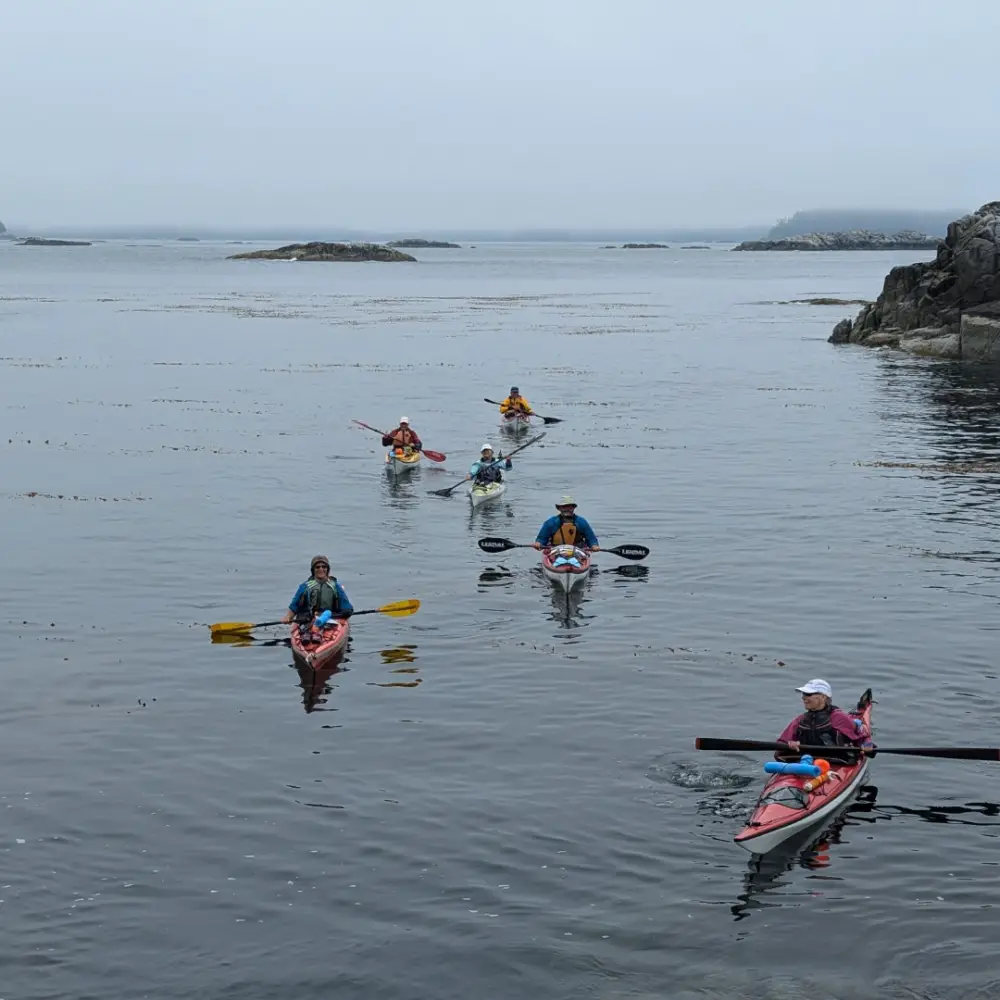
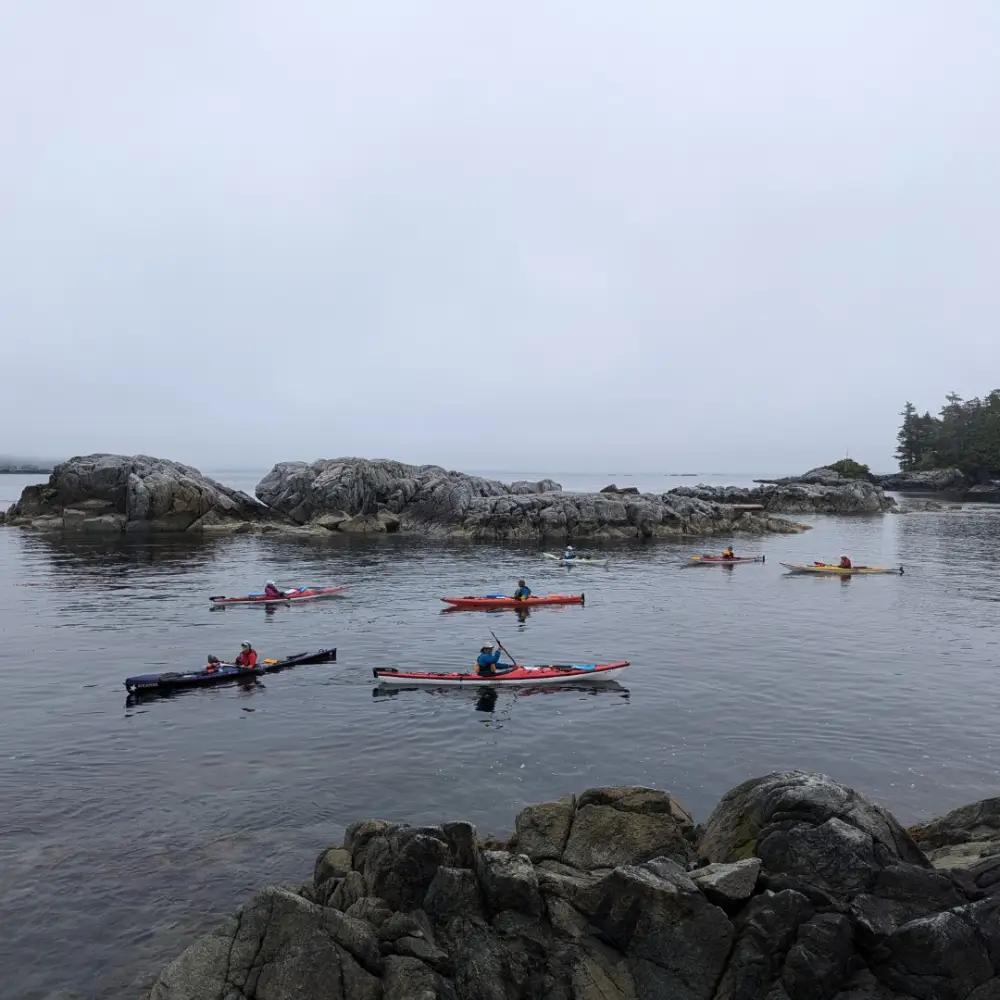
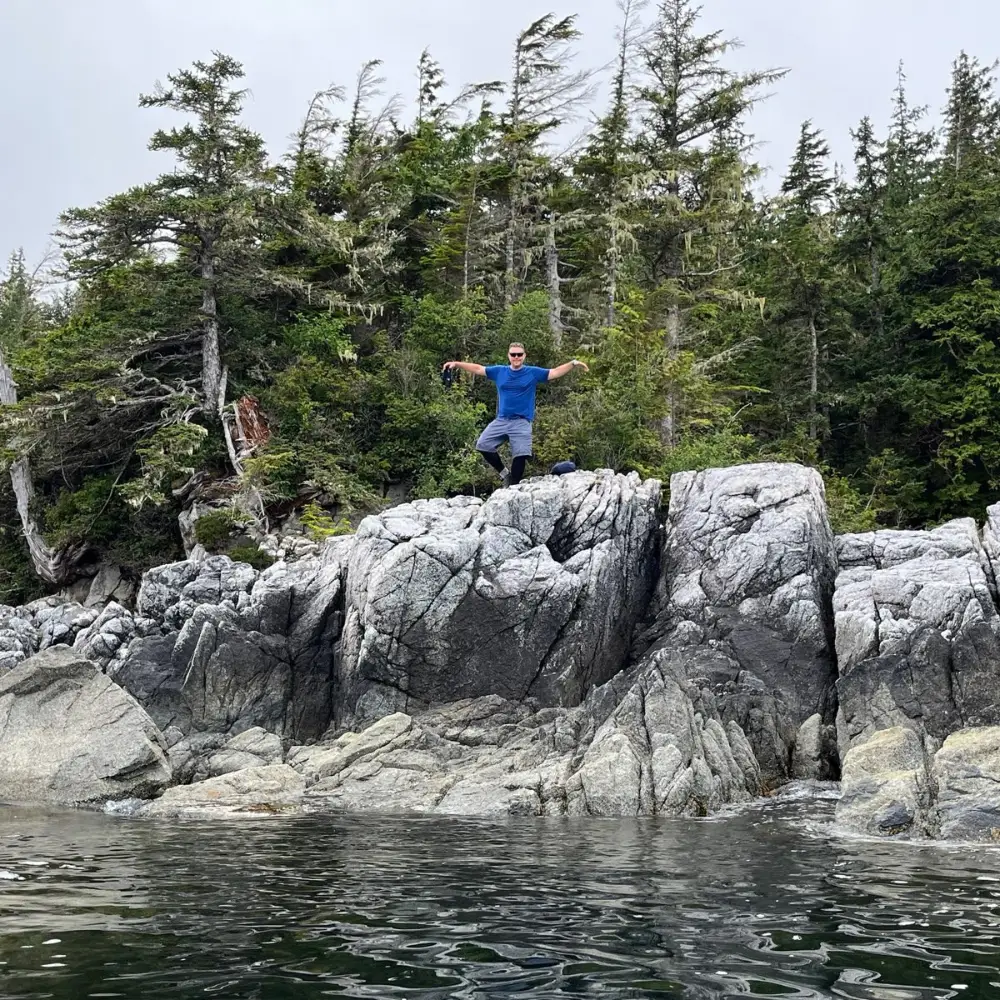
We shared the island with a group from the Nanaimo Paddlers Kayaking group. This was a large group of nine kayakers, but they were mostly well behaved. I enjoyed capturing some photos of them on the water and they shared one of me on the rock.
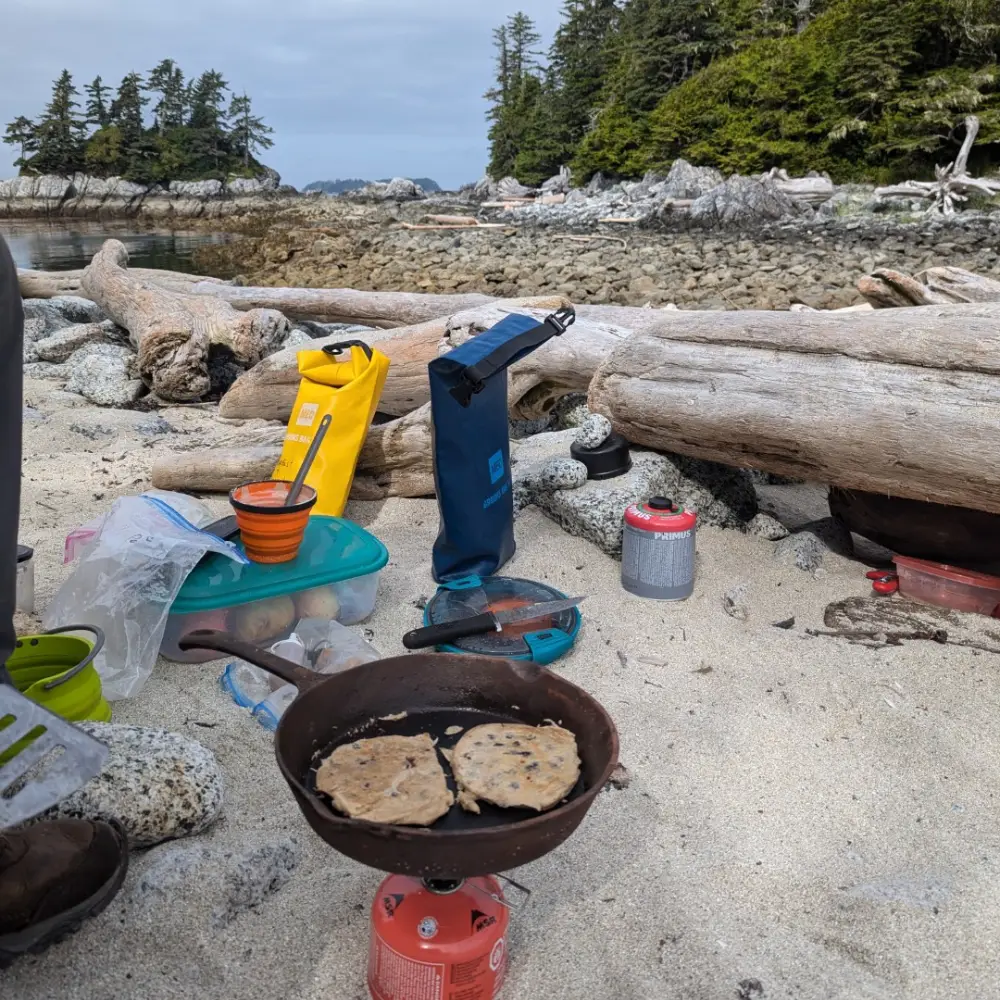
The following day we enjoyed another cast iron creation (thanks, Shawn). I collected fresh water, warmed in my jet boil, and used a modified dry bag with a spout to have a shower against the root of a giant fallen tree. Not the best shower I have experienced, but certainly the wildest.
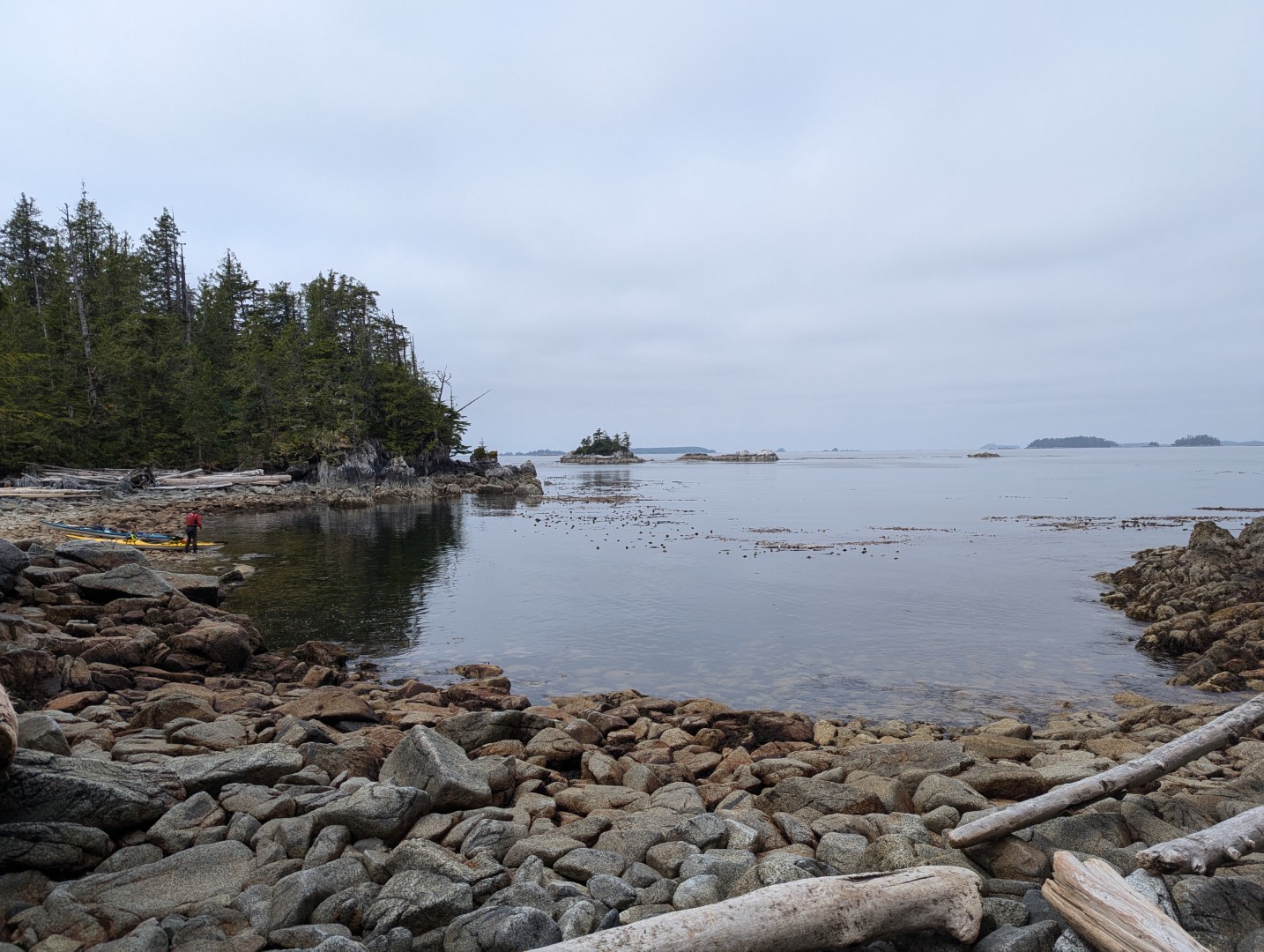
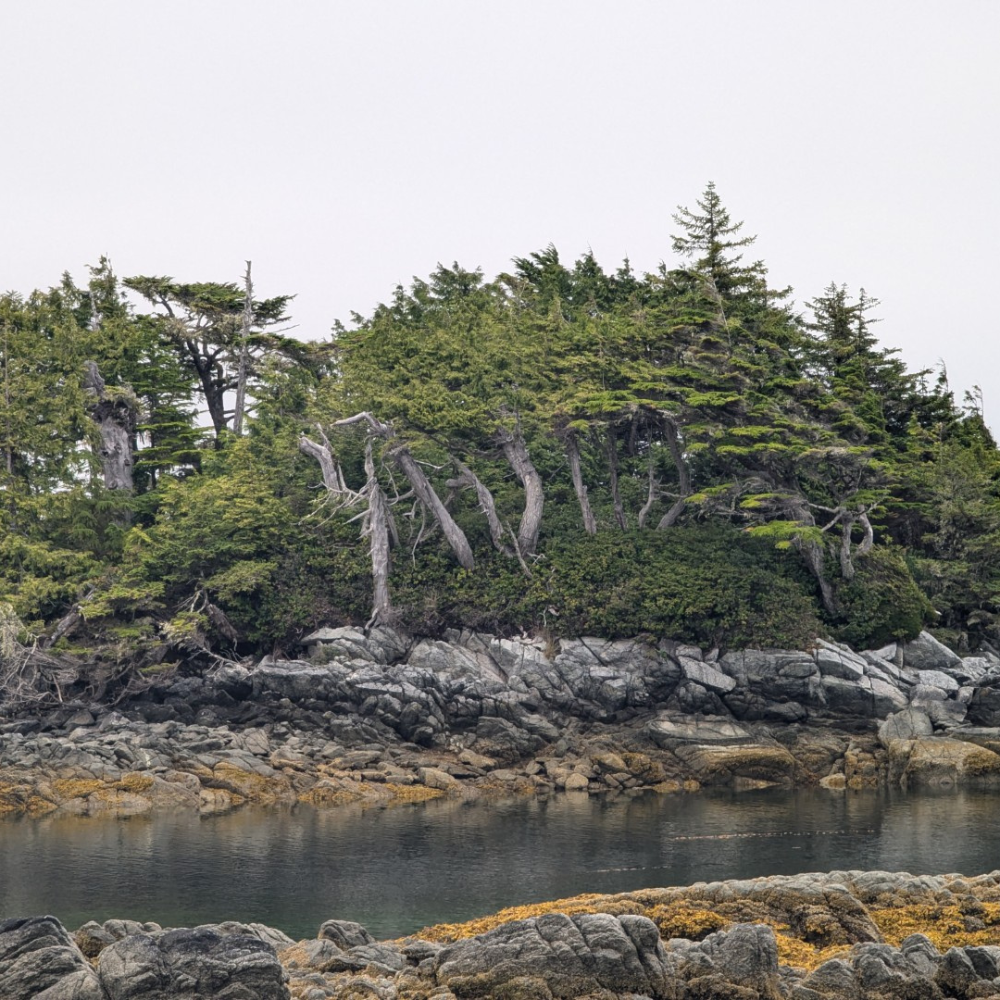
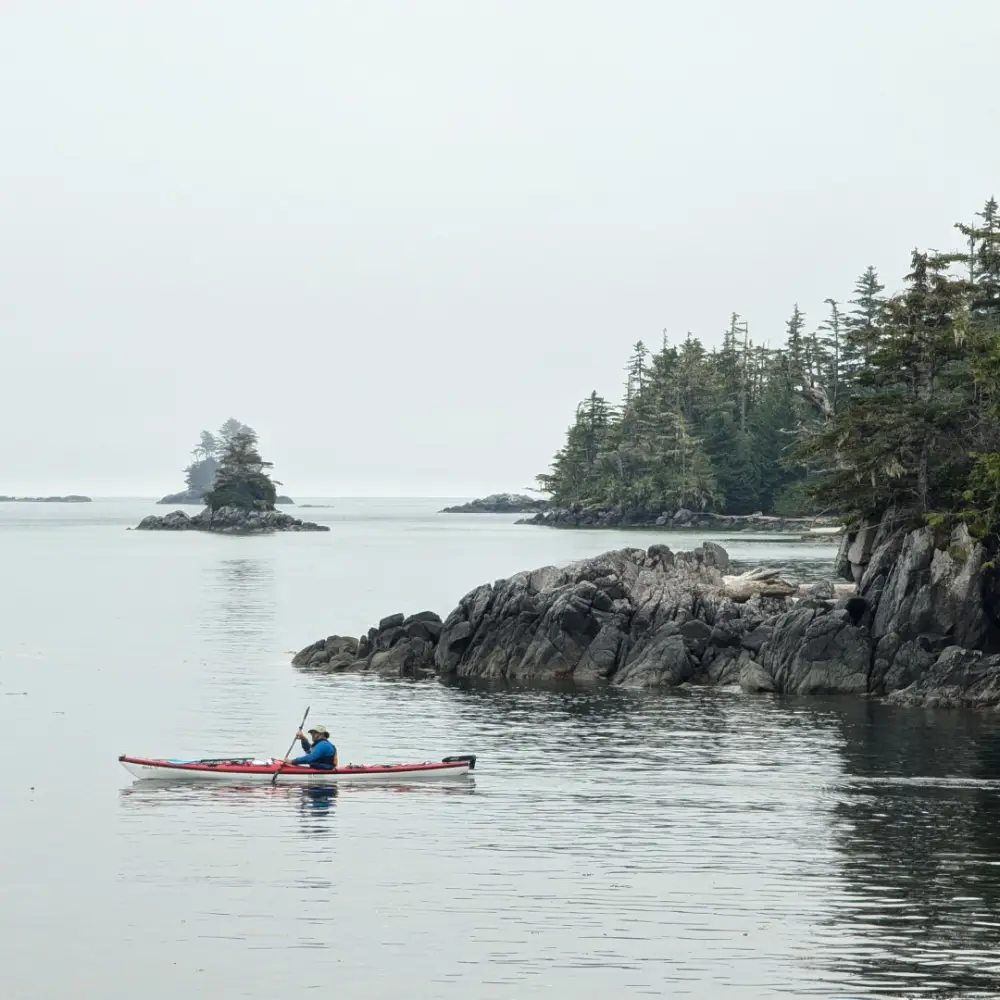
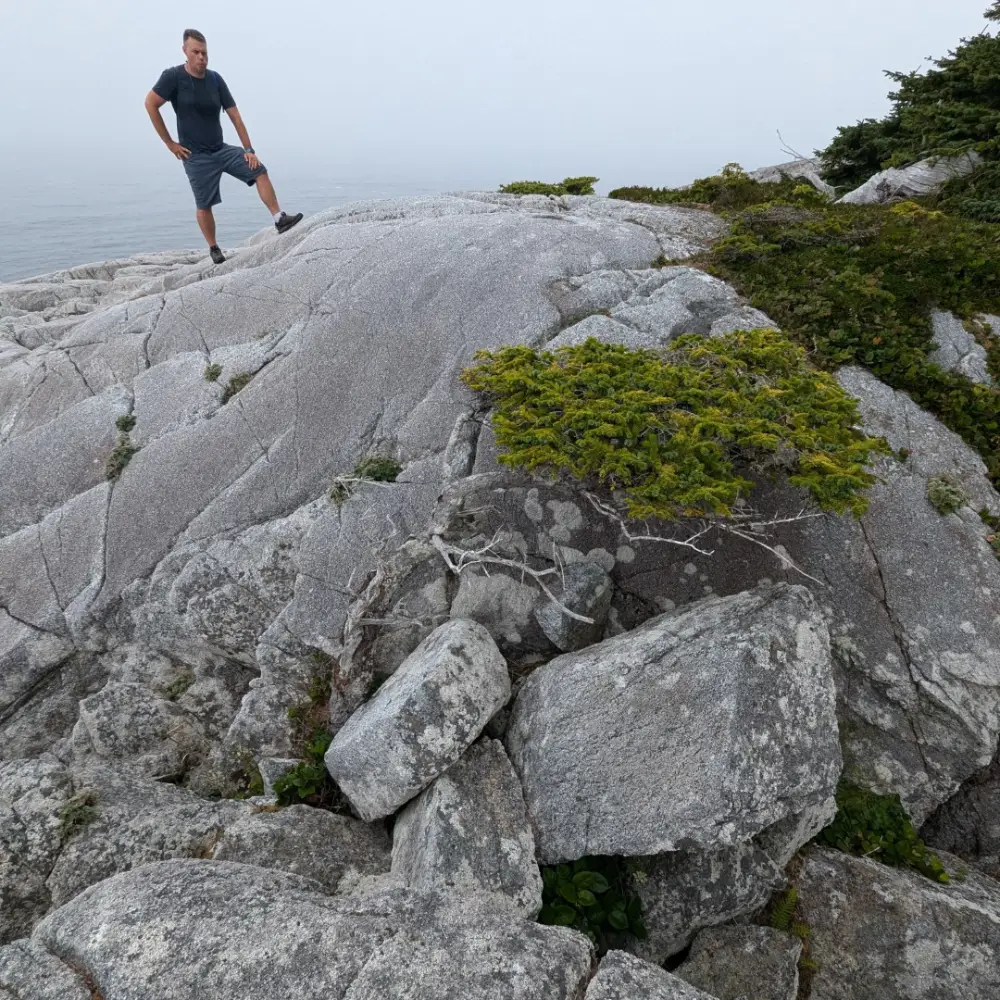
We decided to return to the small island west of us at low tide and circumnavigate via the shoreline. There was much to explore here with the white rock ridges, black basalt lava belts, and heather and stunted trees clinging to the cliffs.
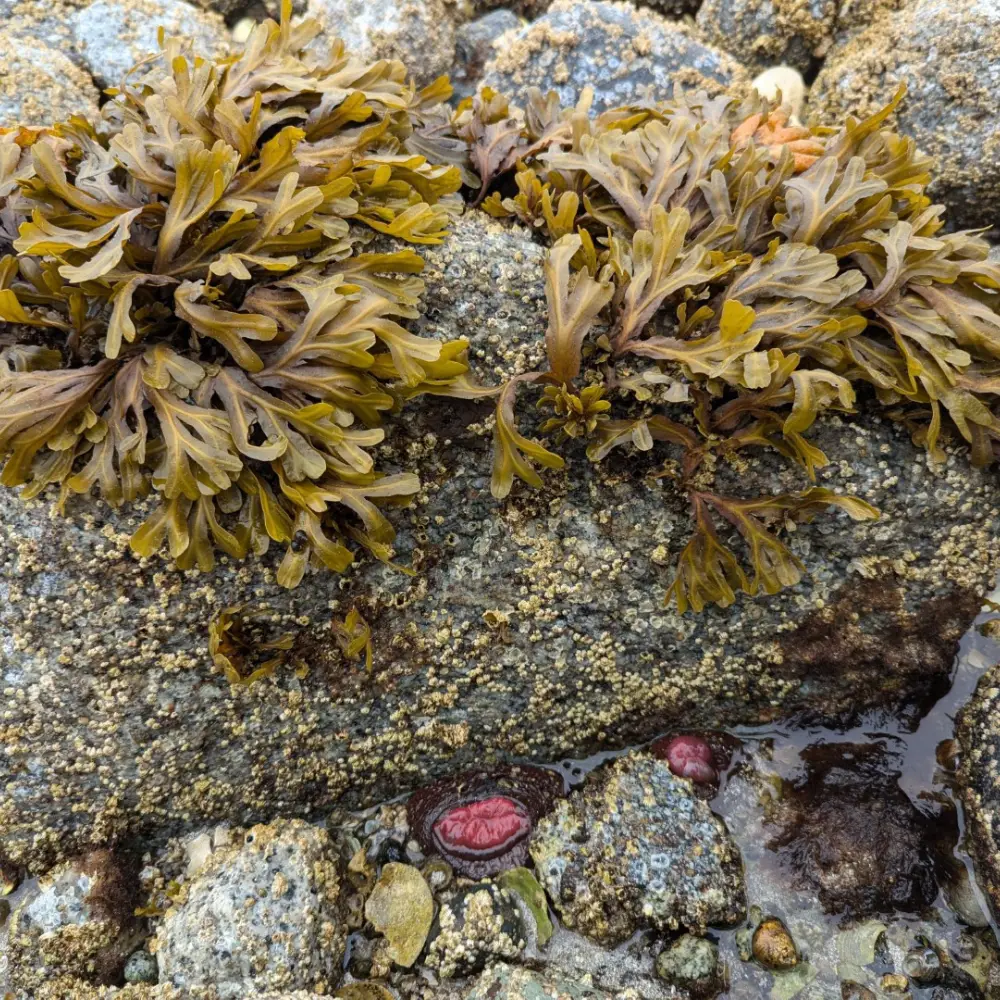
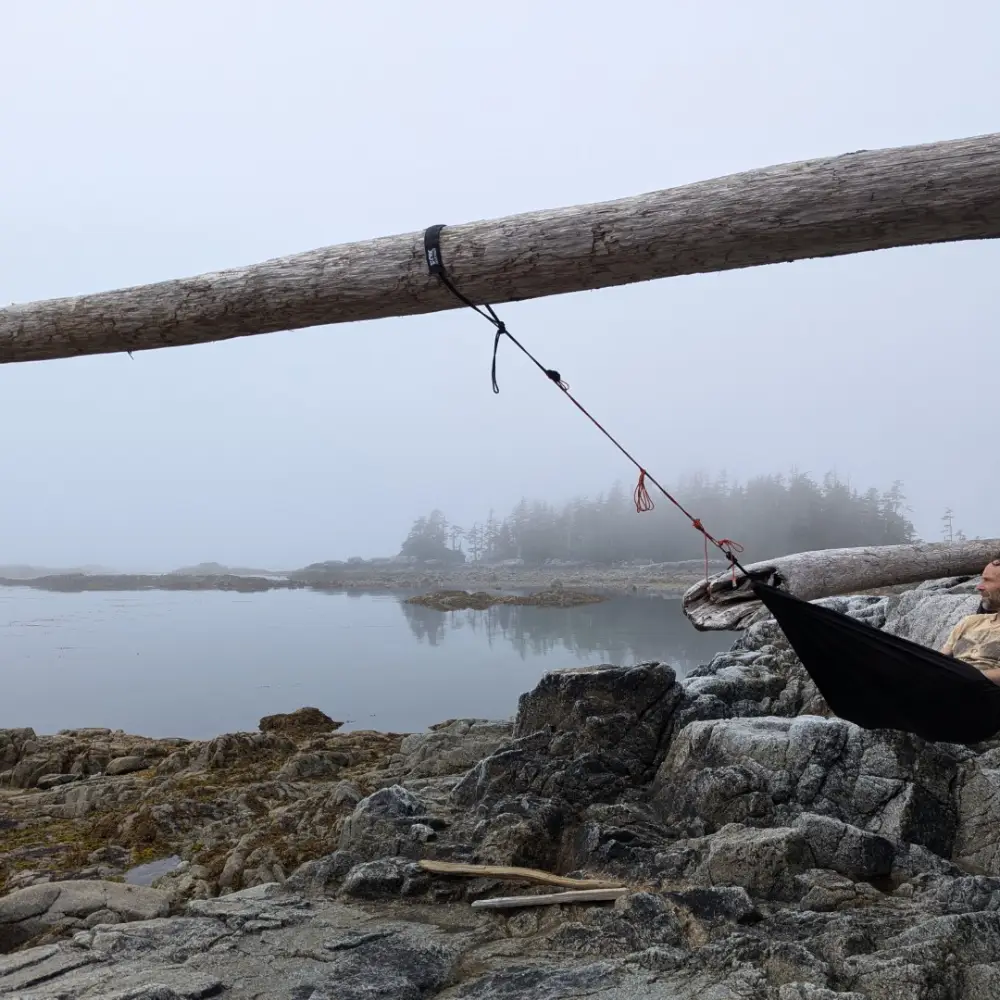
After rounding the island we returned to our home island and Shawn setup his hammock while I continued exploring the tidal pools. This is where the expedition shifted from a physical challenge to a spiritual one.
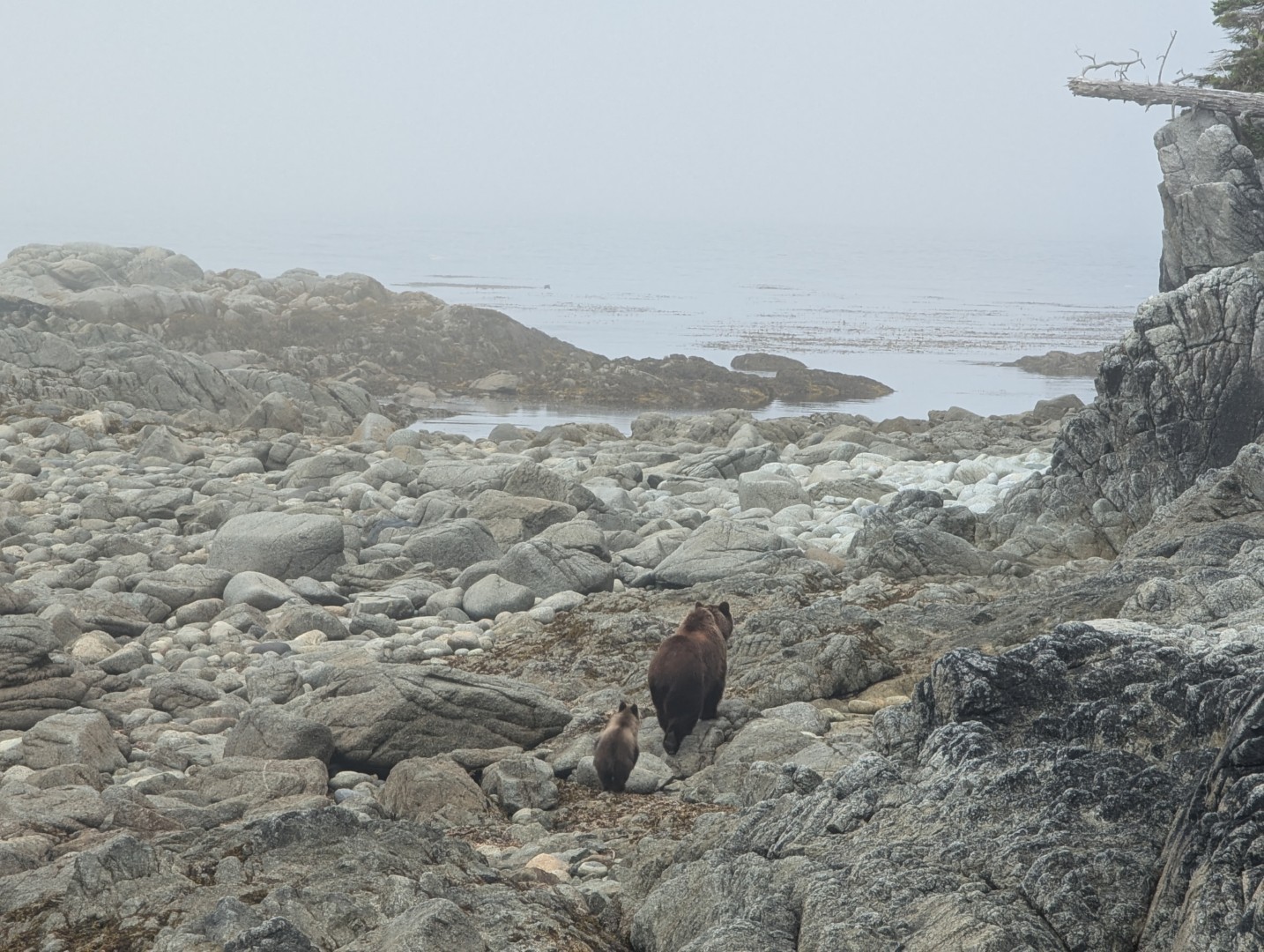
While exploring the low tide flats, with mist wafting in from the sea, I spotted them: a massive grizzly bear and her cub. They were crossing from the even smaller island we had just explored and were coming directly my way.
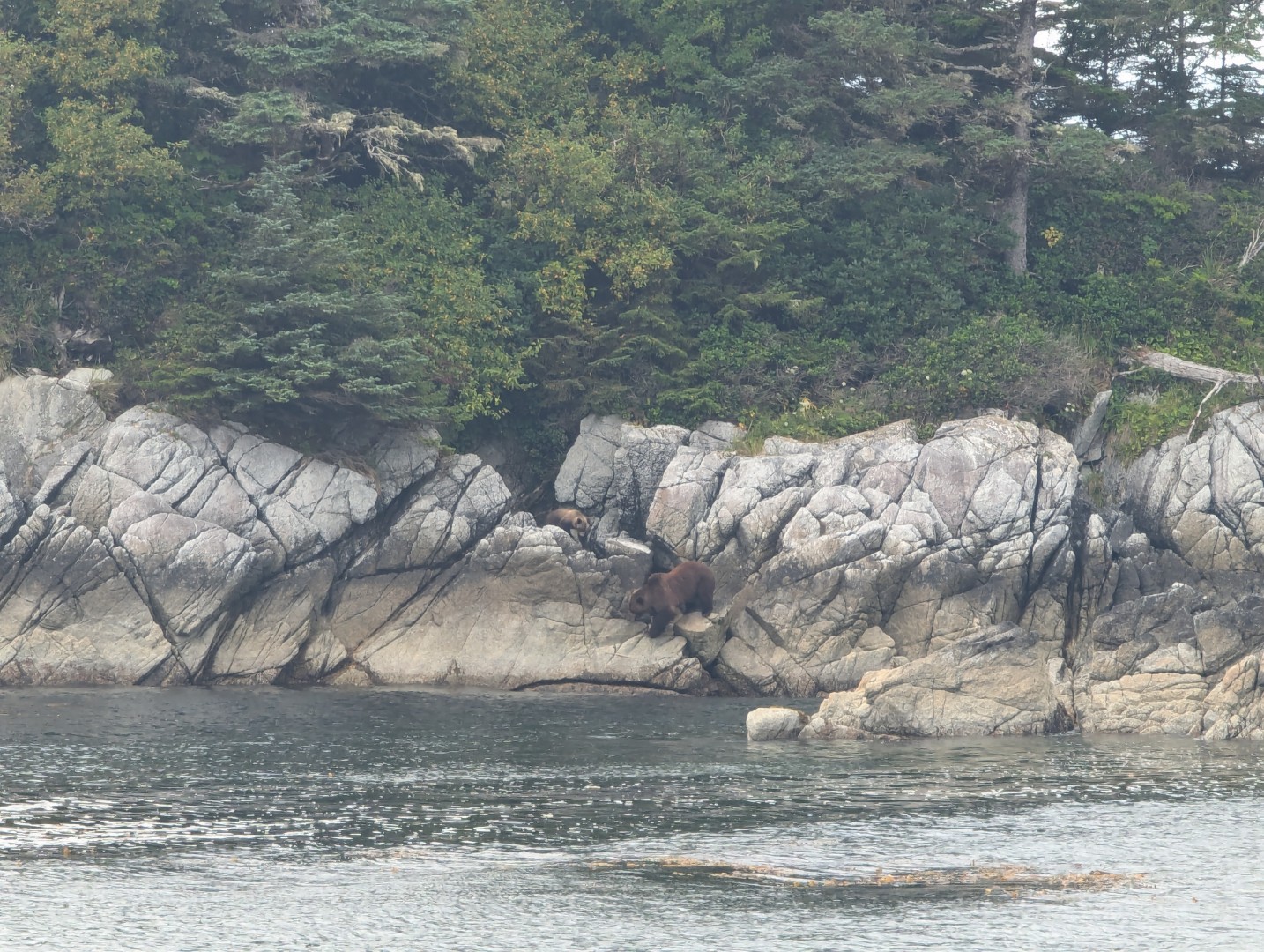
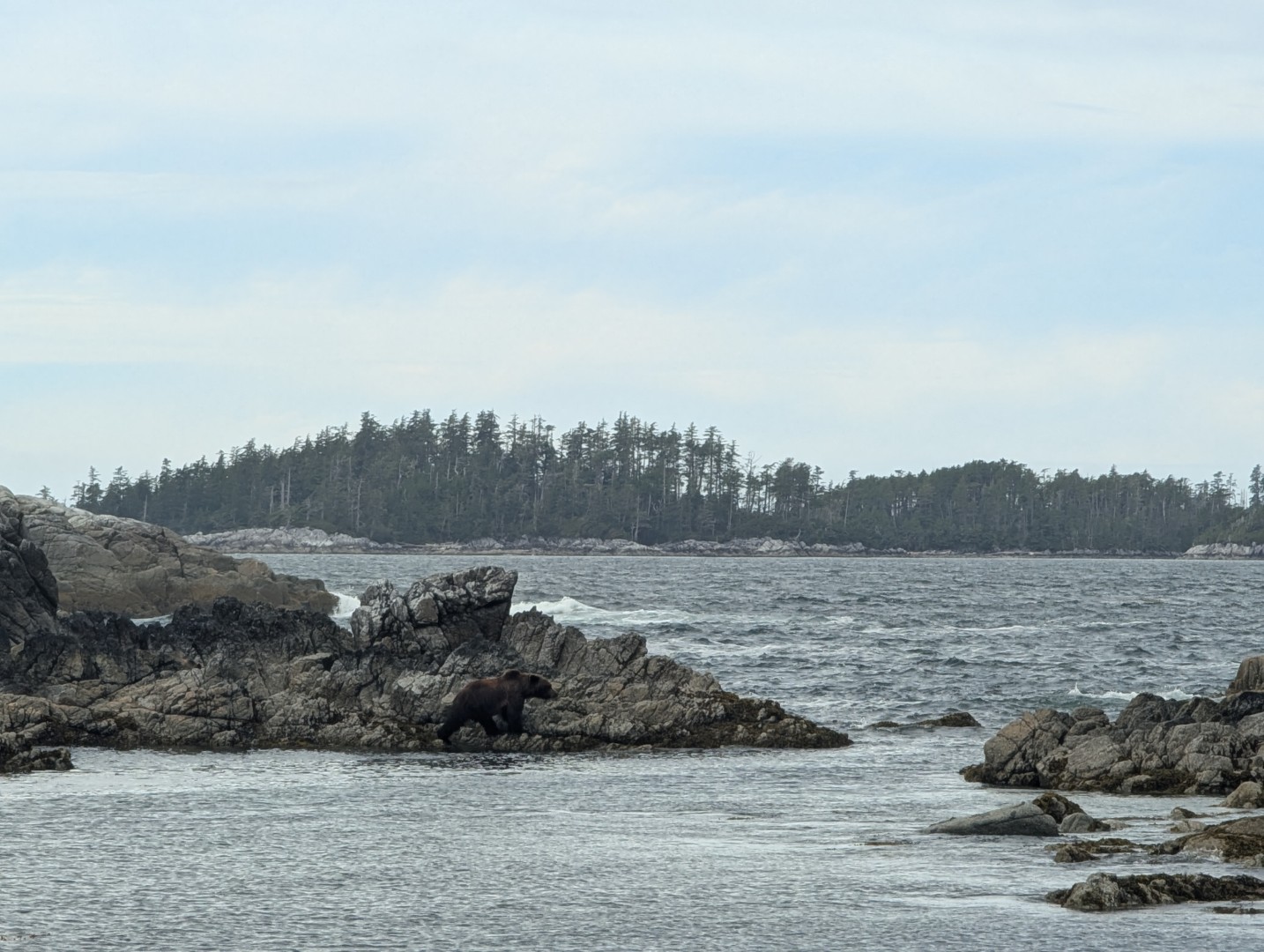
It was the last thing I expected to see on this tiny group of outer islands. Seeing a grizzly in the wild is humbling; seeing one with a cub on a small island is electrifying and potentially very dangerous. I scrambled up onto a rock to gain height, turning back, I watching as they bolted in the opposite direction. The encounter shook me and Shawn was in disbelief until I showed him the photo I captured as they ran away. The hump on the mother’s back is a clear marker of a grizzly bear.
Now, we were were both shook by the reality of sharing a small island with a grizzly bear mother and cub. When a group of eleven guided kayakers landed on our beach that afternoon, the combination of a crowded camp and a nearby grizzly was our cue to move. The guides seemed surprised with our encounter and assured their group by detailing a bear-aware protocol and protection via bear spray.
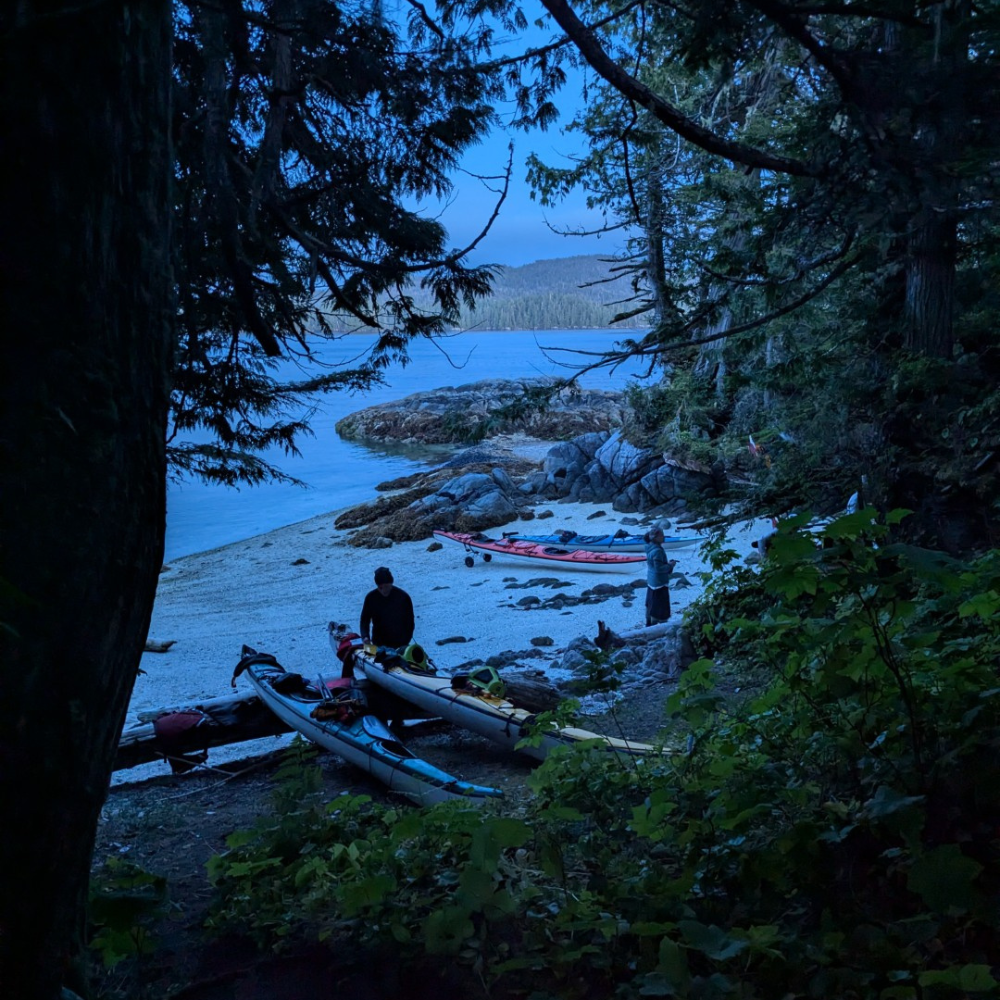
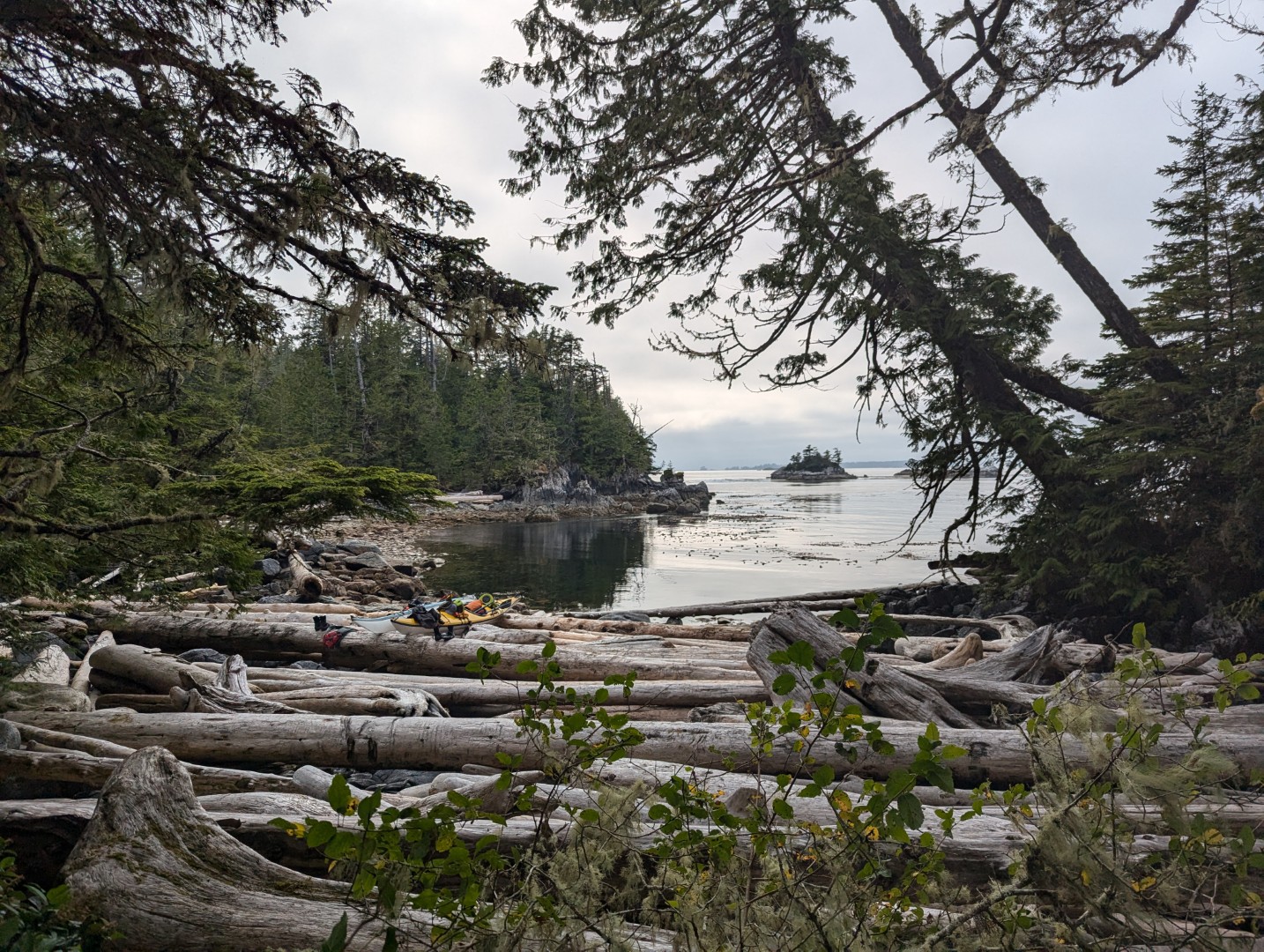
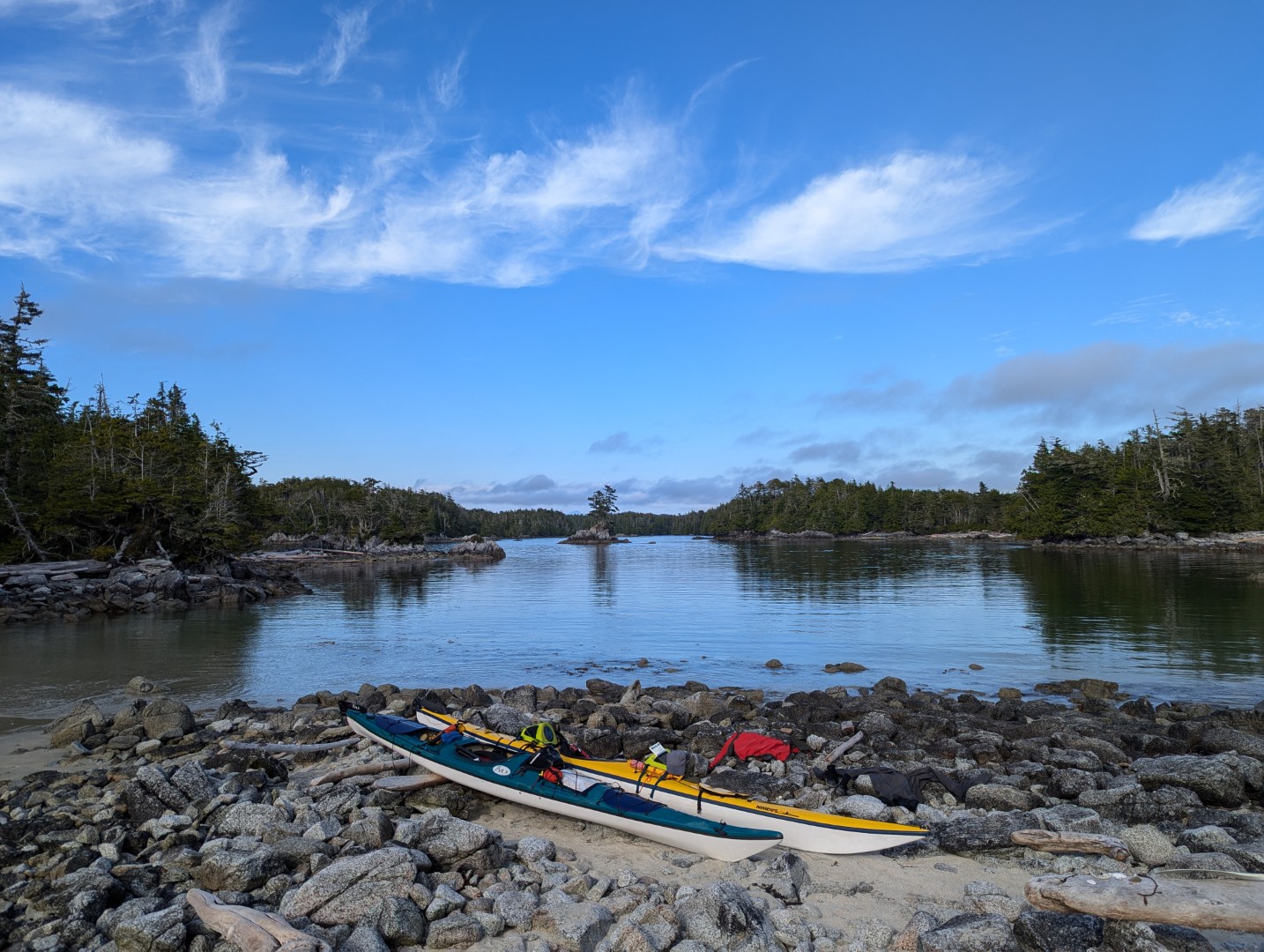
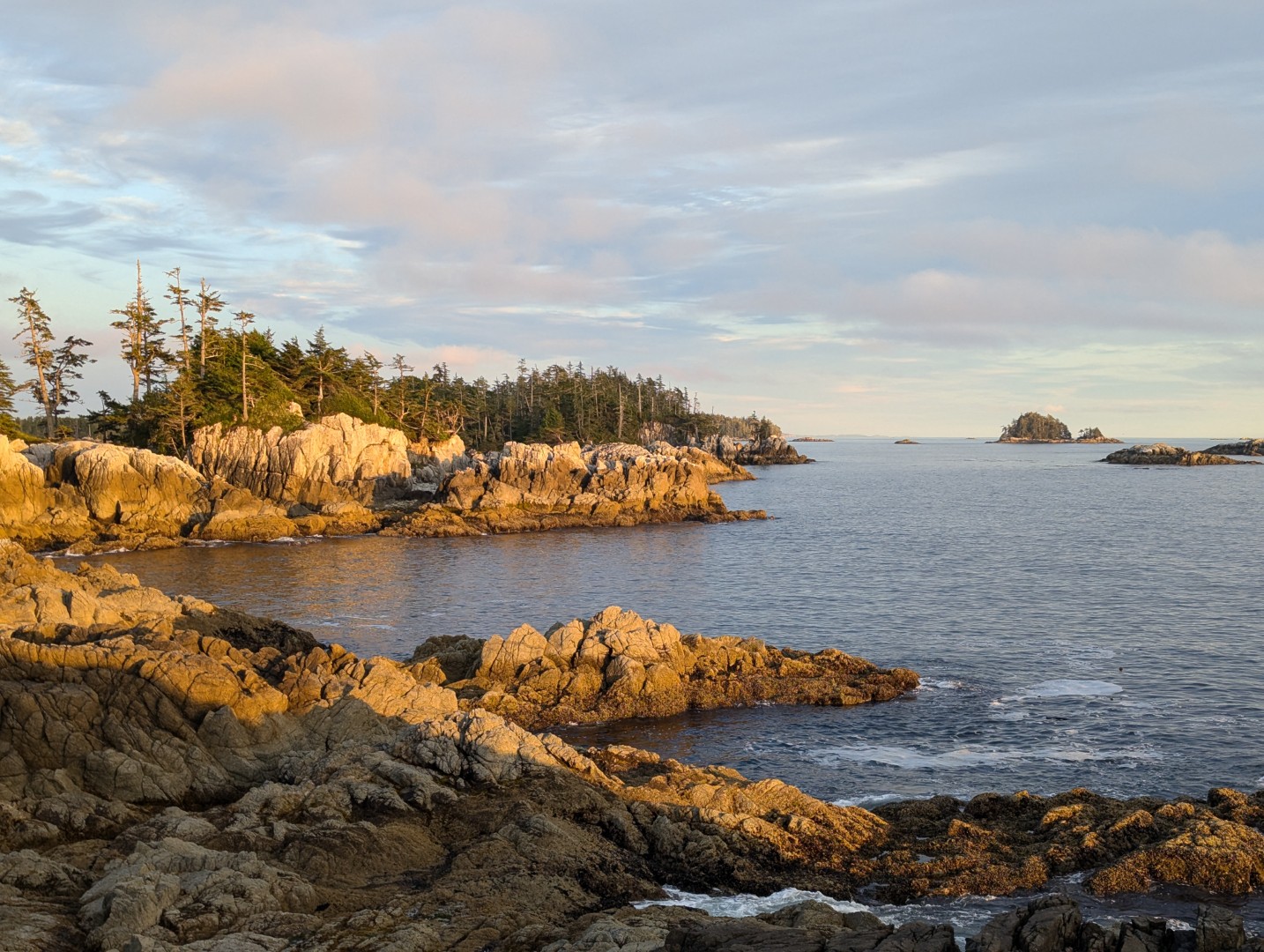
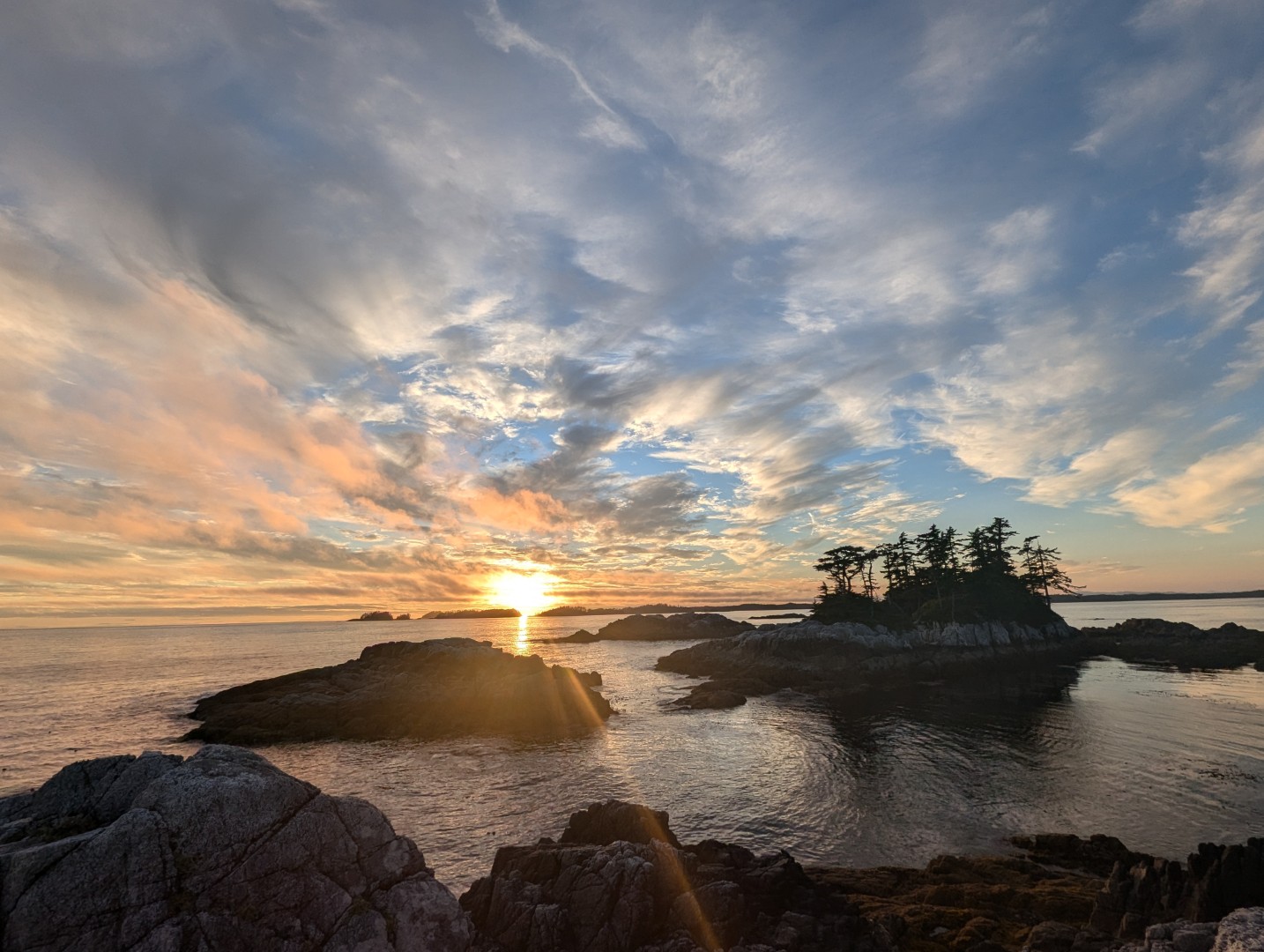
We hurriedly packed our boats, which might made some in the group nervous about the risk, really we were rushing as the day was getting on. We pushed off for a mid-afternoon paddle towards Striker Island. We were greeted at Islet 48 by some sunshine, a beautiful campsite, and views galore.
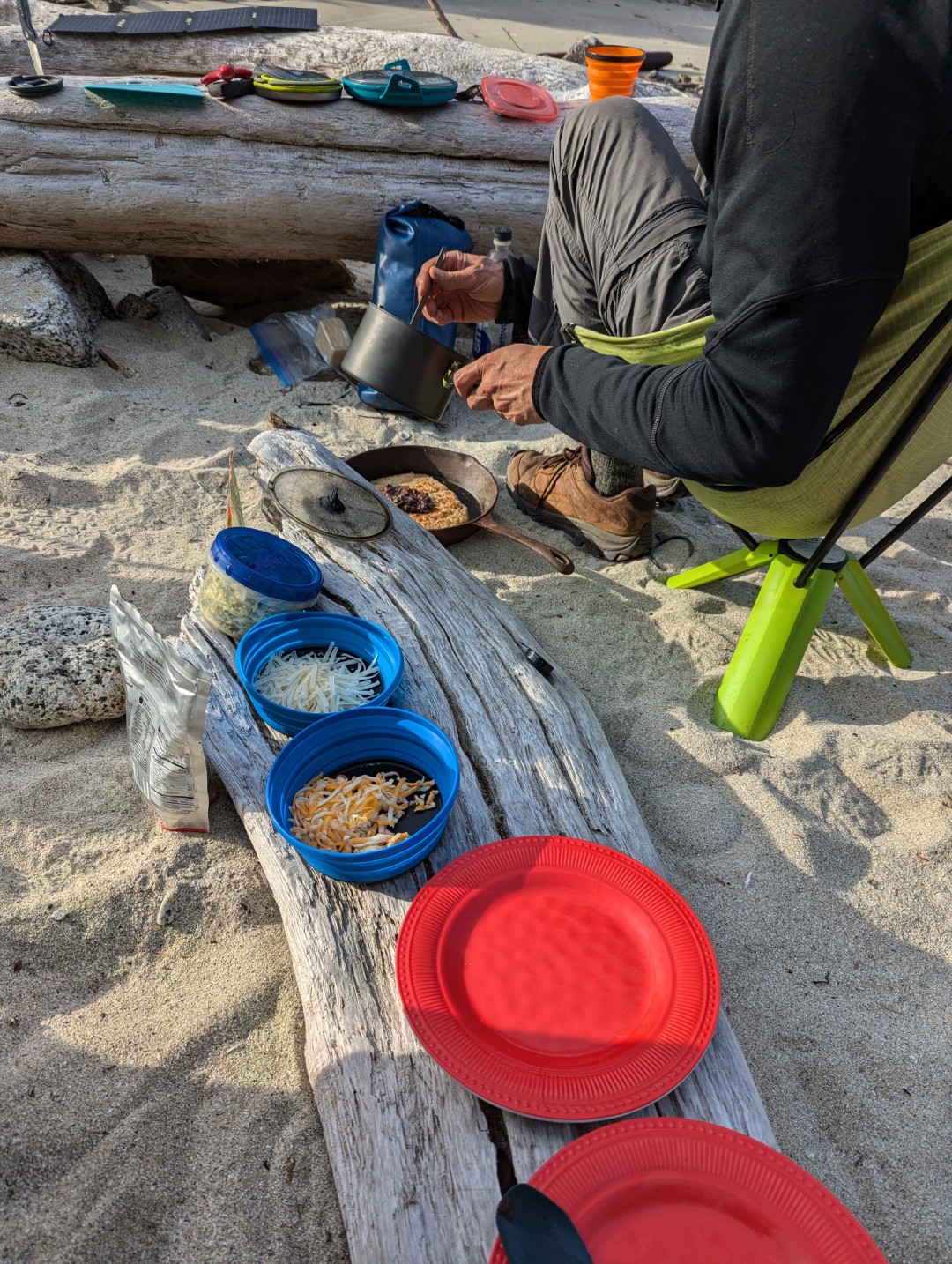
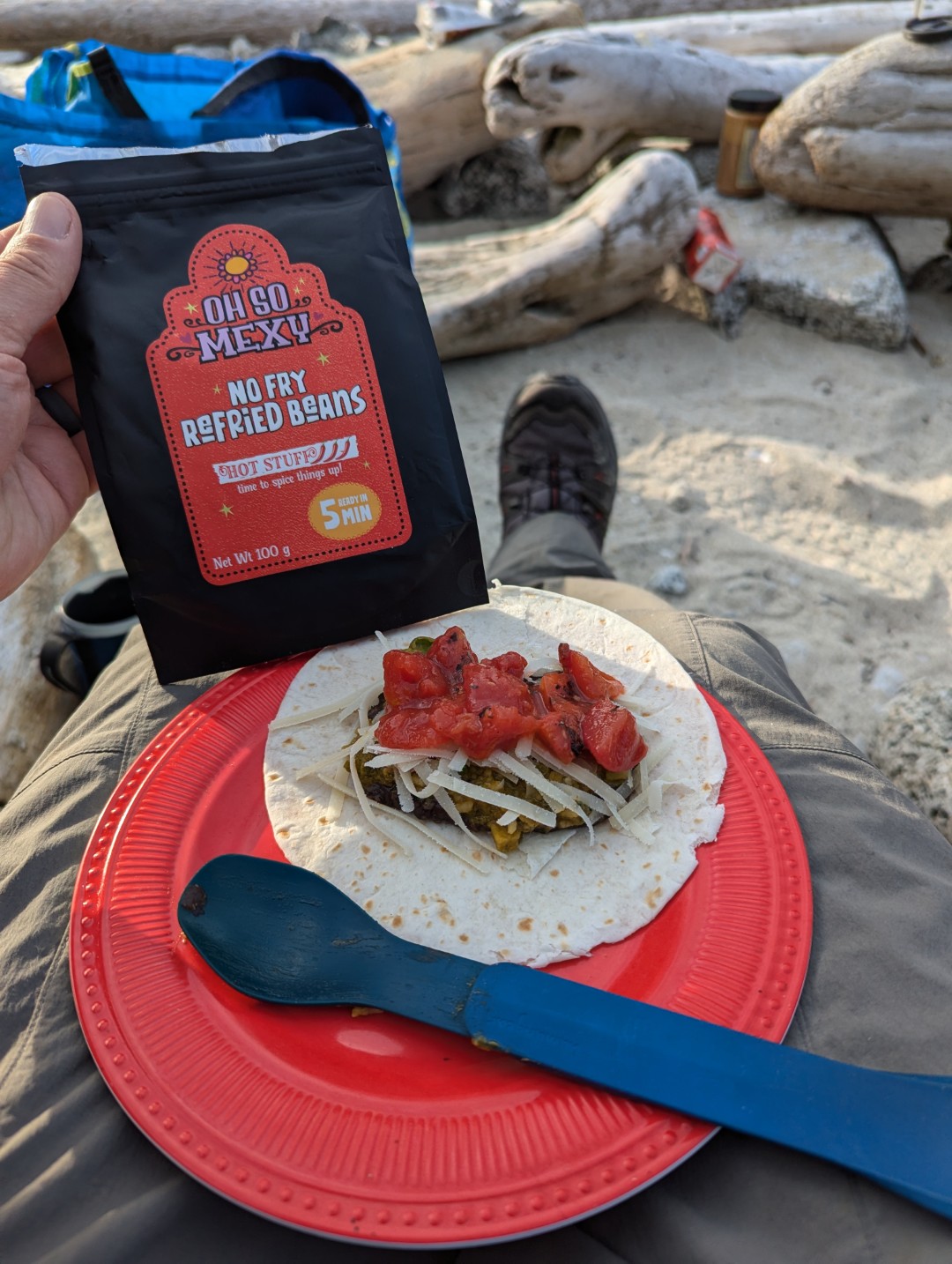
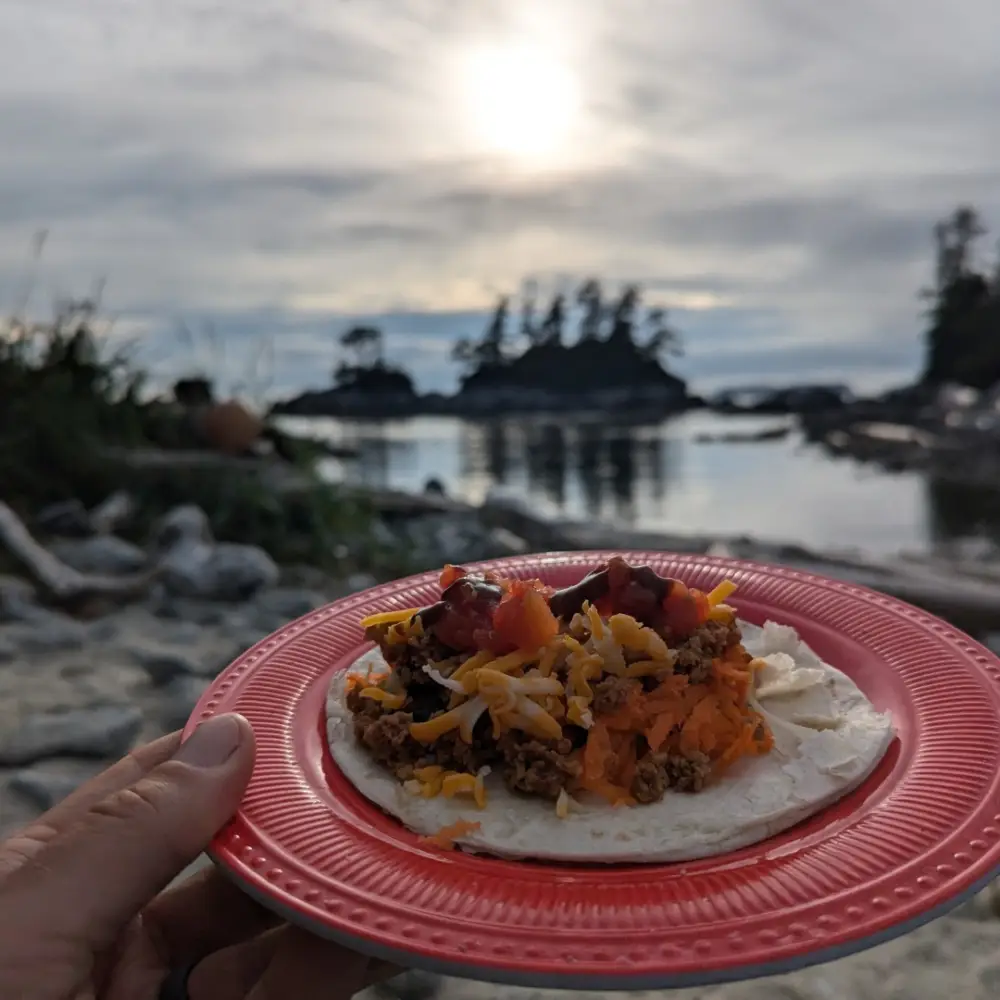
Another mind blowing meal as we put together tacos collectively with avo, cheese, black beans, and dehydrated vegetable protein bits.
We marveled and laughed at the experience of seeing the grizzly bears and counted ourselves very lucky to have seen them in the wild. I can only imagine what motivated them to swim way out to the McMullin Group of Islands. It had to be more than just the sweet salal berries, perhaps they were being stalked by a male grizzly? Perhaps that male was in the area too?! In any case we were able to let out a sign of relief that we had left them 7 kilometres behind.
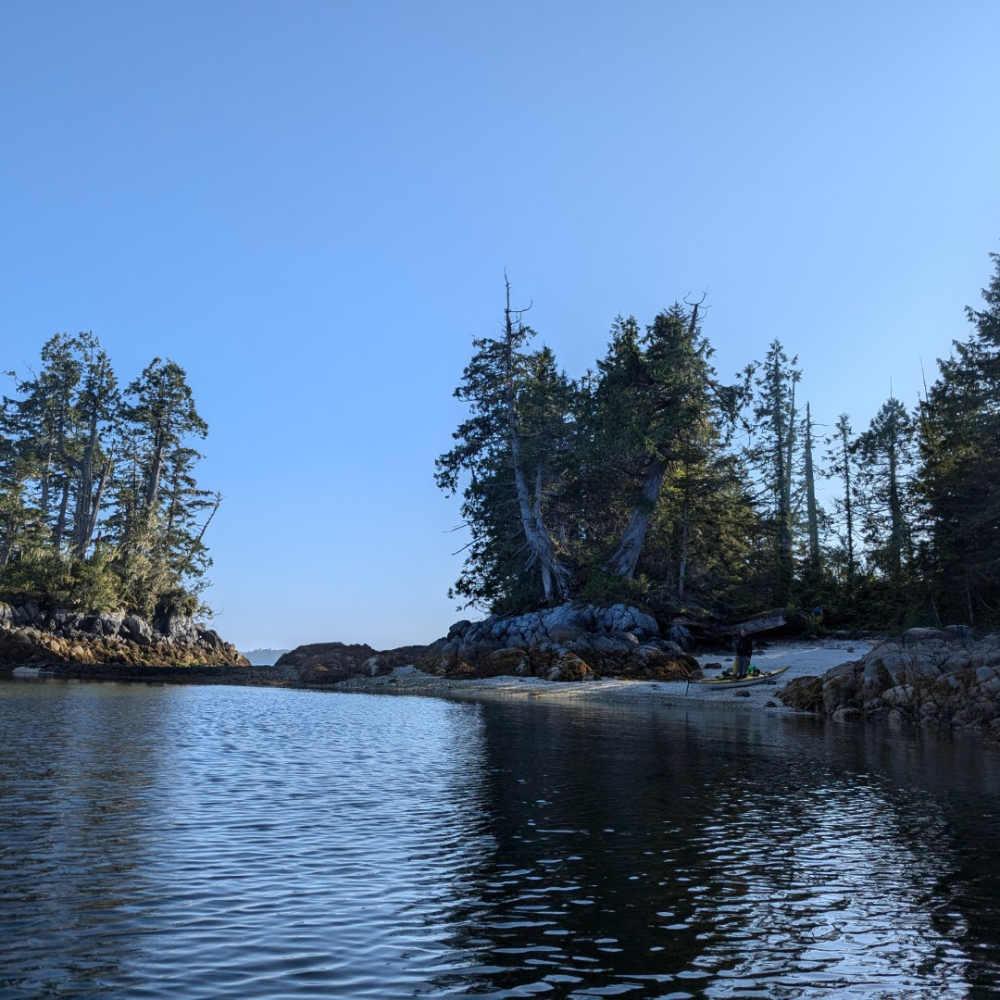
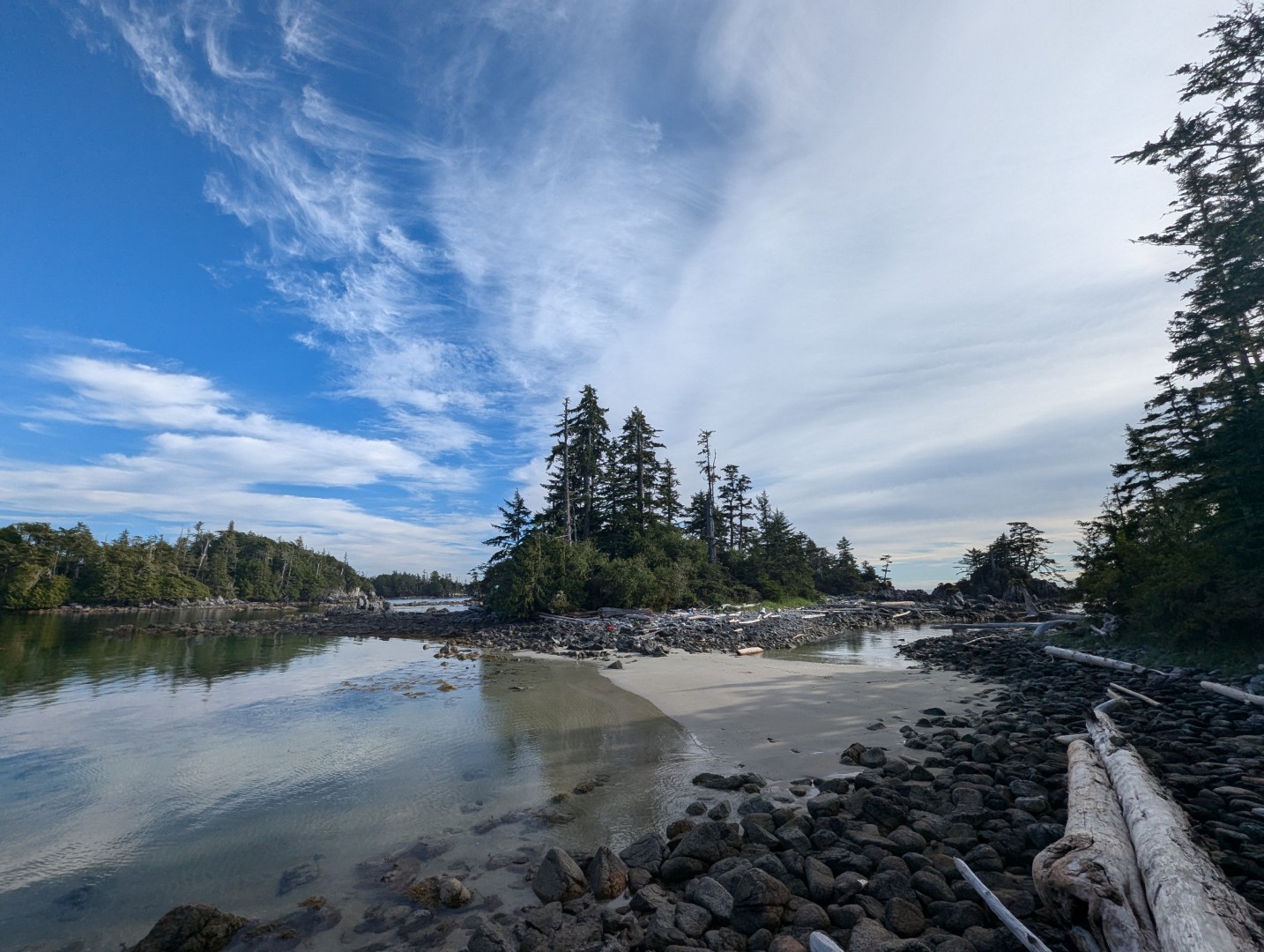
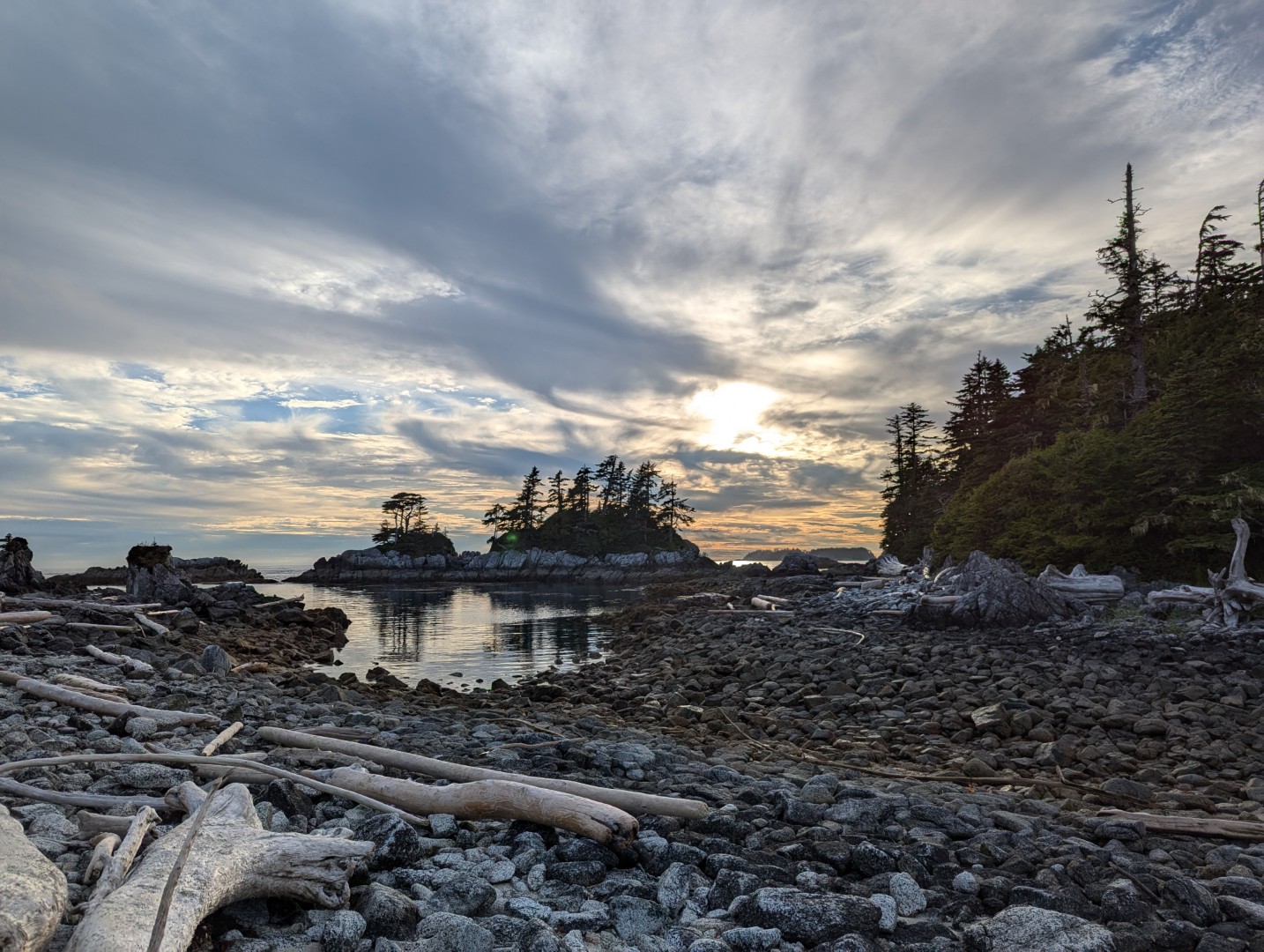
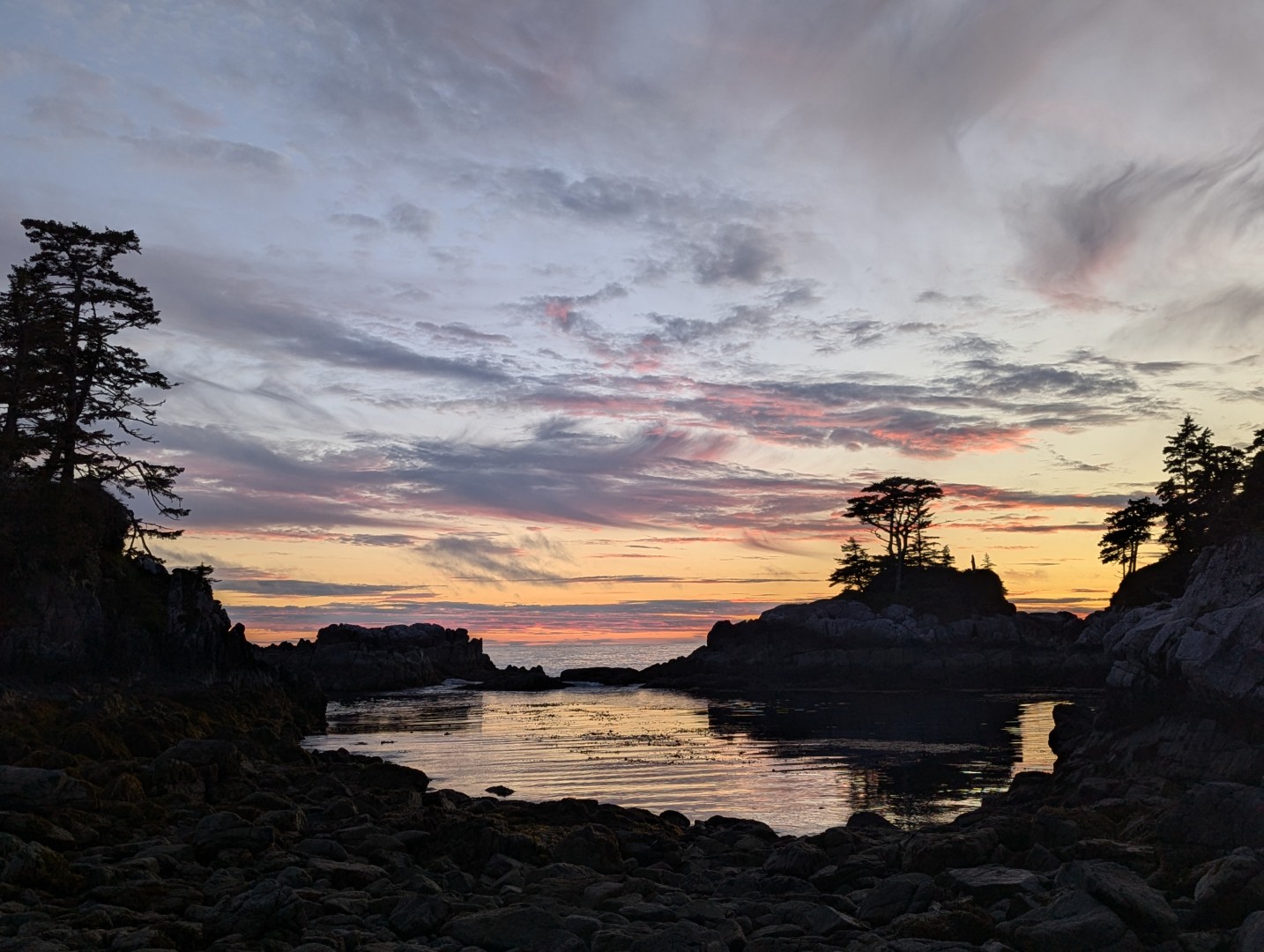
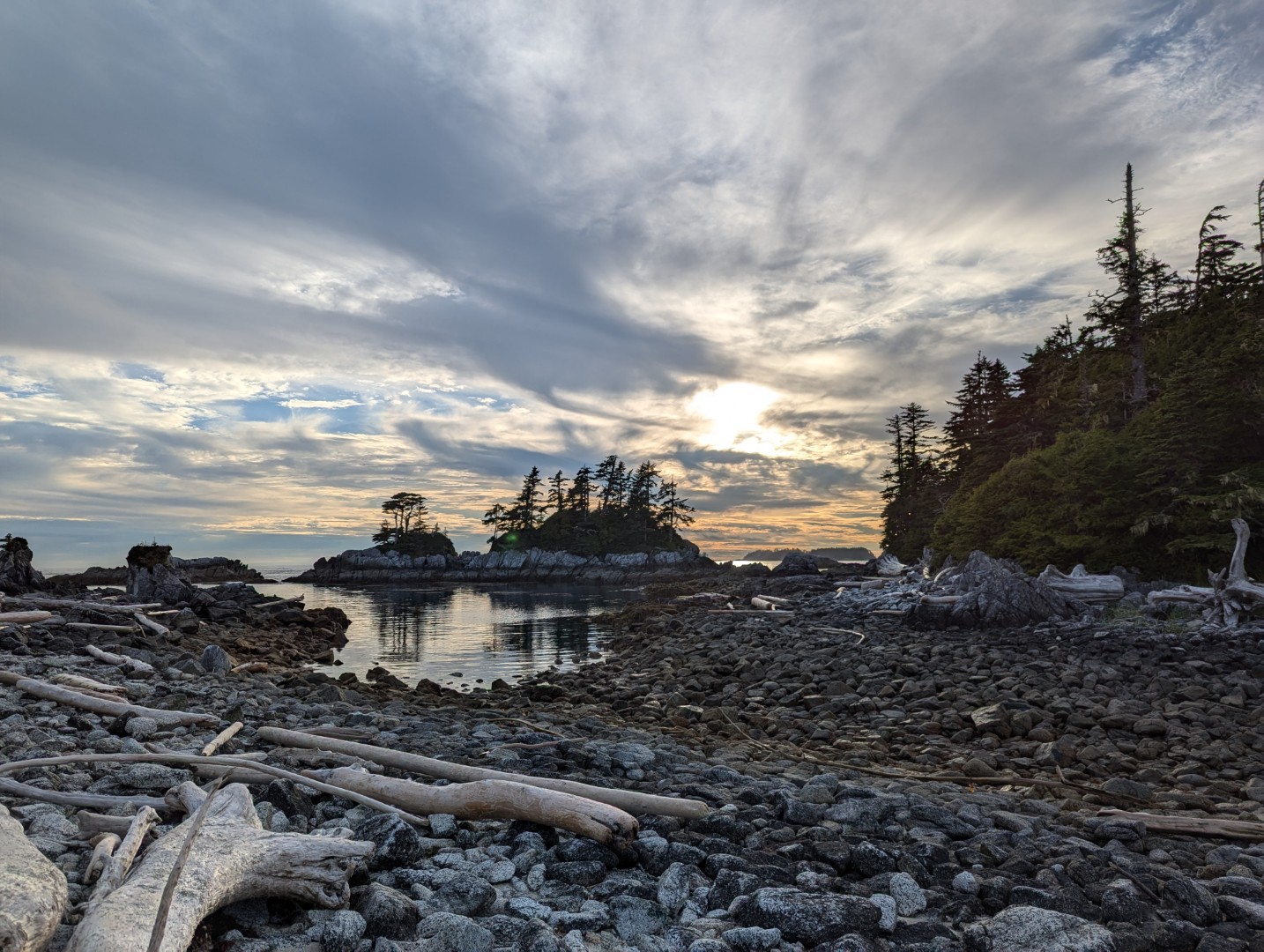
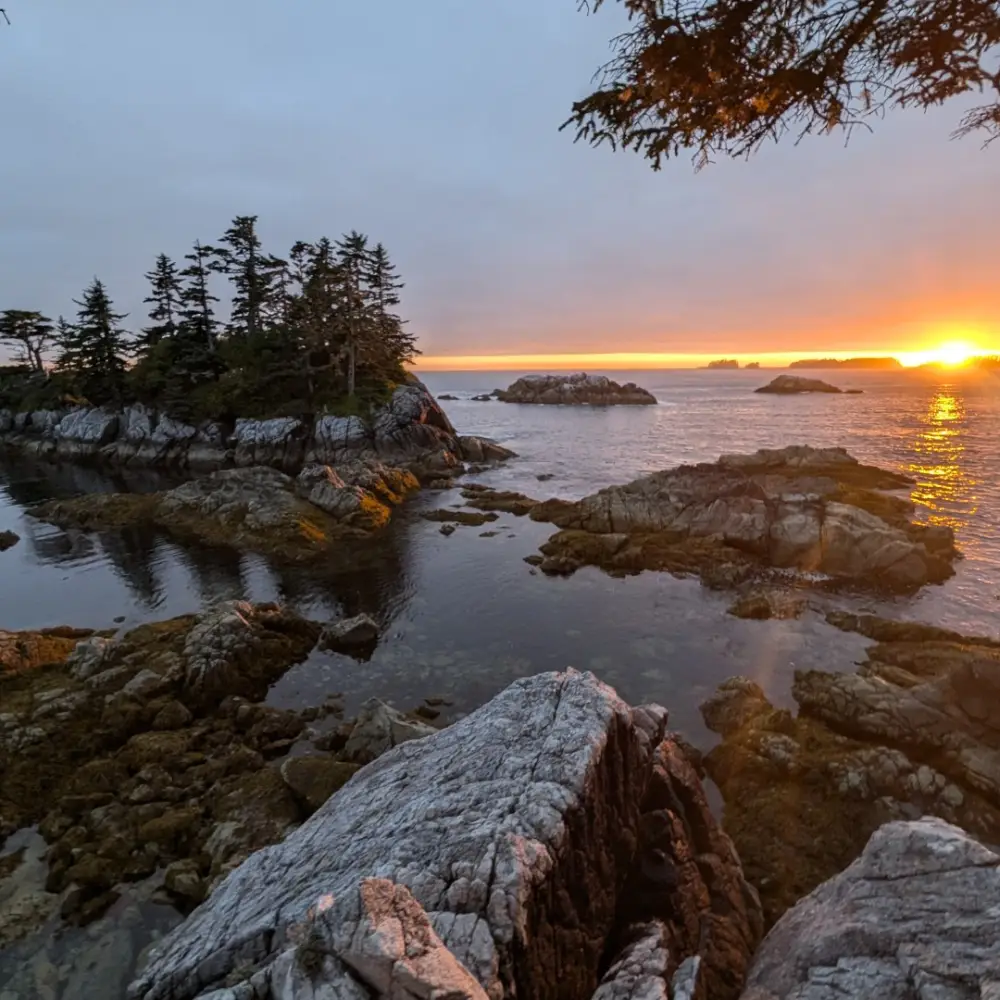
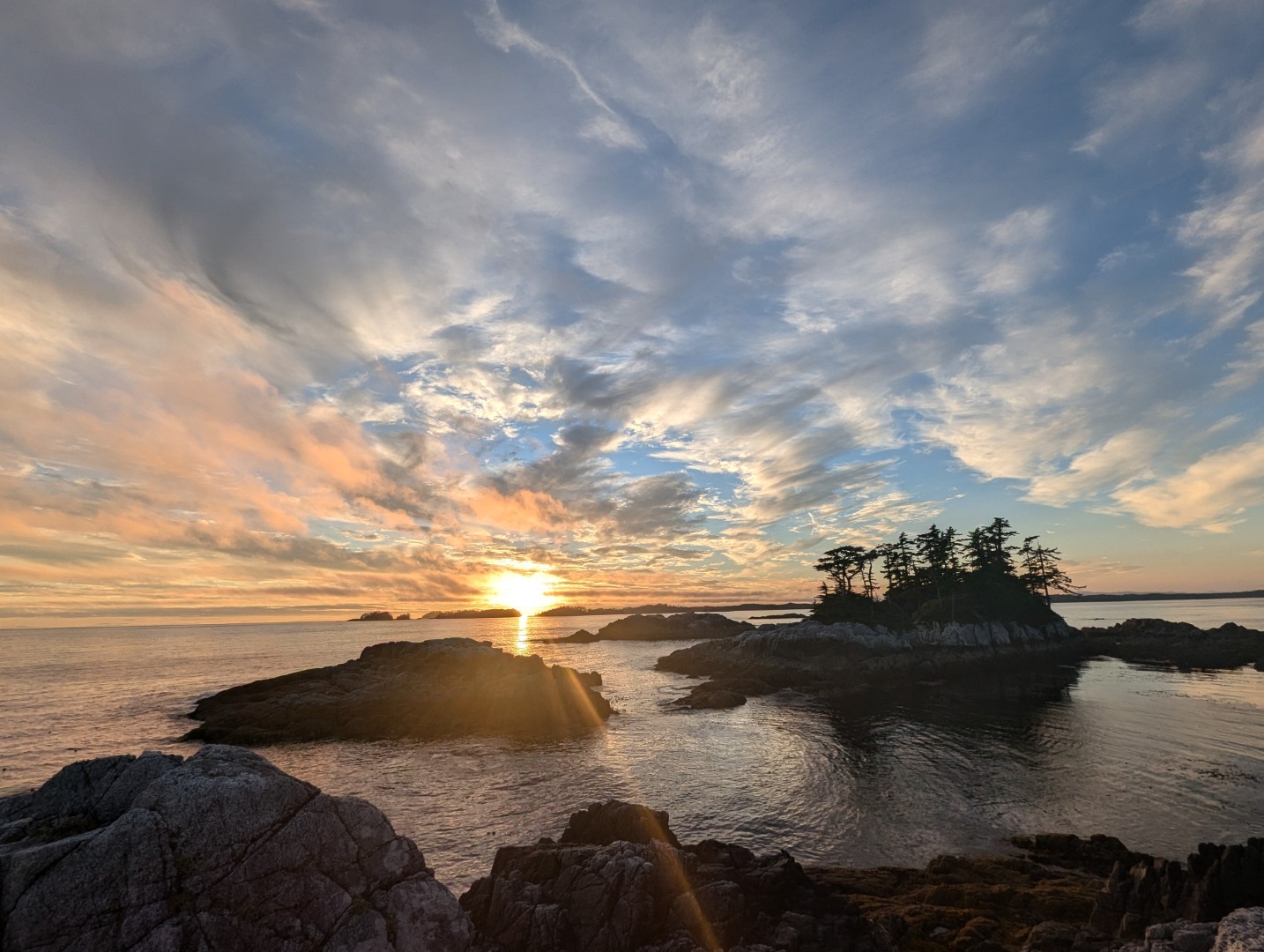
After dinner we explored the nearby islands accessible at low tide. We watched an amazing sunset from a perch on one of the islands. This is the magic and what we came for.
The 7-Kilometre Swim
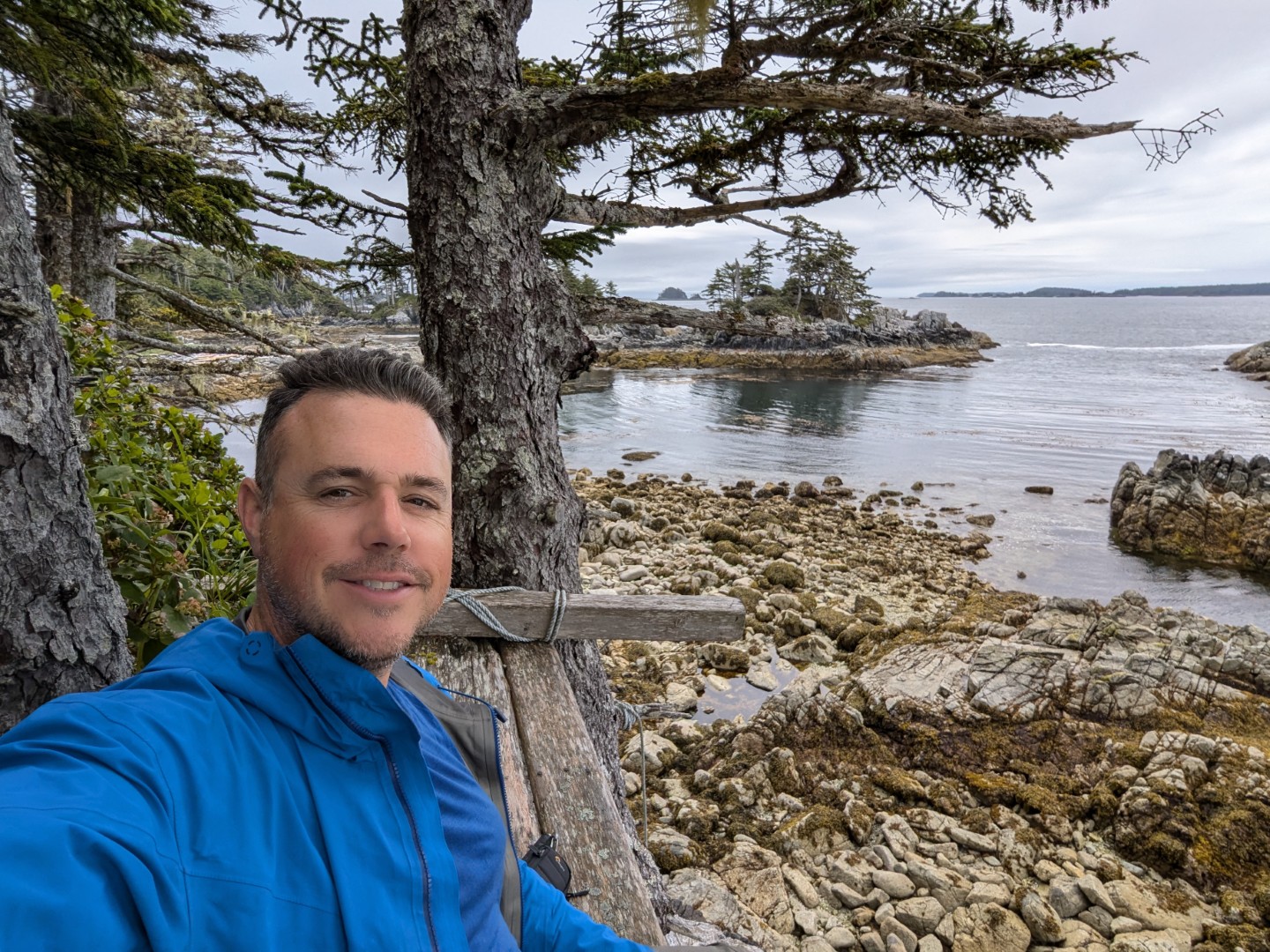
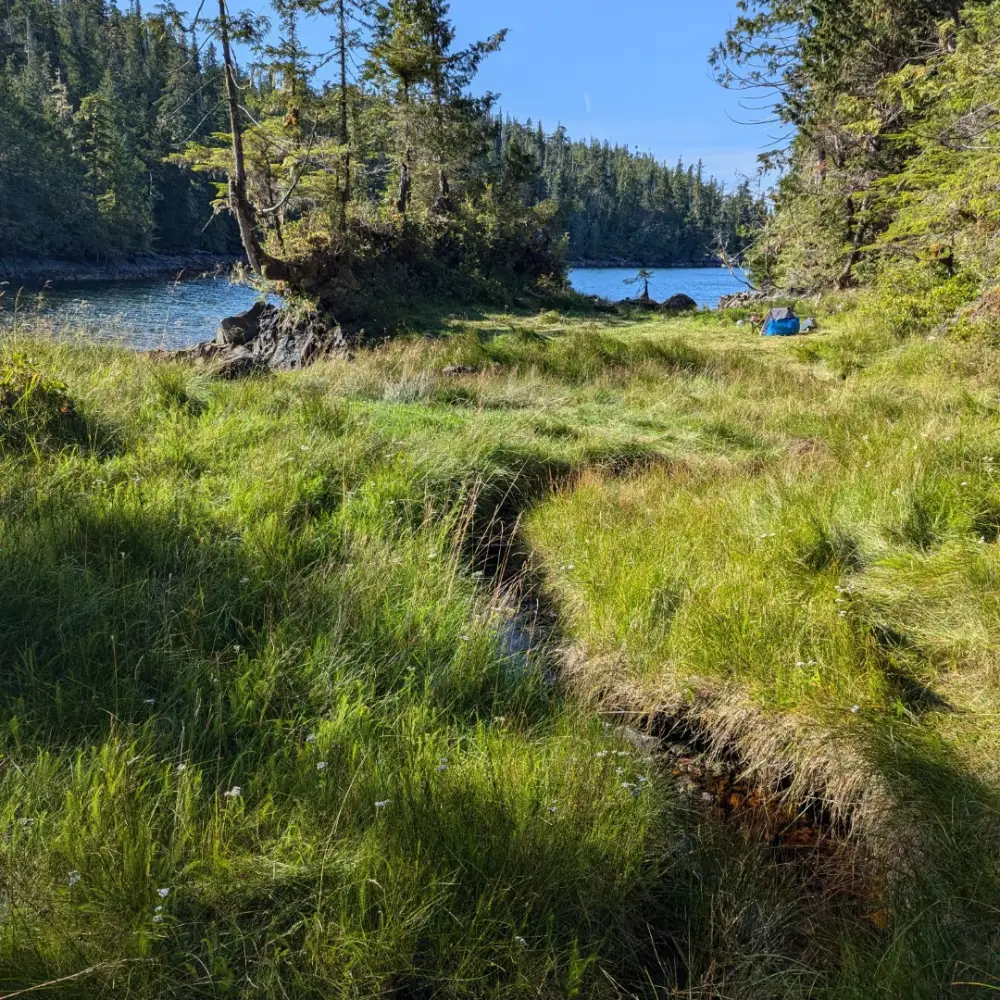
On day seven, the rain finally caught us. We explore our new island in more depth and located the ‘sky chair’ that someone had placed for perfect sunset viewing.
The real surprise came during our lunch. While enjoying some food, I looked across the water toward a headland about 150 metres away and I saw two familiar shapes. Excuse the language, but in my mind I was thinking ‘no. freaking. way.’
We both now observed a mother grizzly and her cub feeding on salal berries across the channel. My heart pounded and Shawn, seeing them for the first time, was in awe. Did they follow us here? Was this a random coincidence? Was this another set of bears in a grizzly paradise? We reckon the chances that we were seeing a different set of bears was slim, it must be the same mother and cub. We were most perplexed, how could they have followed the exact same route we had, crossing roughly 7km of open water to land on the exact same island?
Watching through binoculars with Shawn capturing amazing video with his 10x optical camera (available below), the cub followed its mother through the berry bushes and down onto the rock. We now realized we were sharing this wilderness in the most literal sense. As they came across the land bridge, seemingly oblivious to us, we deployed a bear banger to ensure they knew we were there. The mother took note, and we gave them a wide berth as they ran in the other direction around the back of the neighboring island.
Considering we were still sharing a small island (in fact smaller than the previous) we decided to get in our boats and see if we could observe them leaving this island from the other side. Into the boats, we went around the island to try to gain sight of them from the water. At this point we were looking both on shore and in the water, since they had now demonstrated remarkable swimming ability. We did not see them.
The bears journey from McMullin to Stryker crosses mostly open water.
We discussed at length our options and decided to hold our position on this island for another day. We would practice bear-aware protocol, travelling with bangers or air horn, staying together as much as possible, and being very, very alert. As I lay down for the night, I could not help considering they were still nearby and what brought them to this island was us, and they might try to eat us. I thought of the Grizzly Man film. I had to reckon with my mortality and imagine what I might do or how an attack might be experienced. It was a feeling like no other, and it humbled me in a very meaningful way.
In reality, the bears may have left the McMullin group as soon as they saw me the first time. They may have started their swim before we even got in our kayaks to leave. Perhaps they were as perplexed to see us in the Stryker Islands after their long swim. I still think of those grizzly bears today and I hope they are well.
We gradually became more comfortable on the island and had a wonderful stay, all the while being very aware of our surroundings.
Into the Inlet: The Return to Silence
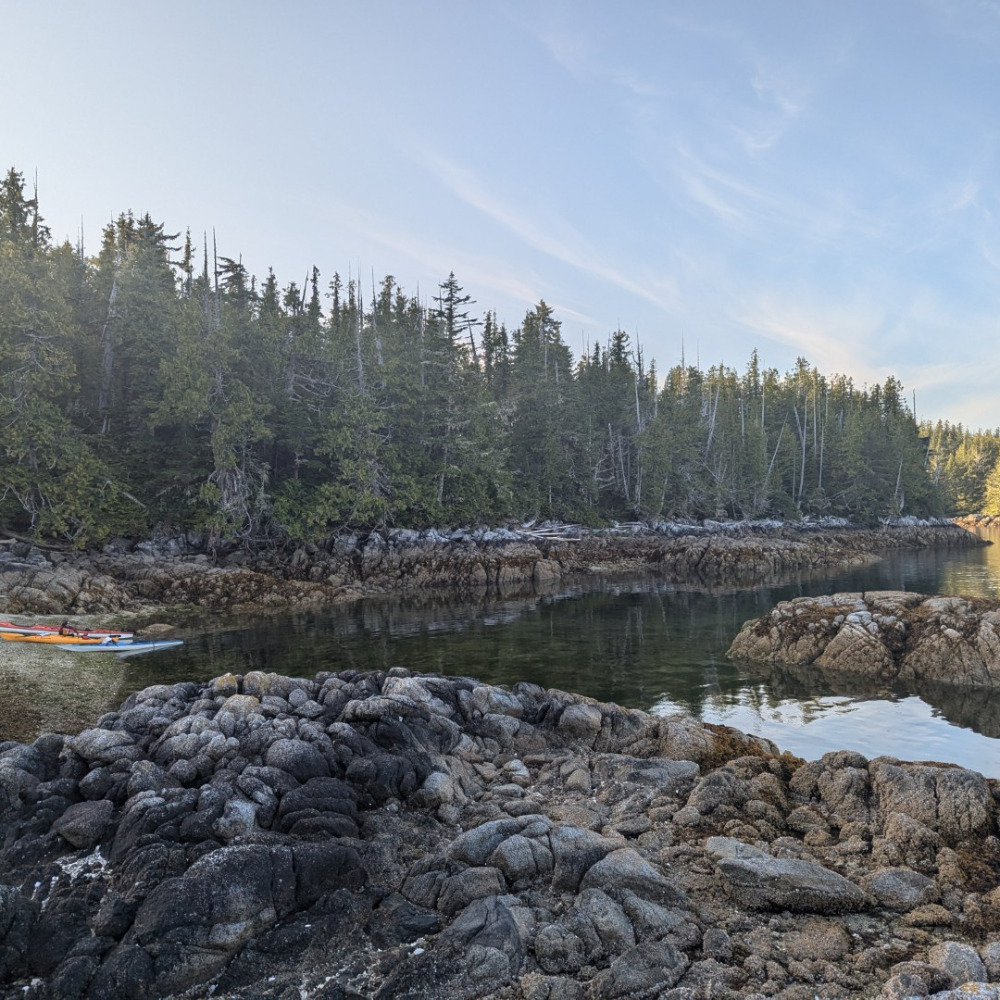
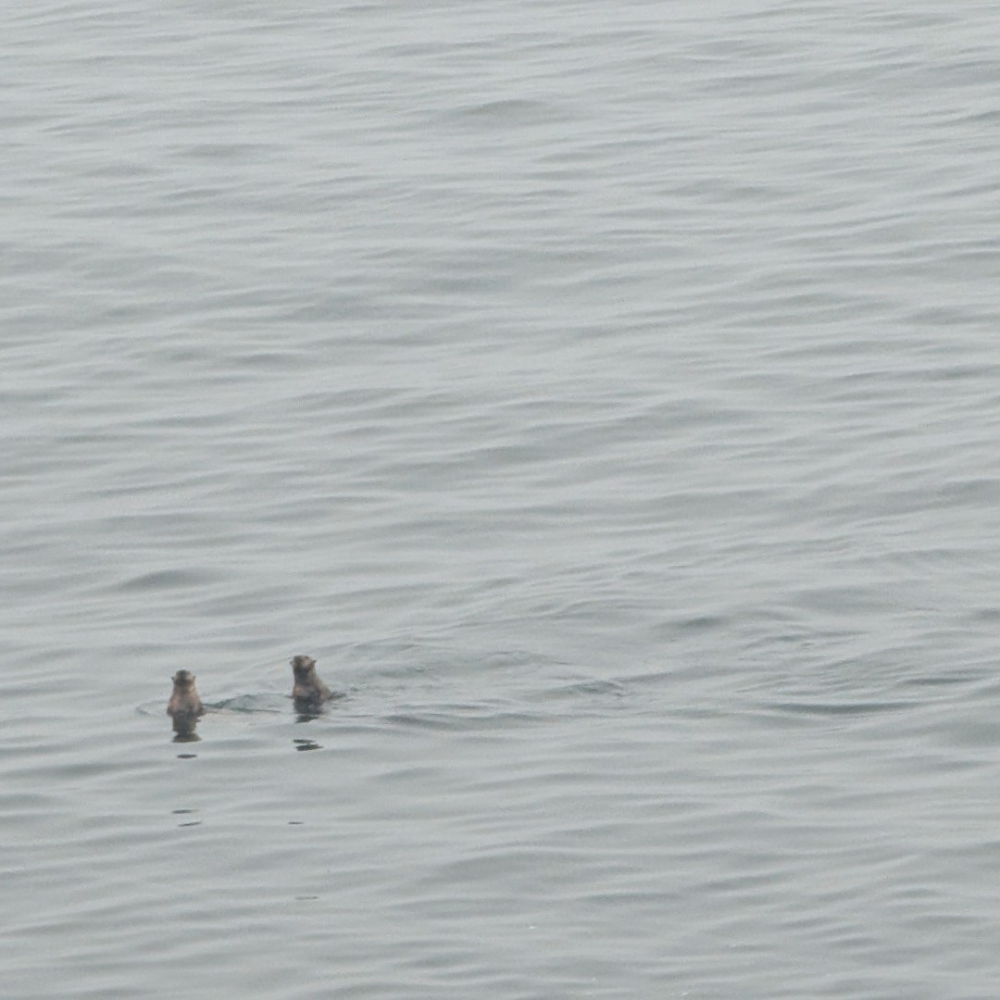
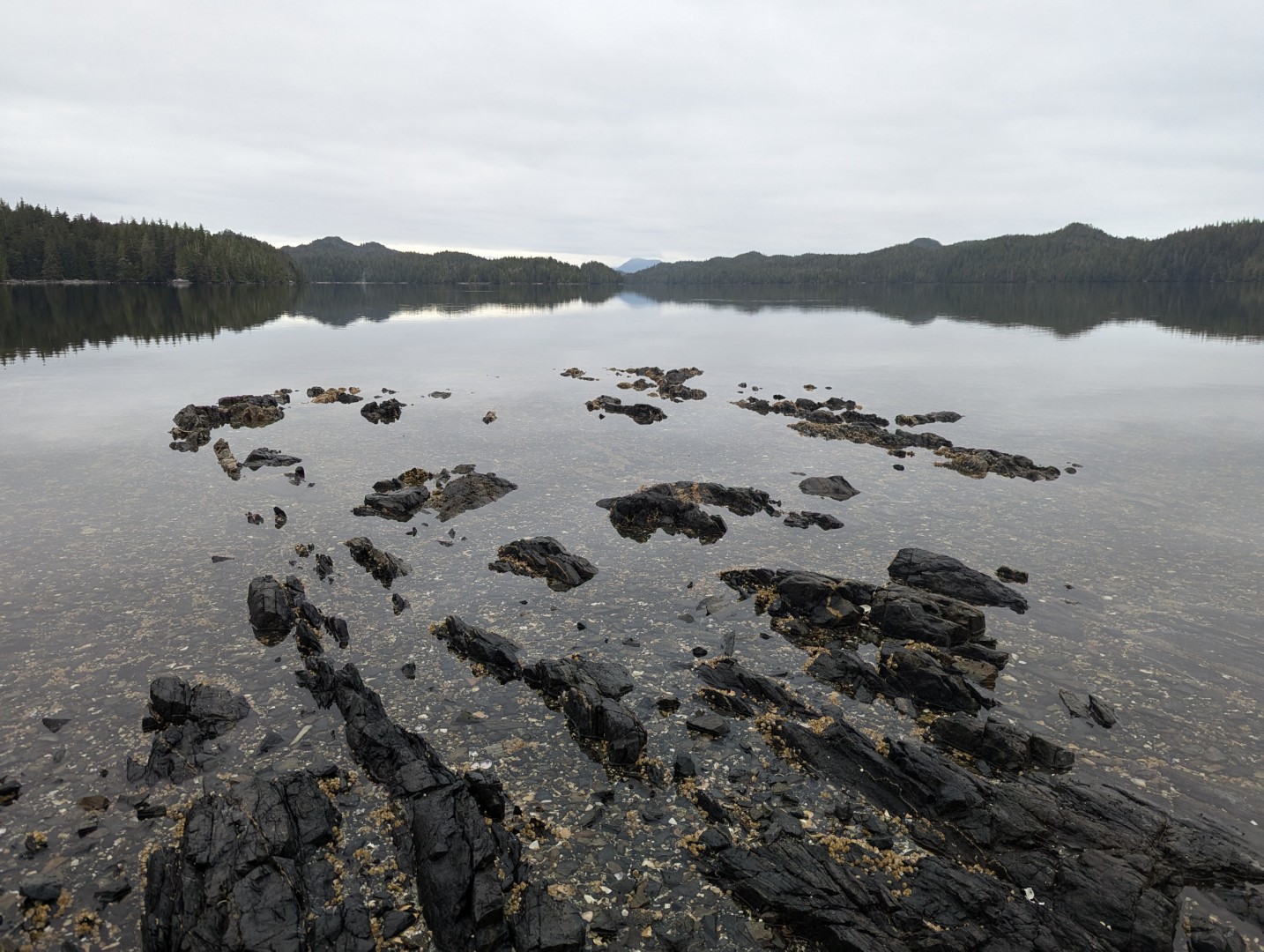
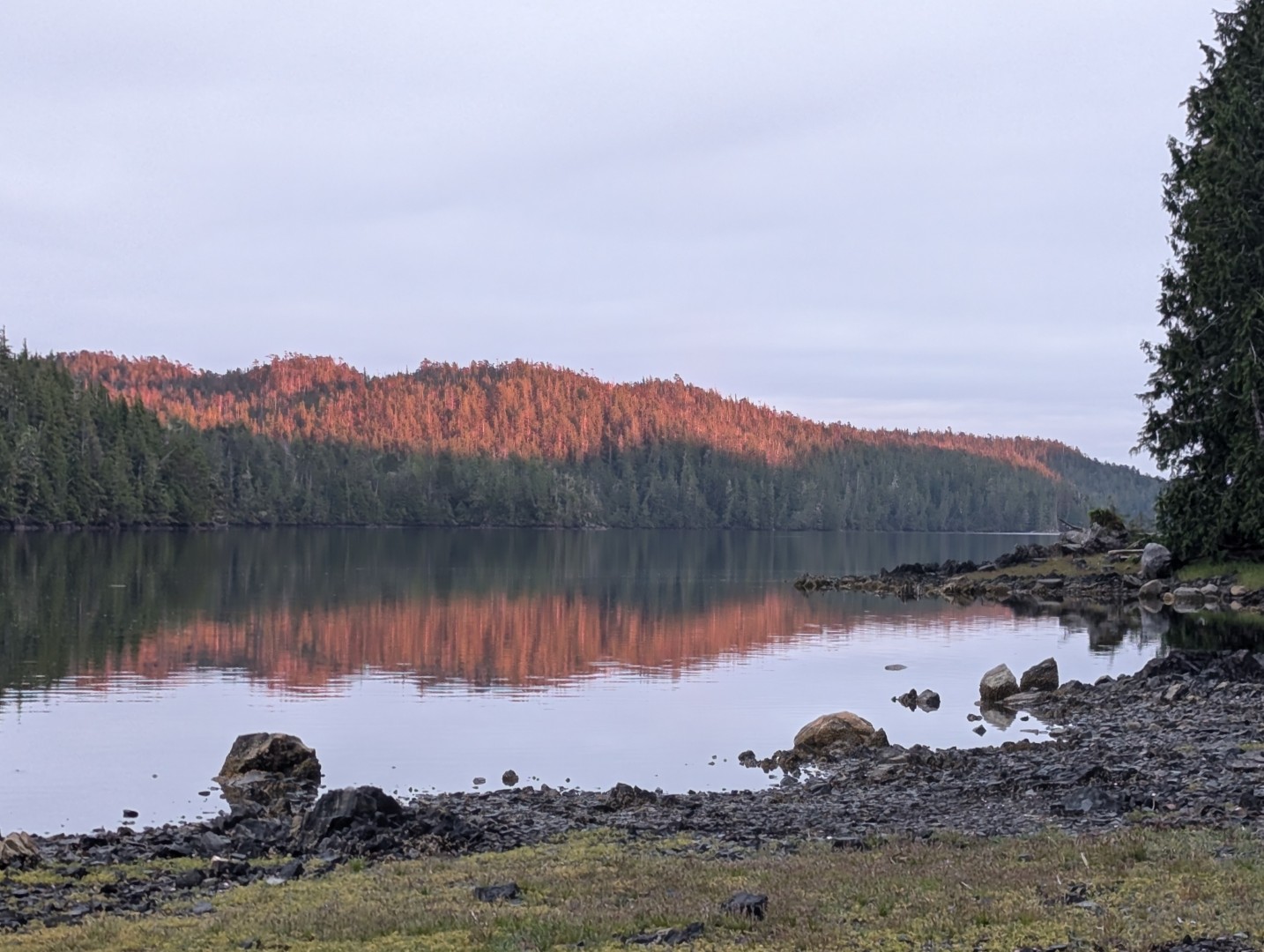
As we turned away from the wild west coast, and back toward the mainland inlets, the environment changed. The “outside” coast’s drama gave way to the “inside” silence. At the Helsik Cabin at Quinoot Point, the water was as still as a lake. We watched as the sunset moved across the trees while a large family of river otters played in the nearby current. The somber, eerie calls of birds echoed through the sound.
Ironically, as we travelled the inlets we found what appeared to be a grizzly den near a clear-running brook. Freshly dug holes in the mud and scratches against a giant cedar provided evidence of their presence here. It felt like a final, silent nod from the bears we had tracked (or who had tracked us) during our time in the Great Bear Sea and Rainforest.
Easing Back to Civilization
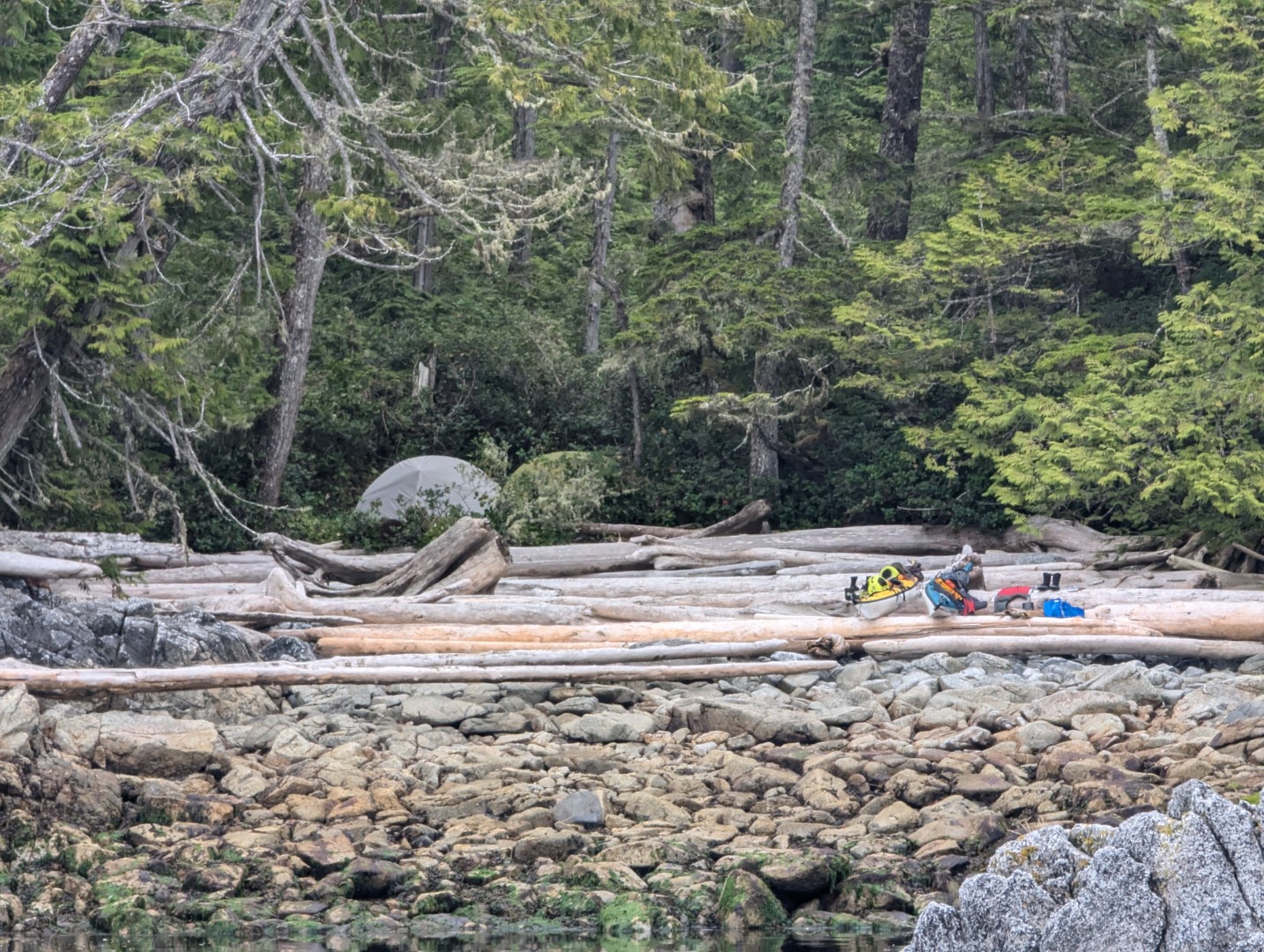
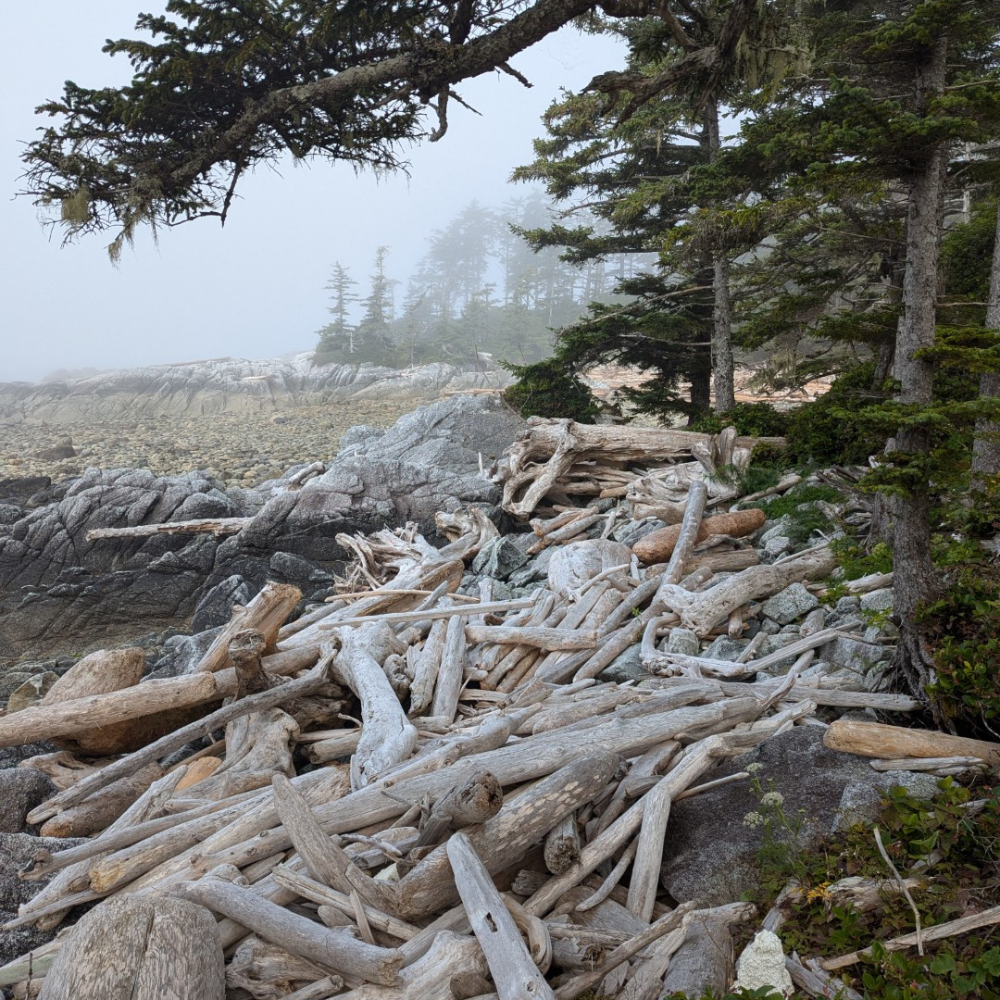
Day eleven brought us through Joassa channel and Rait Narrows. The tidal flow was in our favour and we shot right through and out towards Seaforth Channel. The transition here was jarring. After ten days of hearing nothing but the sea, wind in the tress, and wildlife, we suddenly had sight of sailboats helicopters, planes, and powerboats signaling our re-entry into civilization. We staged our final camp near Gowland Mountain on Horsfall Island, taking advantage of a very enjoyable freshwater shower to wash off the salt from the Great Bear Sea.
Final Journey to Bella Bella
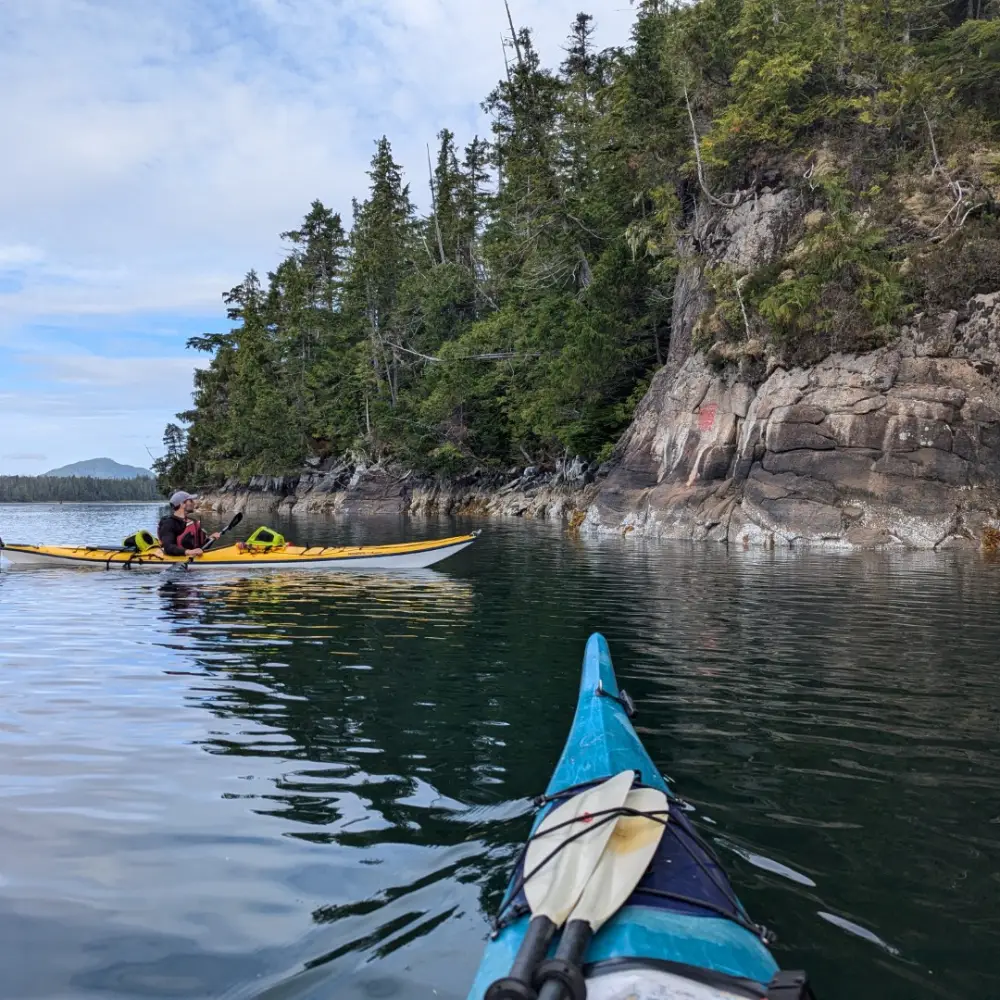
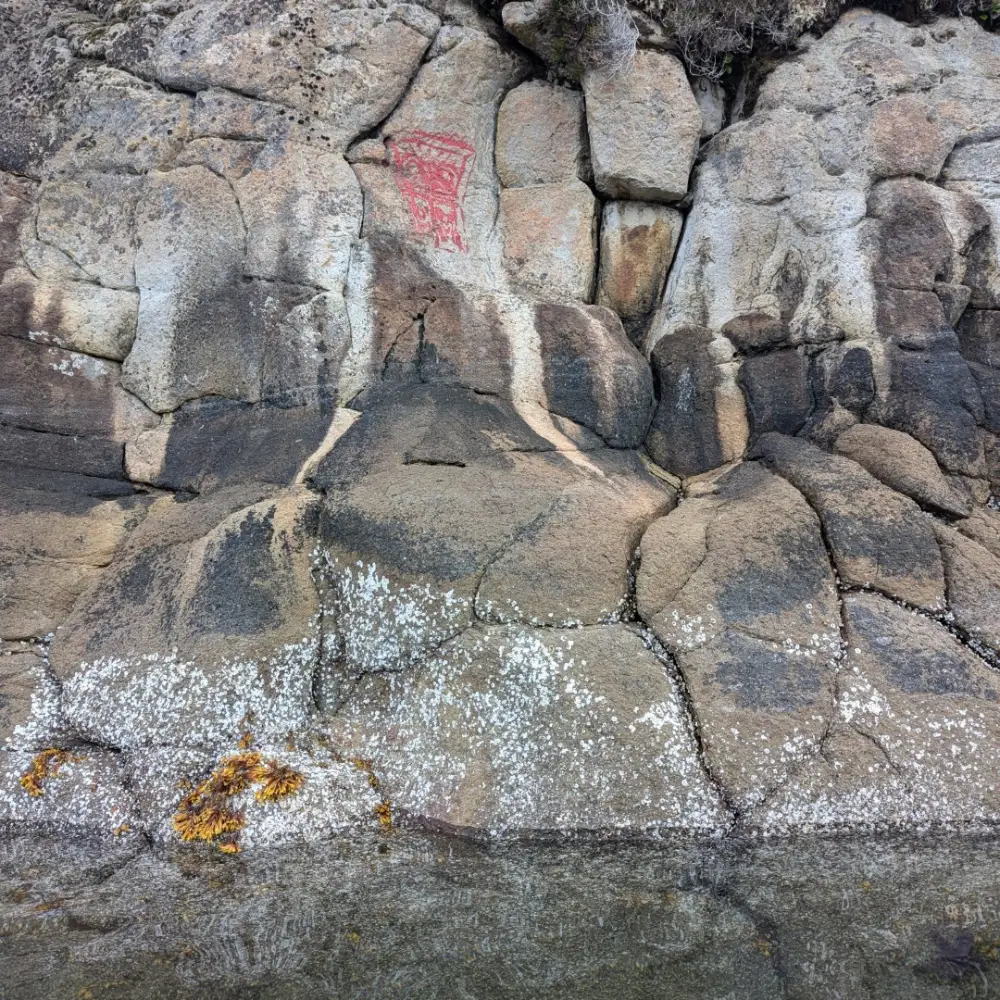
We ended our journey by paddling back to Bella Bella to meet the afternoon ferry. We passed by Heiltsuk rock paintings marking ancestral place, presence, and power.
We made the 15km journey in good time to meet the ferry and began the dance of loading and unloading again. Warm food on board the ferry was a great treat alongside a cold beer. We had time now to think back upon our great adventure.
Expedition Notes & Gear Reflections
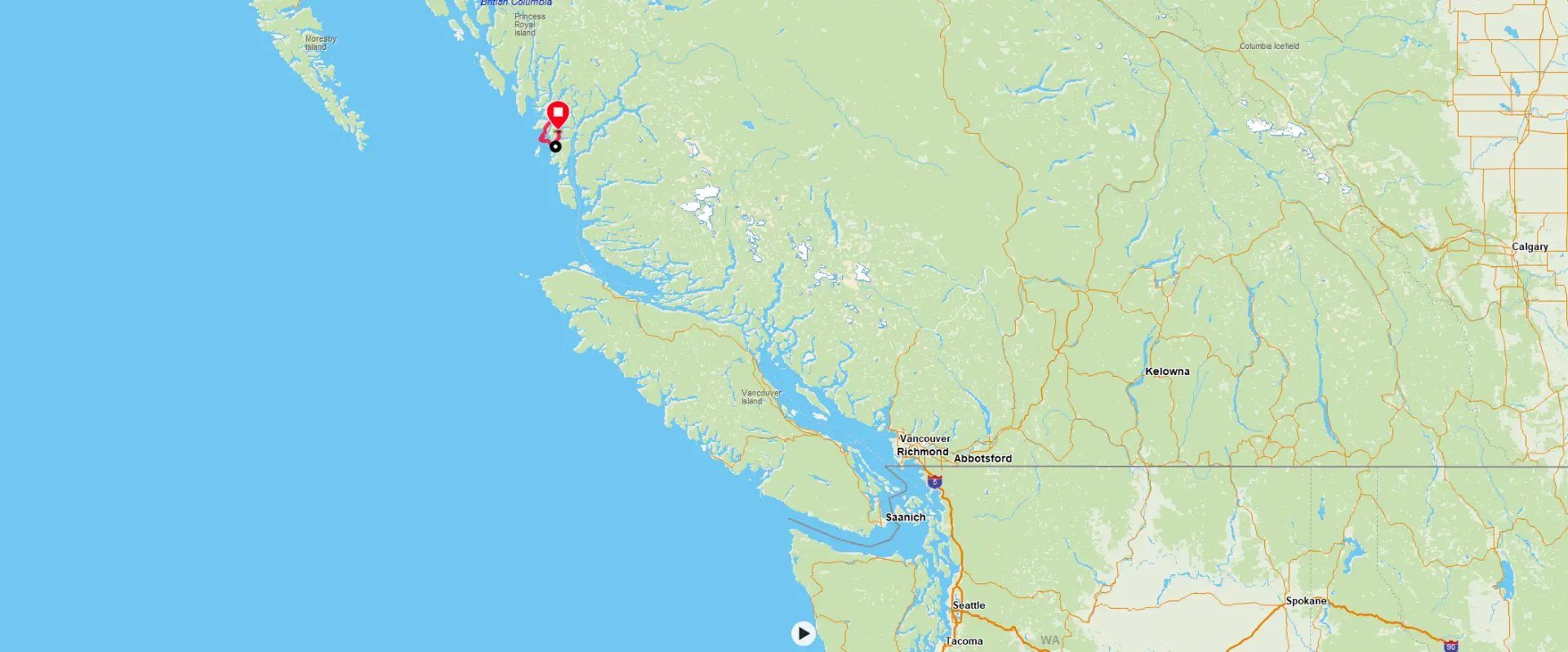
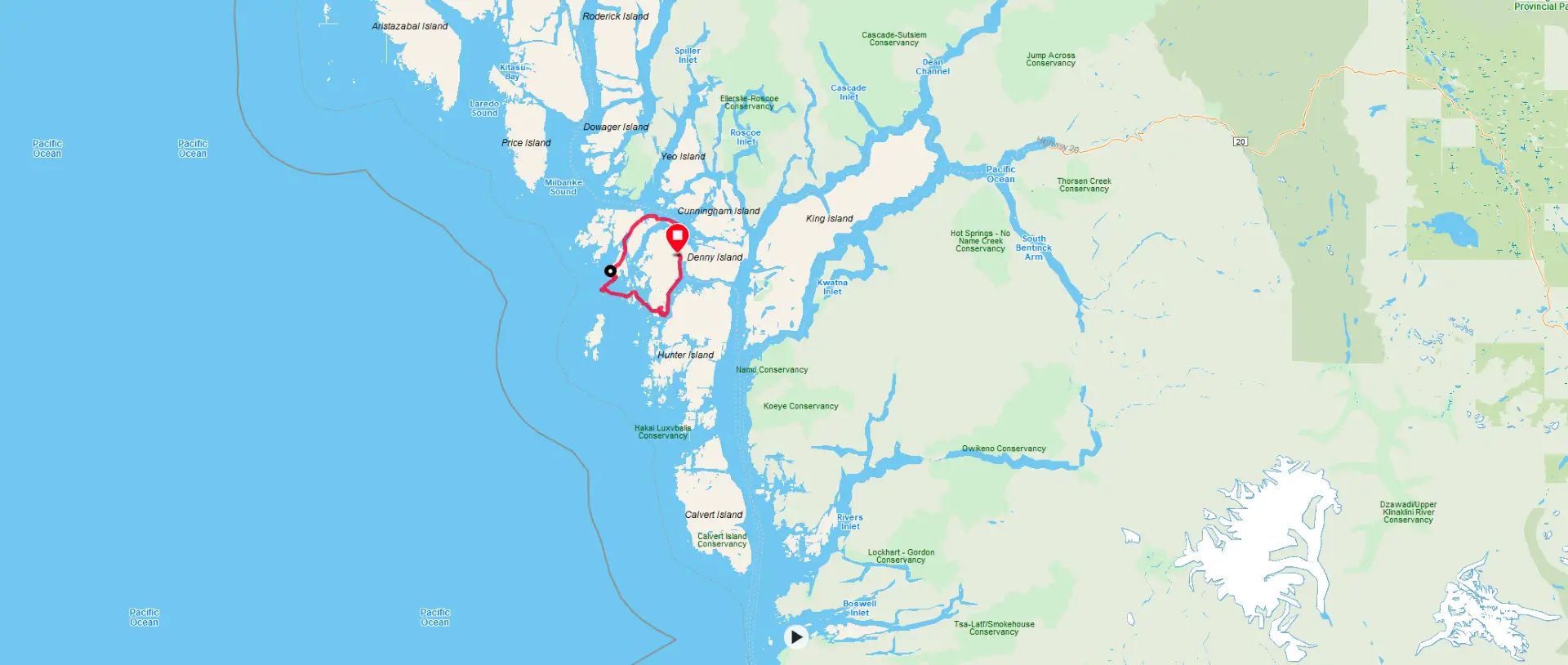
The full route map can be seen below from several views showing perspective relative to the coast.
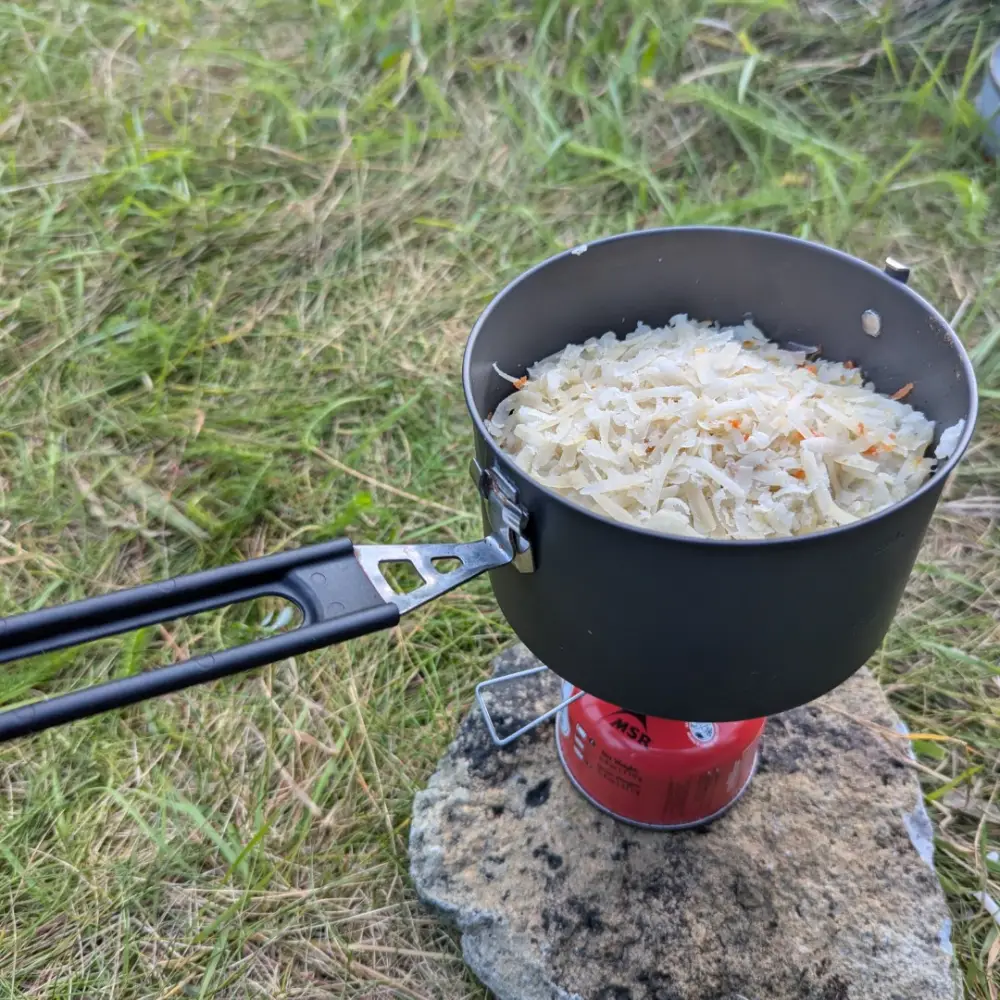
The Food: When you’re burning calories on the water, morale is tied to the menu. Highlights included Shawn’s cast-iron pan pizza, peanut butter cookies, and our “collaboration tacos” (refried beans, mushroom crumble, vegan cheese, and shredded carrots).
The Gear: My duck boots and full rain suit were non-negotiable. For anyone planning this route, a current and tide chart for the Bella Bella area is vital, even if a full atlas isn’t available. Have confidence and comfort in your kayak and paddle too, as these are essentially part of your body. My solar panel came in very handy as well for charging devices on this long journey. Bear deterrents are also needed (bangers, horn, bells, and/or spray are advised)
The Philosophy: This trip reminded me that we aren’t just observers of the wild; we are temporary participants in it. Whether carving a tent site out of the brush or sharing a beach with a grizzly, the coast demands flexibility and respect.
Total Distance on the water: 96.5 km
Memories and experiences gained: incalculable
Trip Video
Grizzly Bears at Sea
I did some research on the phenomenon of Grizzly Bears travelling by water in British Columbia. As it turns out, historically, the outer islands of BC’s Central Coast were considered the domain of just black bears and wolves, with grizzlies sticking to the mainland fjords. However, this has changed significantly over the last decade.
Grizzlies are excellent swimmers and are now known to “island hop” across the archipelago. Sightings in the McMullin Group and the neighboring Goose Group have become increasingly common as grizzly populations expand their range westward from the mainland. Manty of the islands are small and don’t typically support a “resident” population but grizzlies use these islands for foraging in the intertidal zones for crabs, barnacles, roots, and when on land, berries.
The McMullin Islands sit within the Heiltsuk Territory and the broader Great Bear Rainforest. The Heiltsuk Nation and researchers such as the Raincoast Conservation Foundation have documented a clear trend of grizzlies moving onto these outer islands, likely following food sources or seeking new territory.
Michael Paskevicius is an active outdoor adventurer living on Vancouver Island. He regularly documents his journeys exploring the coast, at sea, and up in the mountains on his blog (https://exploring.michaelpaskevicius.com/)
Great article, photos and video. Brought back many happy memories of my own paddles around Bella Bella, Islet 48, the McMullans, Goose Island, Calvert Island and down the coast to Tofino. Thanks for sharing! Jerry Kaye
We use basic cookie information to track things like which pages are viewed by visitors, in order to help improve our content. This information is used within Google Analytics, but is not provided to third parties.
By continuing to use this website, you consent to the use of cookies in accordance with our Privacy Policy, which can be found at the bottom of this page.


Thank you Mike. I much enjoyed your well-crafted trip report! One wonders what those bears thought of it all!
/Nick
Great article, photos and video. Brought back many happy memories of my own paddles around Bella Bella, Islet 48, the McMullans, Goose Island, Calvert Island and down the coast to Tofino. Thanks for sharing! Jerry Kaye