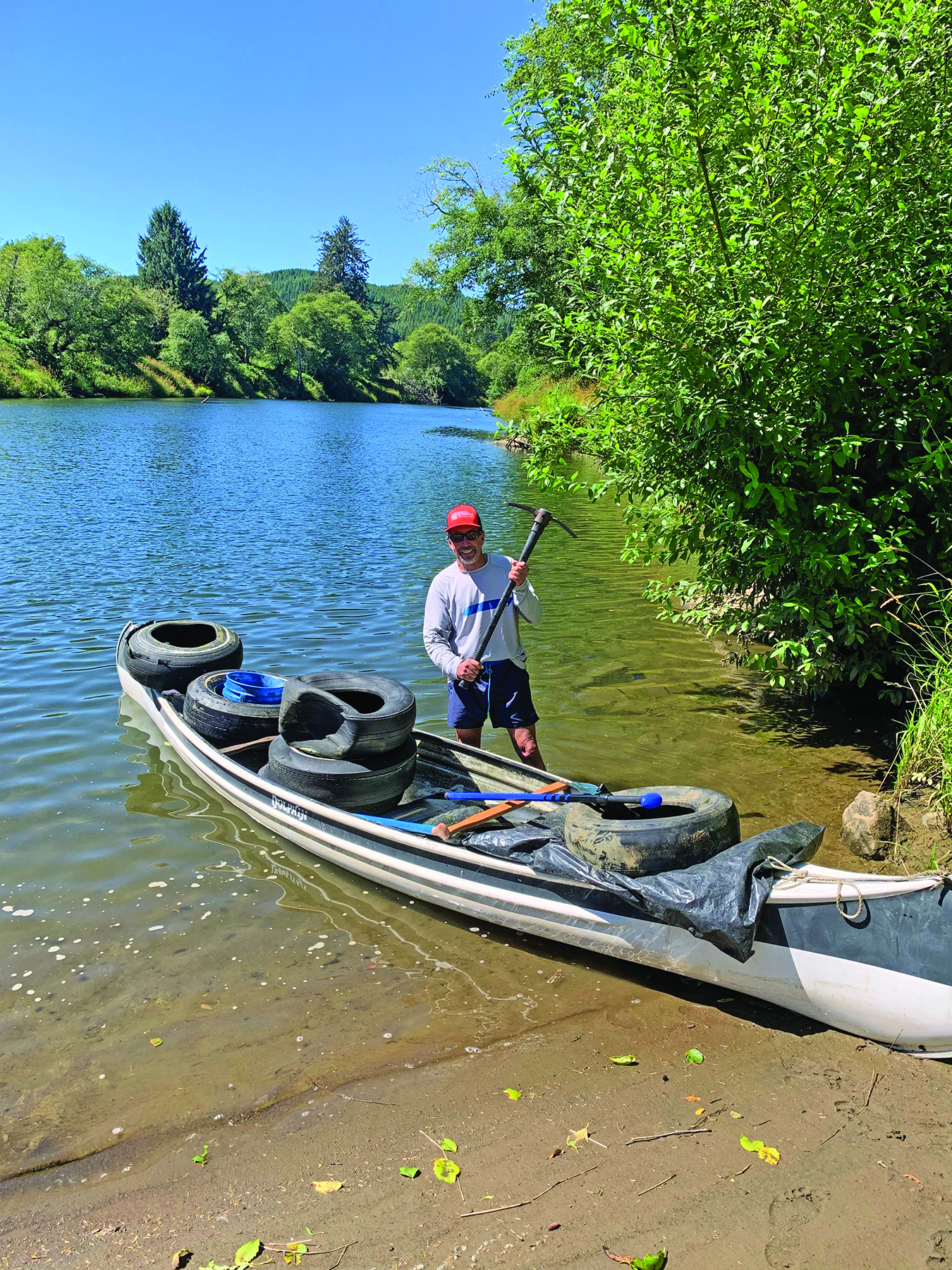
In a shallow, sunlit riverbed, Ken Sund stands shin-deep over his canoe wearing a proud smile. Both hands grip a pick axe, and in his canoe rest two car tires, their rubber edges peeling from years of subaquatic erosion. Only a few feet of space remain near the bow of the canoe, where Ken will situate himself before paddling down the river, collecting debris along the way.
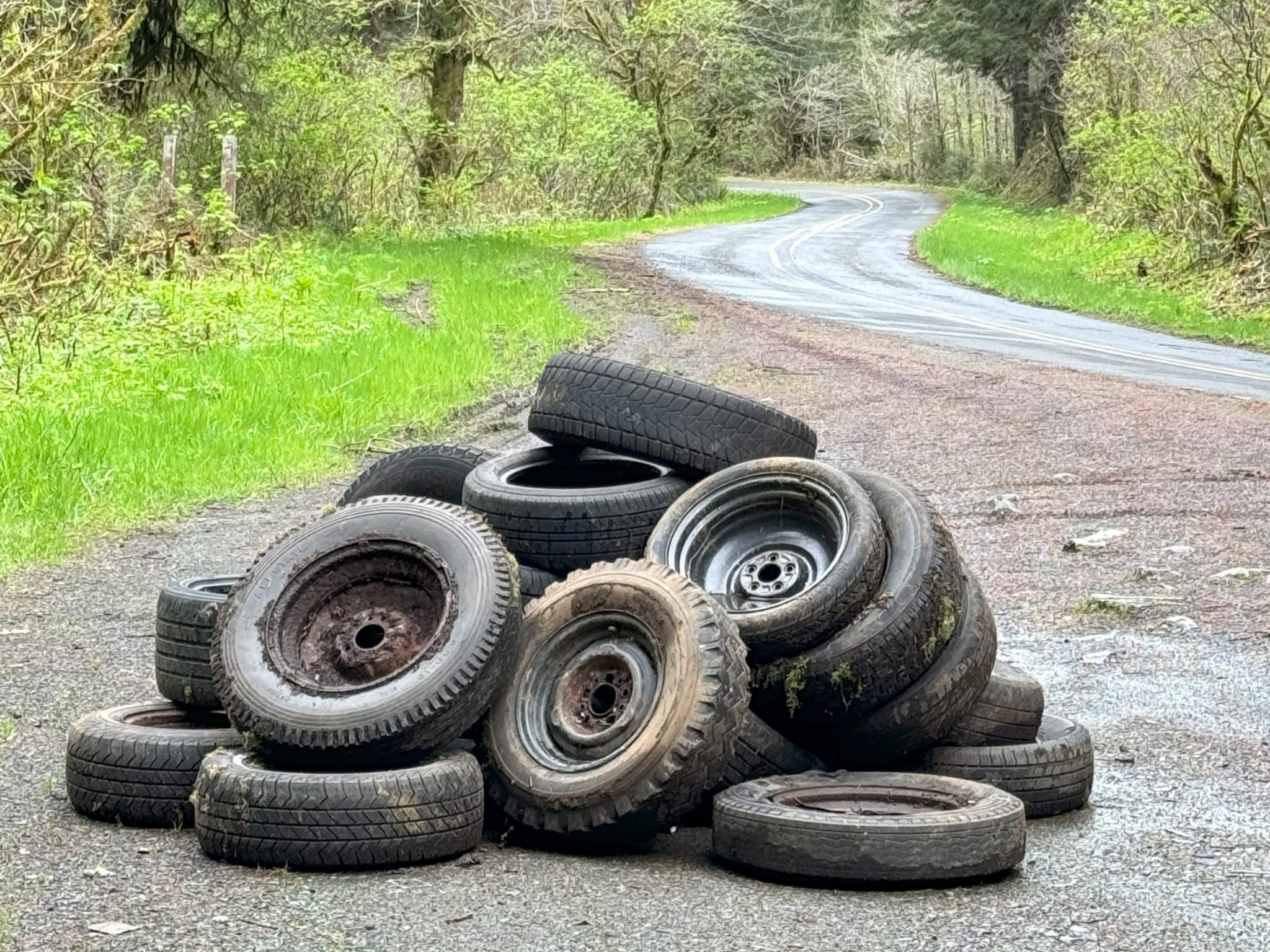
A self-titled “RiverSea Ranger,” Ken and his friends make up a handful of local residents who steward waterways around Oregon’s Cascade Head, a roughly 102-acre biosphere reserve located near the Oregon coast. Findings from their trash-collecting outings range from the expected (Styrofoam cups, beer cans, and fishing bobs) to the curious (broken plastic chairs, rugs, and television monitors). But what Ken and his fellow stewarding squad are often most interested in extracting are tires, whose chemical makeup harms the local ecosystem and aquatic life.
A tire’s tread on rivers
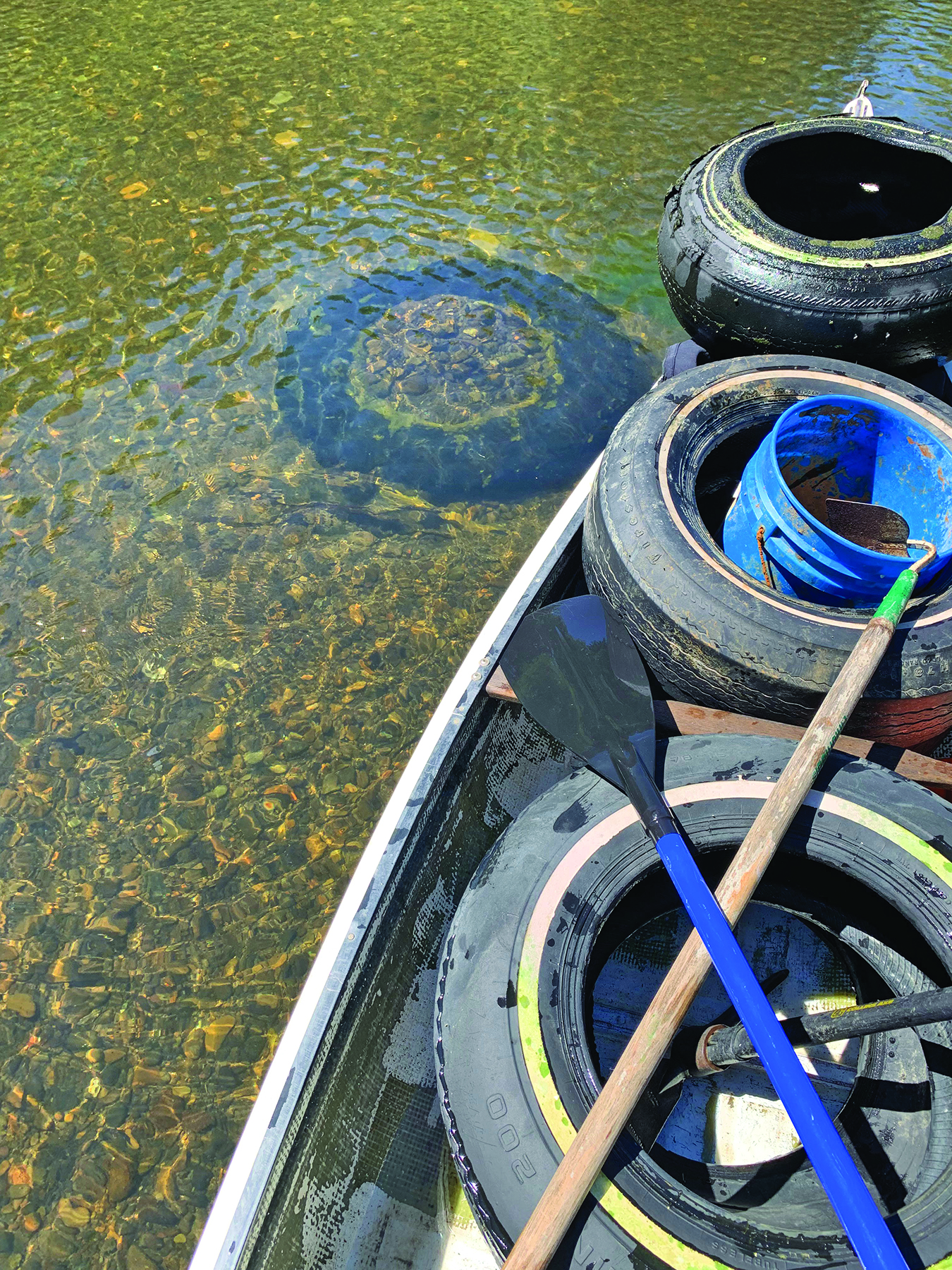
While most trash discarded into waterways hypothetically gets carried away by the current, Ken explained that “tires don’t quite make it to the ocean,” instead getting “buried and unburied and buried again as they bump their way downstream.” As the tires settle and decompose, they release toxic microplastics and chemicals that negatively impact marine behavior, including altered gene expression, reproductive abnormalities, and shortened life expectancy. According to research by Science, one chemical biproduct in particular (6PPD-Quinone) has been linked to the death of entire generations of coho salmon in the Pacific Northwest.
“I don’t think the tires are best left where they lie, so I take them out,” said Ken. Using the edge of a pickaxe, hoe, and boat anchor (if the water is deep enough), Ken and his friends gradually shake the tire loose until it can be surfaced, cleaned of gravel, and secured to their canoes. When required, Ken will don a wetsuit and dive underwater to wrestle loose the heavier tires that are too hard to hook with an axe. While working beneath the surface, these tire-extractors have buoyancy on their side, but once the tires breach, they can weigh anywhere from 25 to around 180 pounds. “Those are the feats of success,” Ken shared, “when you get to remove big tractor tires.”
Preserving what’s close to home
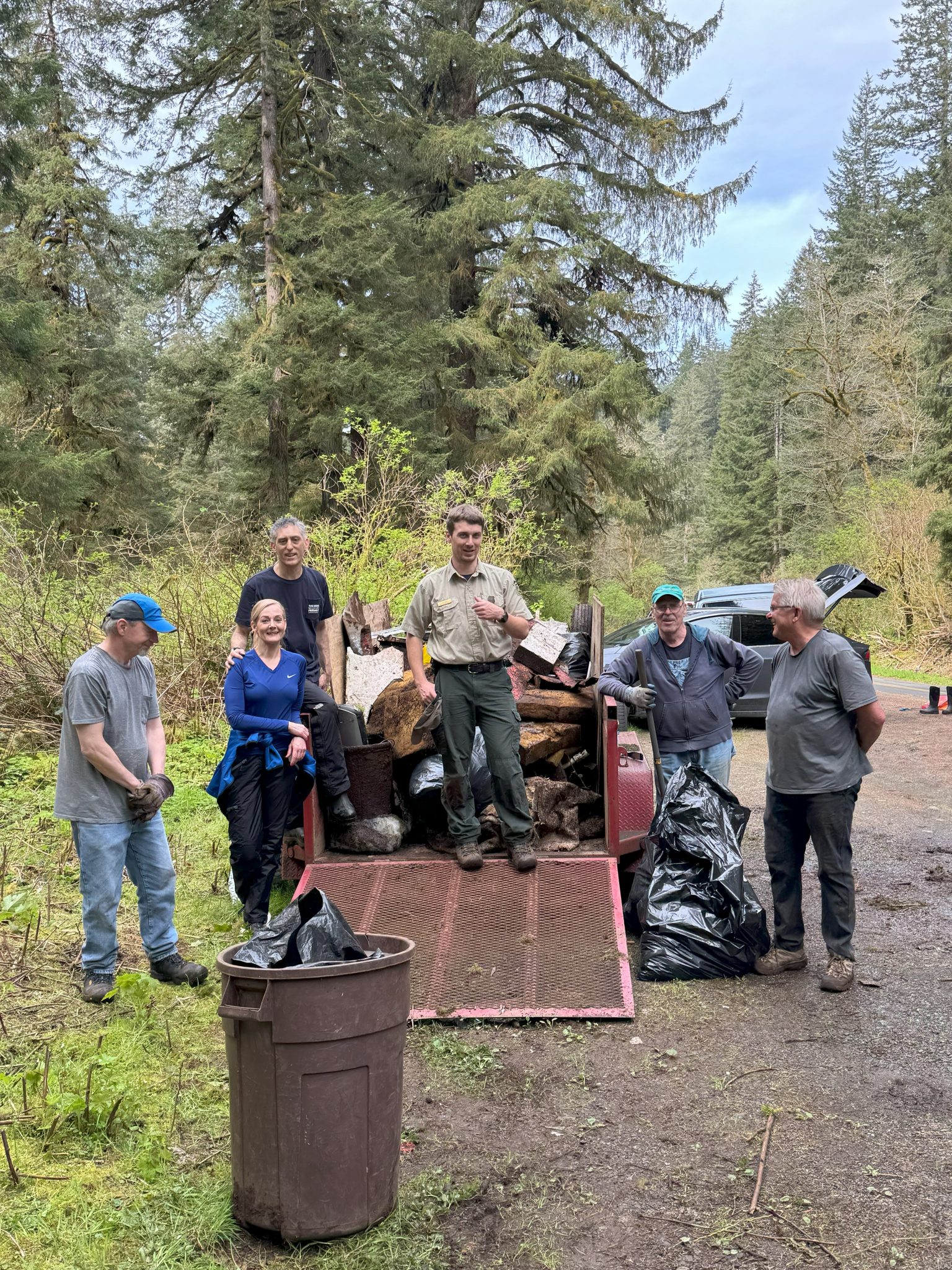
With a home nestled against the Salmon River, Ken’s tire-extraction escapades began in his backyard. His favorite activity is sea kayaking from his house to the ocean, and during his first trips – when low tide coincided with clear water – pristine views were frequently interrupted by conspicuous waste dotting the riverbed. “I immediately saw there were a lot of tires, so I started pulling them out and paying for the dumping myself,” he shared. After self-funding the disposal of nearly 100 tires, Ken began partnering with the Surf Rider Foundation’s Newport Chapter, who agreed to help cover the costs of what was becoming trailer-filled loads of tires.
Often accompanying Ken on his trash-collecting paddling trips is friend, fellow RiverSea Ranger, and Senior Fish and Wildlife biologist Mike Szumski. About twice a year, Ken, Mike, and other stewards hold an organized gathering to canoe local rivers such as the Salmon, Yaquina, and Siletz River and dig out tires. Occasionally, the group’s hard work makes it into the local paper, which Ken hopes inspires others to think more sustainably about their waste decisions as well as raise awareness of how easy it can be to steward our natural places. “You have to suffer the recognition to promote the idea that people are doing this,” Ken humbly teased. “I am just one of many doing the same thing.”
More often, Ken’s stewardship-oriented paddling trips are impromptu, which is part of the reason why they’re so effective: preserving the natural world is easy when it involves doing what you love. “You develop such an intimate relationship with the river,” Ken said, “and it’s really important to make sure that it remains healthy, and that you encourage the next generation to keep it healthy and happy.” For Ken, stewardship isn’t a separate objective of his paddling trips, but an integrated practice. With stewardship as a guiding ethic in his recreation, protecting our waters became just as habitual as paddling through them.
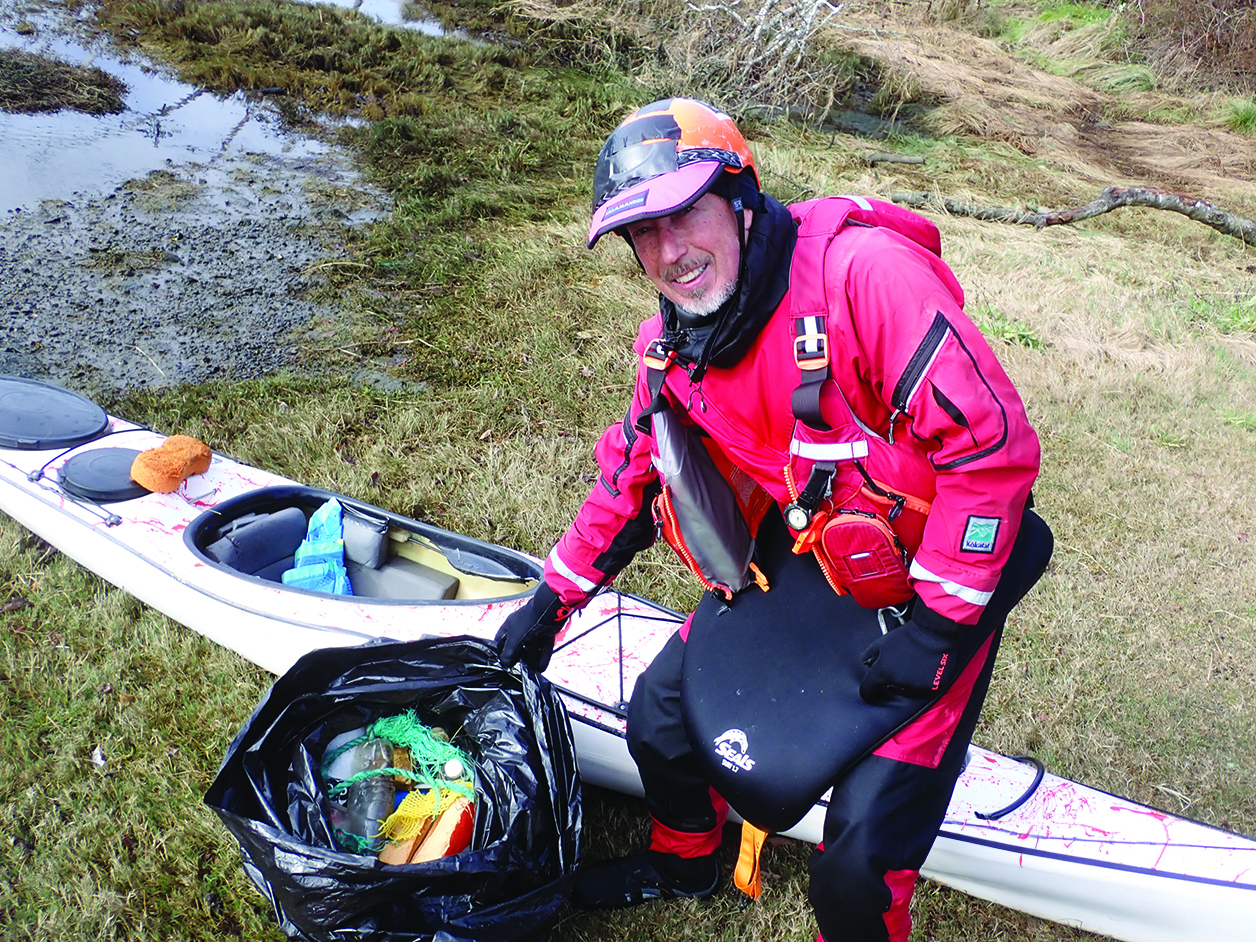
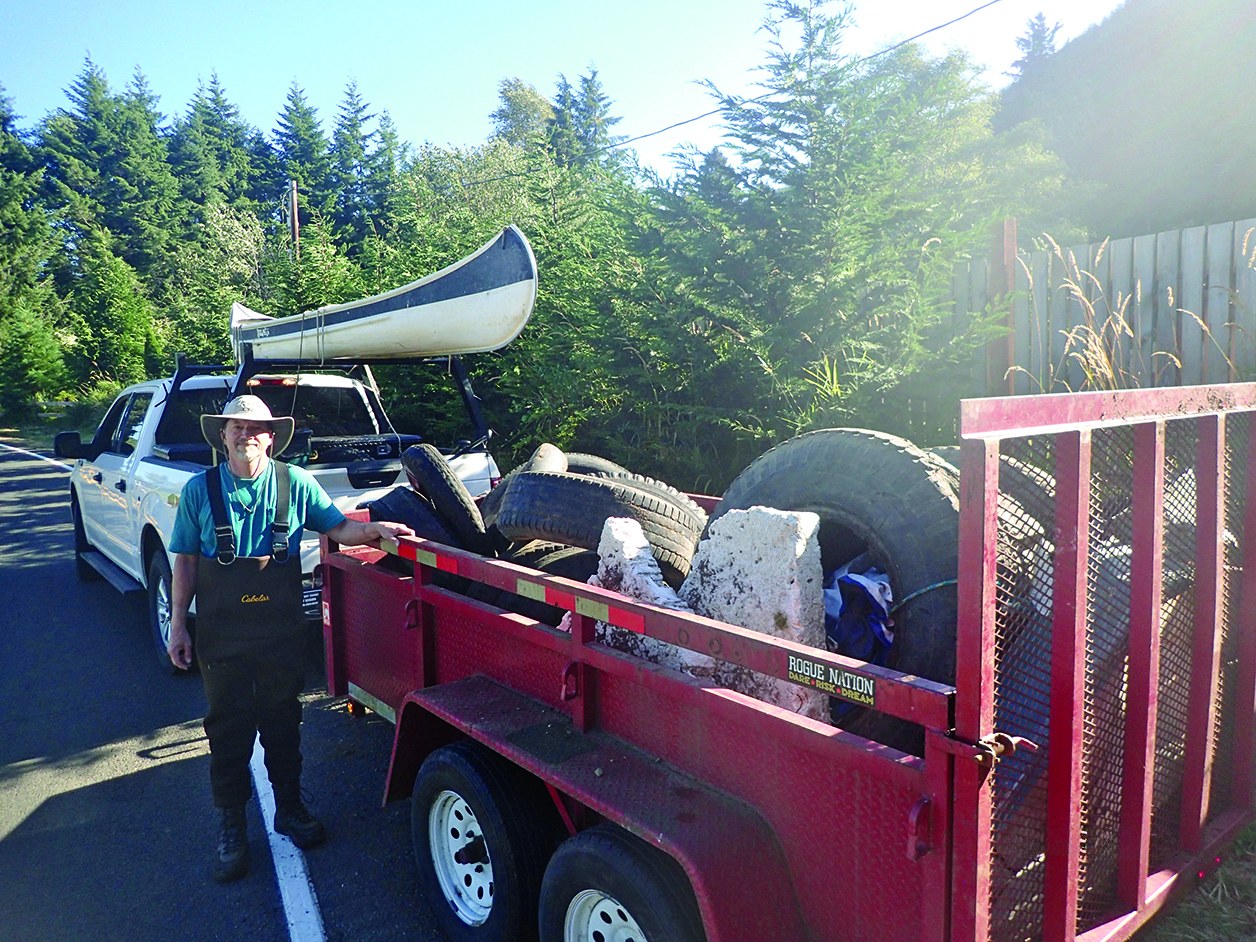
As a paddling enthusiast, Ken heads to the waters frequently, and not always just for tires. Sometimes, he’ll make a dedicated trip to an area he knows has been affected by improper waste disposal. “Just a few weeks ago, I saw somebody dumping two pickup loads of remodel debris into a little drainage ditch,” Ken shared, “so I went out there and filled the back of my truck with the help of a neighbor.” Other times, the promise of a peaceful paddle is enough to get Ken outside. “The other day I went out in my canoe with the king tide and just paddled around the estuary where everything floats. I got some beautiful photos and a five-gallon bucket of debris.” Off the waters, Ken and his wife will stroll their neighborhood to pick up trash, and often see their neighbors doing the same. As Ken reminded, “it’s a habit that anyone can get into.”
An ethic for anywhere, at any age
Raised in San Francisco, California, Ken’s pull toward water began at an early age as he spent his childhood years competing on the swim team and enjoying summer vacations along the Russian River in Guerneville. “No one really had to tell us, but we never liked seeing garbage, especially broken glass which cut our feet as we walked barefoot,” Ken shared, as he recalled the upset he and his brother experienced while collecting trash along their favorite beach. “One of the local concession stand vendors would trade us a milkshake for a cup full of straws. Twenty five cents for a milkshake was a lot of money for us at the time, so we were happy to become his beach cleanup crew.”
Those beachside moments of stewardship left a lasting imprint that would inform the rest of Ken’s relationship to place. “That connection – doing a positive thing and getting something back – stays with you,” he shared. “Plus, you’re helping to clean an area where you live and play.”
Eventually, Ken found his way to Oregon and The Mountaineers. Through the Oregon Ocean Paddling Society, Ken met Mountaineer Will Greenough, who encouraged him to join a Mountaineers kayaking trip on the Columbia. The paddler that he is, Ken was the only participant to show up to a trip whose weather forecast was so cold, ice formed on their spray skirts.
As an experienced kayak surfing volunteer, coach, and sea kayak leader, Ken hopes that equipping people with the confidence to explore our waters will also instill a desire to care for them. “I like to share my passions so that other people can develop their skills and not let the outdoors scare them too much,” Ken said. “The Pacific Northwest waters are dangerous, requiring training, practice, stamina, and support,” but as participants improve their confidence under the guidance of trusted teachers, “they see that one of our ethics as an organization is to leave [our waters] better.”
Any participant of Ken’s trips will quickly learn that there’s more to kayaking than just padding. Ken makes time for moments of stewardship whenever he can, often encouraging participants to join him in filling their hatches with debris during lunch breaks. A popular instructor and paddling partner, Ken shared that “the ones who want to surf with me know they’ve got to participate in my other activities.”
Equally important to Ken is exposing people to the value of stewardship and the effects of improper waste management at a young age, in the hopes that they’ll be inspired to dispose of waste responsibly and contribute to picking up trash that’s been improperly discarded. “Kids will learn from us,” he said. “They either learn the good stuff or the bad stuff. And hopefully they’ll learn the good stuff if we do it right.”
Ways to be a water steward
If there’s water, there’s a way… and for Ken and his fellow RiverSea Rangers, nearly any floating vehicle can be used as a trash-carrying vessel.
Perhaps the most efficient and stable method of collecting discarded trash is via canoe, which is good for navigating upstream on slow-moving rivers when a more significant load of debris is expected. The larger size allows tires to be laid across the top of the canoe while smaller debris is tucked inside (the challenge is not loading so many tires that stability and paddling are compromised).
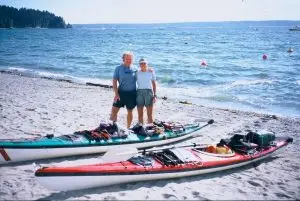
Another effective option – especially when there’s a low swell or when rougher waters are expected – is a kayak. Although smaller in size, “you can really get stuff into every nook and cranny of kayaks,” Ken explained, “and then bungee some of the clumsier stuff on top, like the buoys that won’t fit in a hatch.”
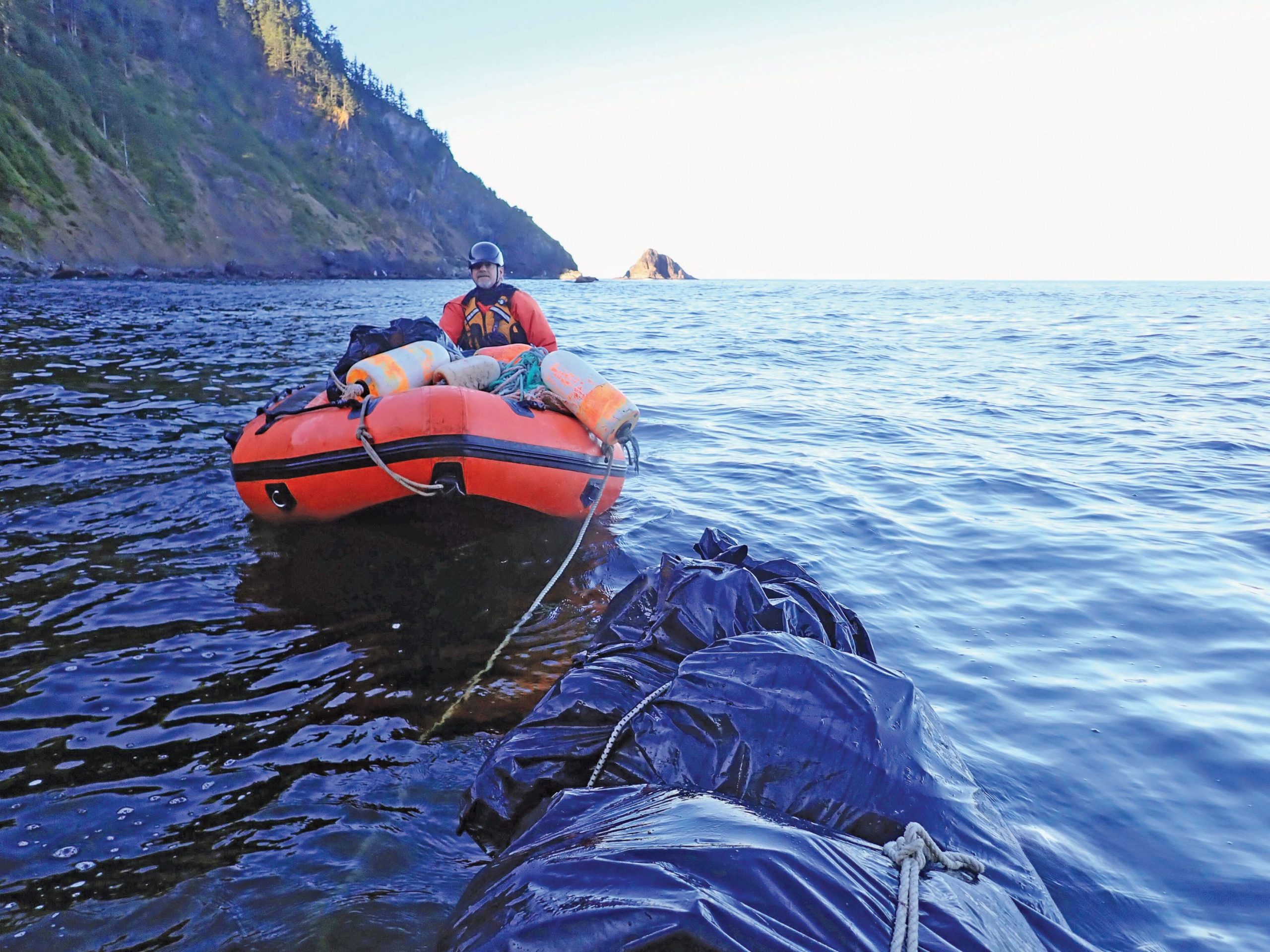
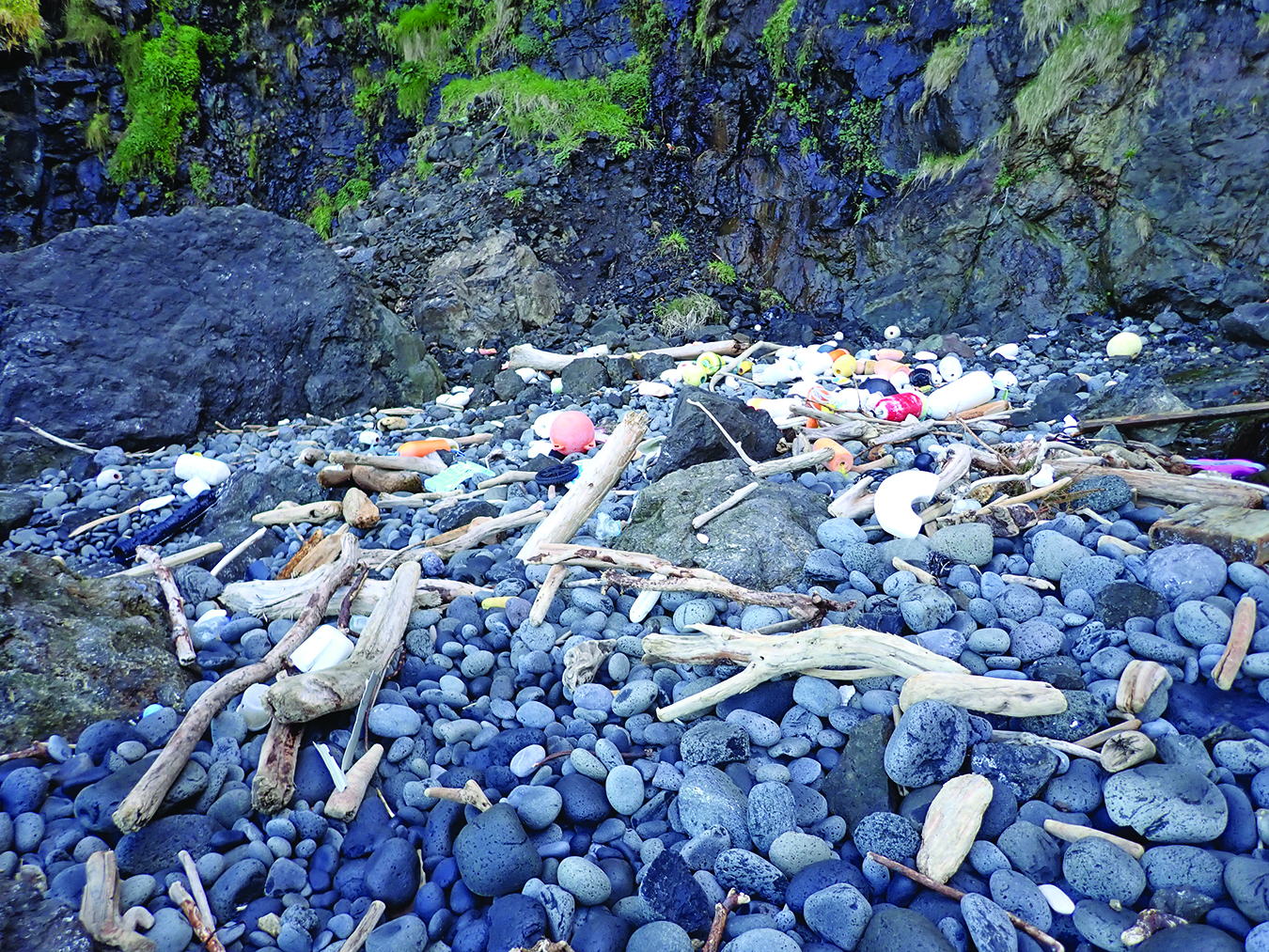
What’s alluring about Ken’s water-based stewardship is that many of the places he and his RiverSea Rangers visit are inaccessible by foot. As Ken described, Cascade Head features several waterfalls that drop onto the ocean near adjacent coves where landing is difficult. These areas are what Ken calls “reservoirs of marine debris,” housing buoy floats, rope, and practically anything that floats. All trash that has been discarded along the river – from headwater to tributaries to mouth – gathers here, and unless you have rope and rappelling skills, the cliffs are too steep to descend. Even with a boat, the swell direction and cobbled shore make these coves difficult to land on without getting hurt. “A lot of fishermen don’t like to get too close to these coves because it’s really rocky,” Ken explained. “It’s gnarly for someone with an outboard motor. You don’t want to get stuck.”
That’s where paddle boarding comes in.
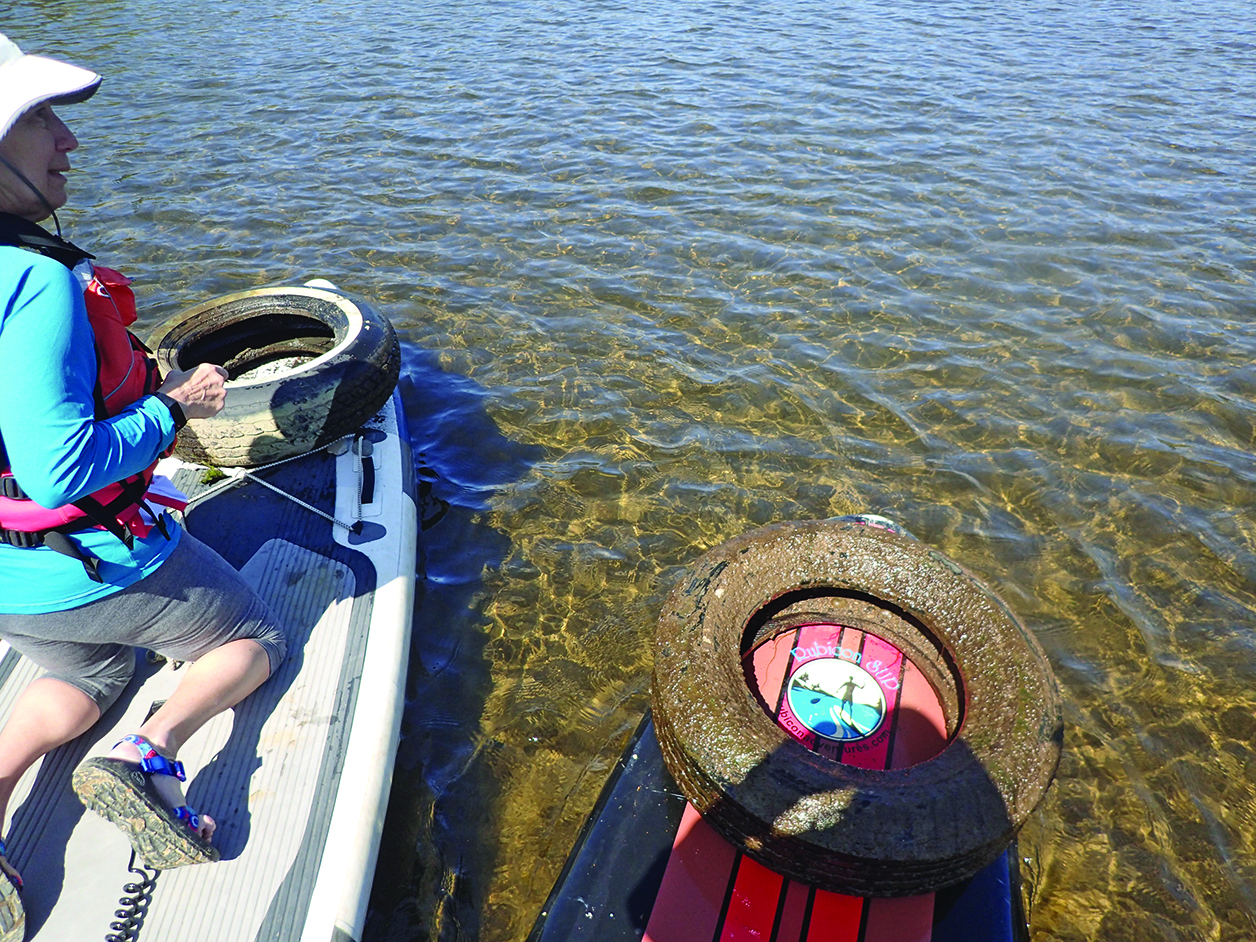
“One year, there was just so much stuff [at the cove] that I decided to pre-bag the debris and get a boat to pick it up,” Ken shared. With a 12-foot Zodiac donated from Mike’s agency, the RiverSea Rangers anchored safely away from shore, paddle boarded to the cove, attached the garbage to their vessels via bungee cord, and then paddled back to load the boat and return upstream. To avoid getting caught in giant wave breaks, they timed their journey for high tide and low swell, and bungeed everything – paddleboard and trash included – to the Zodiac to ensure nothing fell off during the bumpy journey. “It gives us quite an adventurous feeling of success when we do those things” Ken said.
To land his paddleboard on the large, cobbled shores, Ken will remove its fin and crash land on the cove’s rocks. He assured that, despite a paddleboard’s seemingly meager size, “it’s easy to bungee a few large garbage bags or tires to the front.”
A labor of love for anyone
If crash-landing a paddle board isn’t in your wheelhouse, there are plenty of other ways to get involved in stewardship. “A lot of people don’t think they can’t do something until they try,” Ken said. Plus, you don’t have to travel very far to make a difference. “Think globally, and act really locally,” Ken encouraged. “Radiate out from where you are.”
At the age of 72, Ken has seen what he described as “a tremendous degradation” of what he once knew, but he has also witnessed the reward that comes from diligently caring for a place he loves. “My little section of the river is nice and clean,” he shared proudly. “It’s hard to find tires in it anymore, which is why I branched out to the other rivers with my canoe.”
While Ken radiates locally, he still dips his toes in international stewardship, including Vancouver, Canada. “I’ve given them my suggestions,” he shared, like utilizing water taxis or kayakers to collect and pre- bag debris in remote areas. “My attitude is: we’ve been to the moon. If we can coordinate that, how hard is anything else?”
Everyone has something to contribute, and Ken’s contributions extend beyond the waters, showcasing the range of ways we can give back to the places and people we love. “As a Hispanic bilingual, I’m a Red Cross volunteer for disasters like fires,” he shared. “We can all be stewards of our lives and those close to us.”
Extracting buried river tires, picking up trash, aiding disaster relief… “Anyone can do this stuff. They just have to want to.”
Originally published in Mountaineer Magazine.